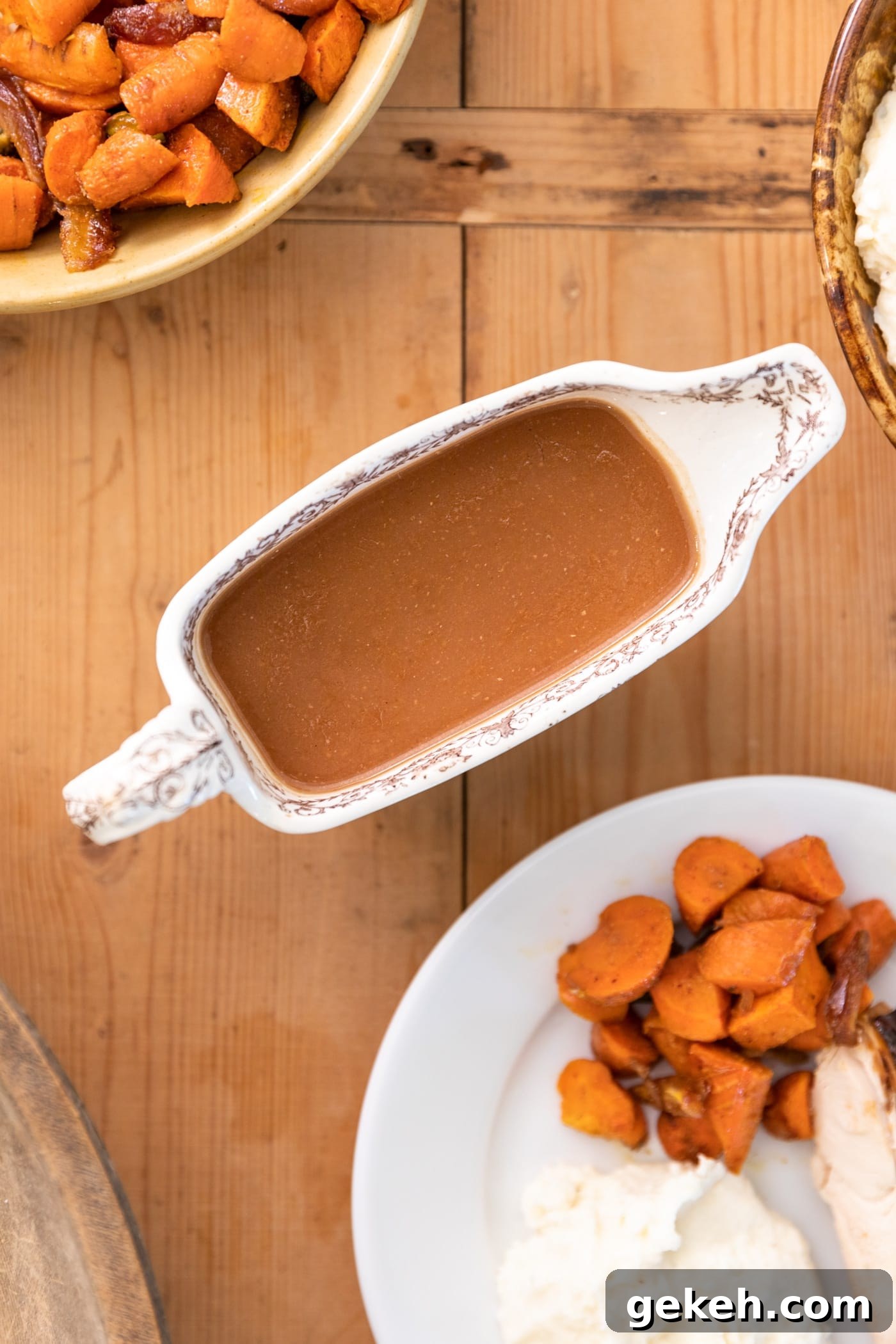

Why I Love This Gravy
Homemade gravy is one of those simple comforts that can elevate a meal. Too often people rely on canned gravies or packet mixes out of convenience or fear of making it from scratch. If you’re short on time this year, shortcuts are fine. But if you’ve never made gravy and have put it off because it seems intimidating, this friendly approach will change your mind.
Growing up I didn’t appreciate how effortless good gravy can be when you know the basics. Rather than waste the concentrated flavor left in a roasting pan, turn those drippings into a seasoned sauce. Instead of gravy being a punchline about soggy meat, it’s the smart, flavorful way to use every bit of what you cooked.
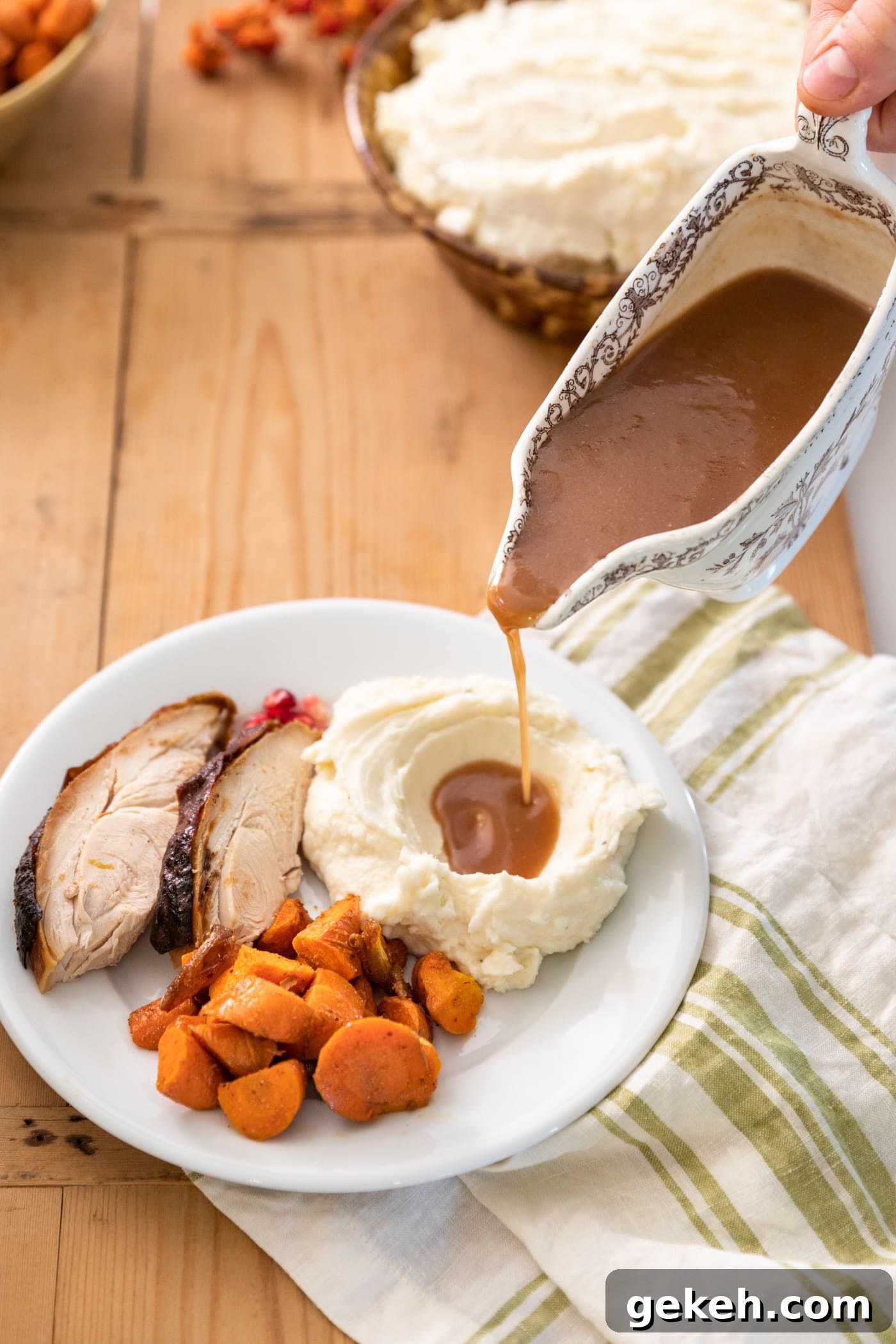
How Do You Make Gravy?
At its core, a reliable gravy needs three components: flavorful drippings, a liquid stock, and a thickening agent. With good proportions and a few simple techniques you can avoid a gravy that’s too thin or overly gloopy. Below I break down each element so you can make consistent, delicious gravy every time.
First Component: Stock
Your choice of stock affects both flavor and body. Options include:
- Make a turkey stock from the neck and carcass for the most authentic flavor.
- Use chicken or store-bought stock for convenience—still great and easier when you’re short on time.
- Use the starchy water from boiled potatoes. This is a traditional tip: potato water adds body and a subtle cloudiness from the starch. Freeze leftover potato water to keep it on hand for gravy later.
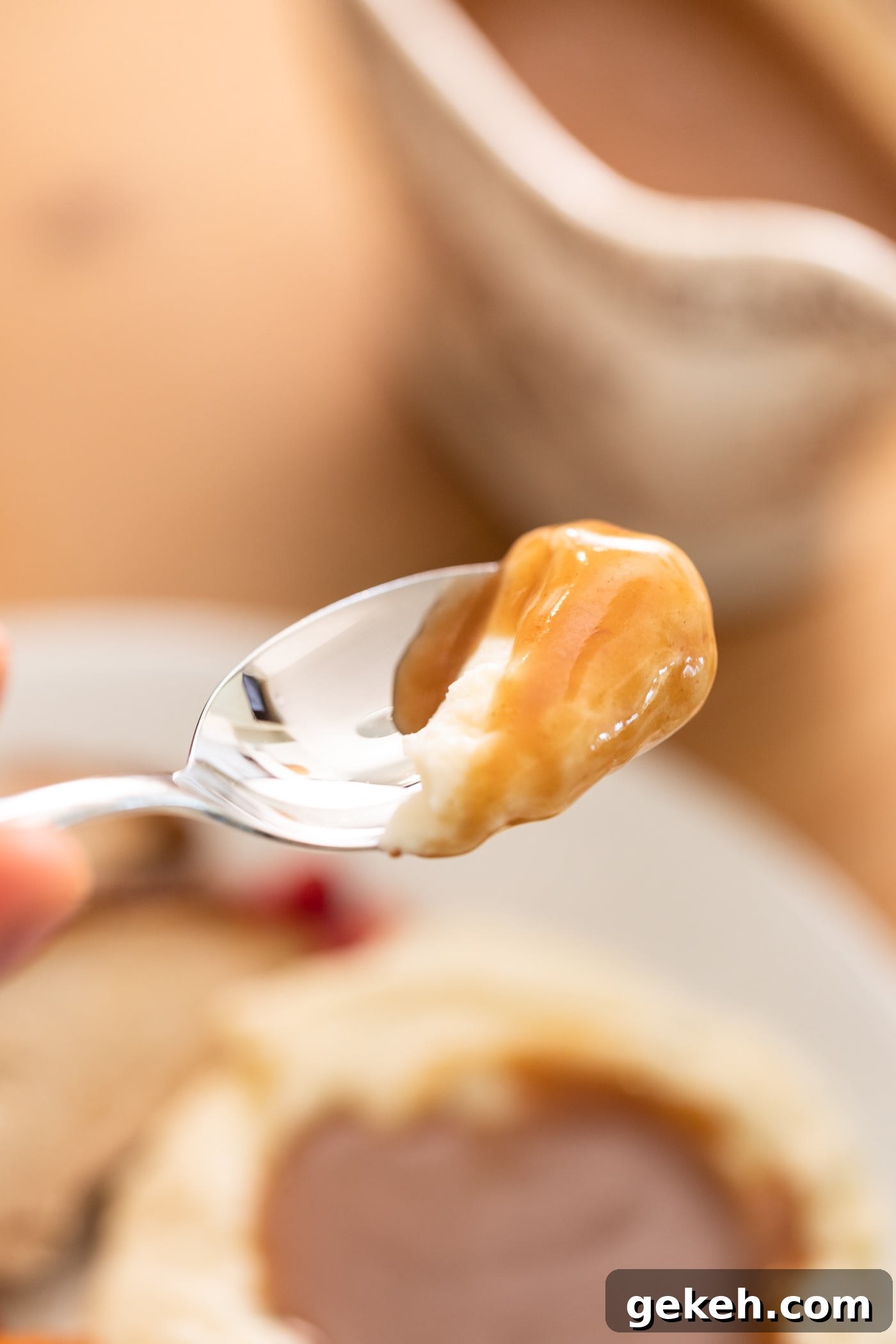
Second Component: Thickener
Choose a thickener based on the texture you want. Flour and cornstarch are the two most common options, each giving a different result.
Flour contains protein and starch, so you’ll typically need about twice as much flour as cornstarch. Flour is cooked into the fat first, then thinned with stock; it produces a slightly cloudier, more rustic gravy.
Cornstarch is pure starch and must be mixed into a cold liquid to form a slurry before adding. It creates a clear, glossy gravy with a smooth mouthfeel.
Third Component: Drippings
Drippings are the concentrated, caramelized juices left in the roasting pan. Pour them into a fat separator or a measuring cup and let them sit 10–20 minutes so the fat rises to the top. Skim or pour off excess fat, keeping the flavorful juices beneath.
One important note: do not salt the gravy before tasting. Roasted poultry and the drippings are often already well-seasoned, and you can adjust salt at the end once all components are combined.
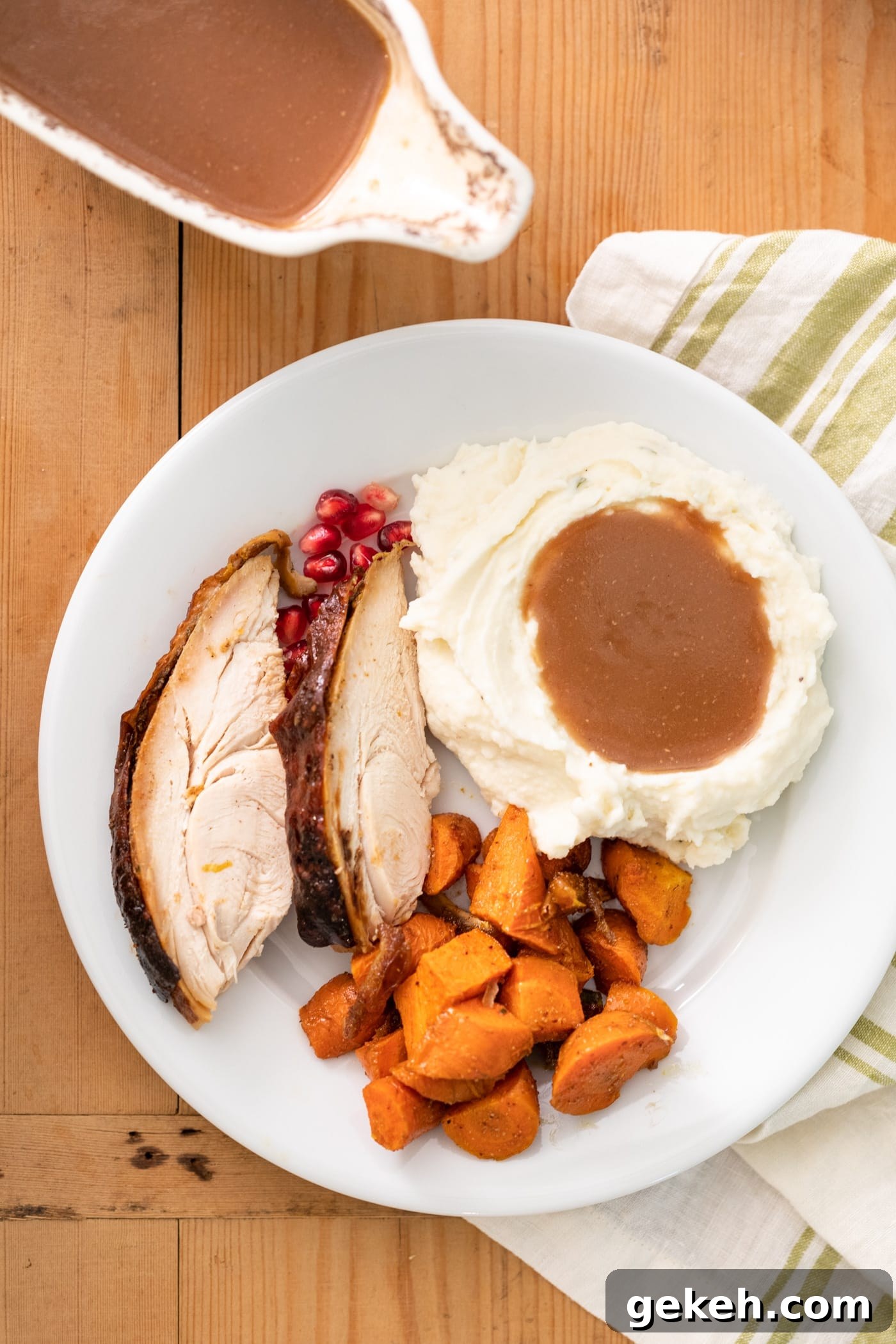
Optional Add-In
If you want a subtle, elevated note, add a splash of cognac or brandy. A small amount brightens and deepens the gravy’s flavor and gives it a finishing lift that guests will notice even if they can’t name it.
Give this gravy a try for your next holiday or roast. It’s an easy way to make a meal feel more complete and to use every flavorful drop from your bird.
Perfect Gravy Pairings
- Classic dry brine turkey
- Grandma’s mashed potatoes
- Citrus dry brine turkey
- Easy slow cooker stuffing
Have I Convinced You to Make This Recipe?
I hope you try this gravy and enjoy it with your meal. If you make it, leave a comment and a star rating so others know it’s approachable and delicious. Your feedback helps others feel confident trying it themselves.
How to Make Homemade Gravy
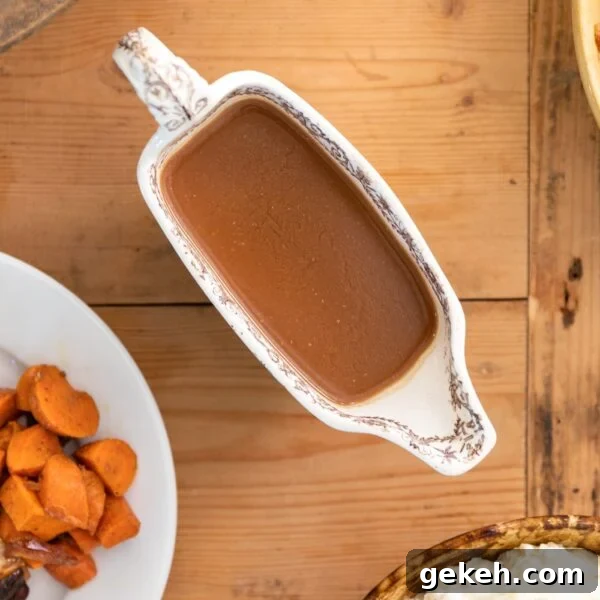
Ingredients
- 1 cup pan drippings from roasting turkey
- 2 cups turkey stock
- 2 tbsp cornstarch
- 2 tbsp cognac (optional)
Instructions
-
Pour the turkey drippings into a fat separator or large measuring cup and let sit 15–20 minutes so fat rises to the top. Separate the fat from the juices.
-
Return the juices (reserve some fat if desired) to the roasting pan with the browned bits. If you have less than 1 cup of drippings, add stock to reach 1 cup. Place the pan over medium heat and whisk, scraping up browned bits until the mixture simmers. If using cognac, whisk it in now.
-
In a bowl, whisk the cornstarch into the stock until smooth to make a slurry.
-
Slowly whisk the stock-and-cornstarch mixture into the simmering drippings. Continue whisking until the gravy thickens. Adjust consistency by adding more stock or potato water to thin, or a bit more slurry to thicken. Taste and season at the end.
Video
Nutrition
Nutrition information is automatically calculated and should be used as an approximation.

Did you make this? Leave a comment below!