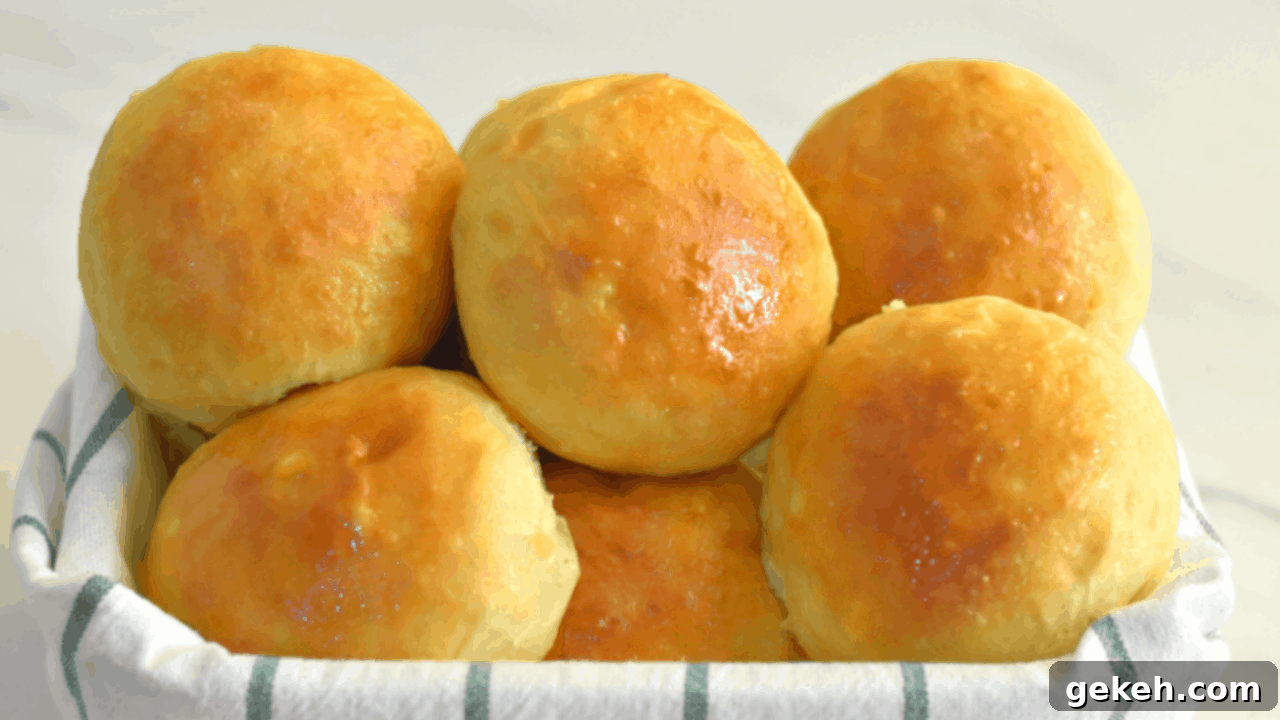
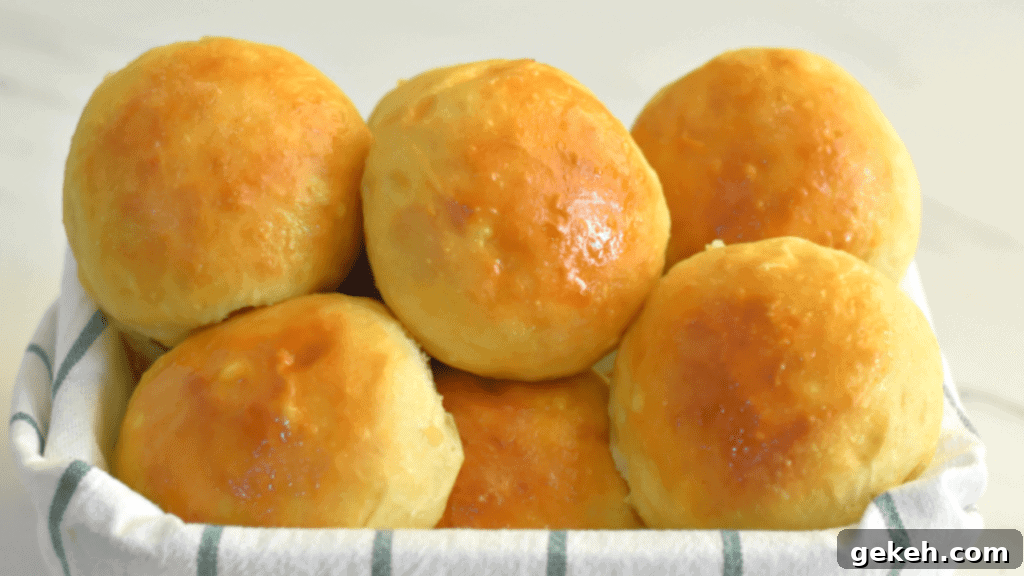
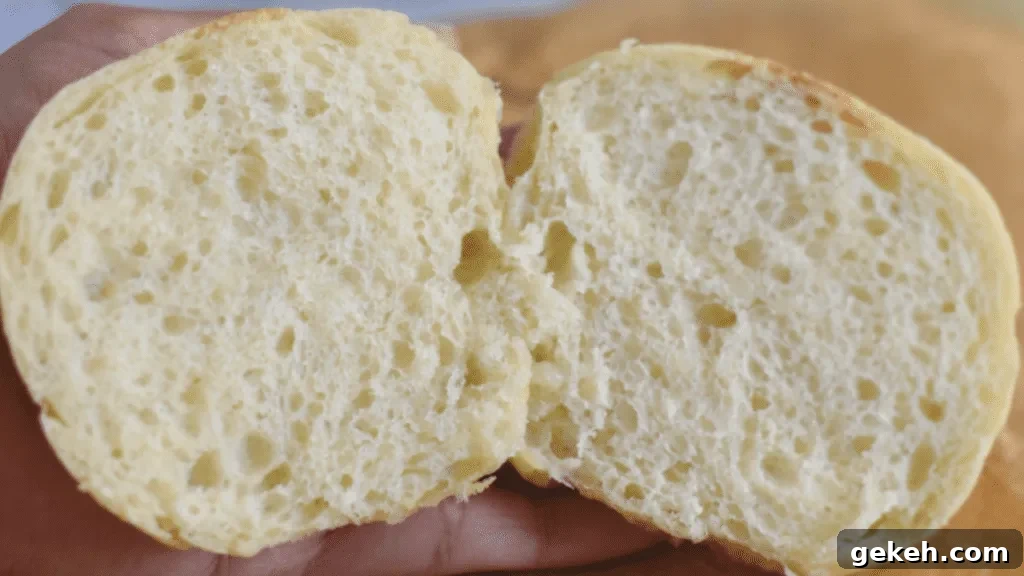
This potato bun recipe shows you how to make soft, light, and fluffy potato rolls in five simple steps. Using mashed potatoes in the dough yields a tender crumb and a moist texture that beats most store-bought buns.
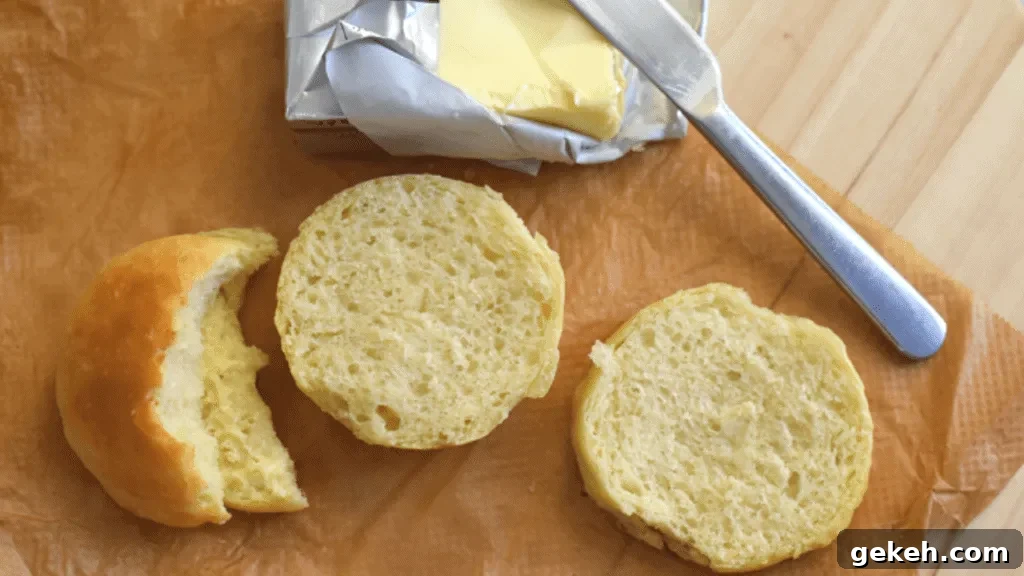
These homemade potato buns are wonderful as burger buns or dinner rolls. They have a delicate buttery aroma and stay fresh longer than many regular breads. I like to brush them with butter and honey after baking — they disappear fast.
- Easy to make: this recipe requires no intensive kneading, so it’s beginner-friendly.
- Extremely soft and moist: mashed potatoes create a pillowy crumb with excellent flavor.
- Stays fresh: potato starch delays staling, so these buns remain soft for several days.
- Healthier twist: part of the flour is whole wheat for added fiber and nutrients.
- Flexible dough: potato-enriched dough is forgiving and produces consistent results.
Why potato buns stay soft longer
Regular bread stales as wheat starches recrystallize and trap water, a process called retrogradation. Potatoes alter that reaction: their starches contain negatively charged phosphates that discourage recrystallization. Replacing some flour with potato makes it harder for wheat starches to crystallize, so potato breads remain soft for longer.
How long do potato buns last?
When cooled completely and stored in a sealed plastic bag or wrapped in foil at room temperature, potato buns will stay soft for about 3–4 days. Because they taste so good, you may not have leftovers!
Why are potato buns lighter?
Potatoes contain potassium and other elements that can encourage quicker yeast activity, helping the dough rise. Potato starches also hold more water than wheat starches, contributing to a moister, lighter texture.
Are potato buns healthy?
Adding potatoes increases some nutrients, making the bread closer to whole-wheat bread in fiber and minerals like iron and zinc. Potato bread provides notably more potassium than typical white or whole-wheat loaves. Potatoes themselves are naturally fat-free and low in sodium, and they supply vitamin C, vitamin B6, potassium, and some iron.
Goodness of whole wheat
Whole wheat provides carbohydrates, about 12 g protein and 10 g fiber per 100 g of flour, and is a source of selenium, manganese, phosphorus, copper, and folate.
Nutrition (per bun)
Calories: 145 kcal
Carbohydrates: 24 g
Protein: 4 g
Fat: 3.7 g
Storing and freezing leftover buns
Allow buns to cool completely before wrapping tightly in foil. For freezing, double-wrap in foil and place in a freezer bag — they’ll keep up to one month. Thaw at room temperature and reheat briefly in a low oven for best texture.
Substituting egg in the recipe
Eggs help with rise, tenderize the crumb, and provide emulsification. Because this recipe uses only one egg, you can substitute about 45 ml (roughly 3 tablespoons) of milk or water for the egg with minimal change in texture. It won’t be identical, but the difference is subtle in this dough.
How to make easy no-knead potato buns in five steps
Ingredients
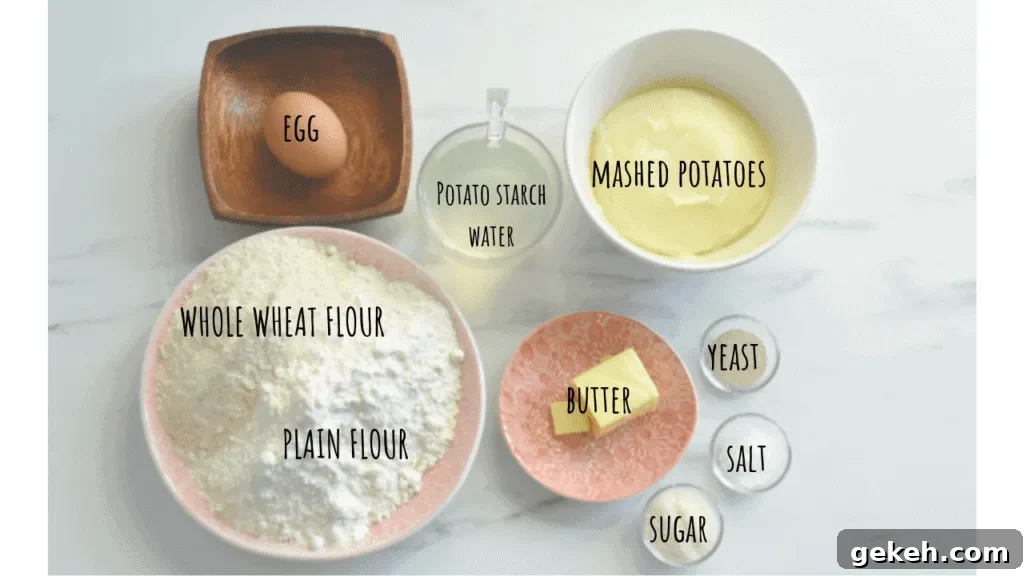
- All-purpose flour: 325 g (about 2 1/2 cups, loosely packed)
- Whole wheat flour: 90 g (about 3/4 cup, loosely packed)
- Mashed potatoes: 310 g (about 1 1/3 cups, tightly packed)
- Active dry yeast: 1 tsp
- Sugar: 2 tbsp (25 g)
- Salt: 1 1/2 tsp
- Butter: 3 tbsp (about 42.6 g)
- Egg: 1
- Water (or potato starch water, or a mix): 120 ml (1/2 cup)
Step-by-step method
Follow these five simple steps to make the potato bun dough and bake soft, delicious rolls.
1. Prepare the dough
Combine all dry ingredients — the flours, yeast, sugar, and salt — in a bowl and whisk to distribute evenly. Stir in the mashed potatoes, water, egg, and butter until the dough is uniform. This is a no-knead style recipe; mix until homogeneous. If needed, use your hands to bring the dough together.
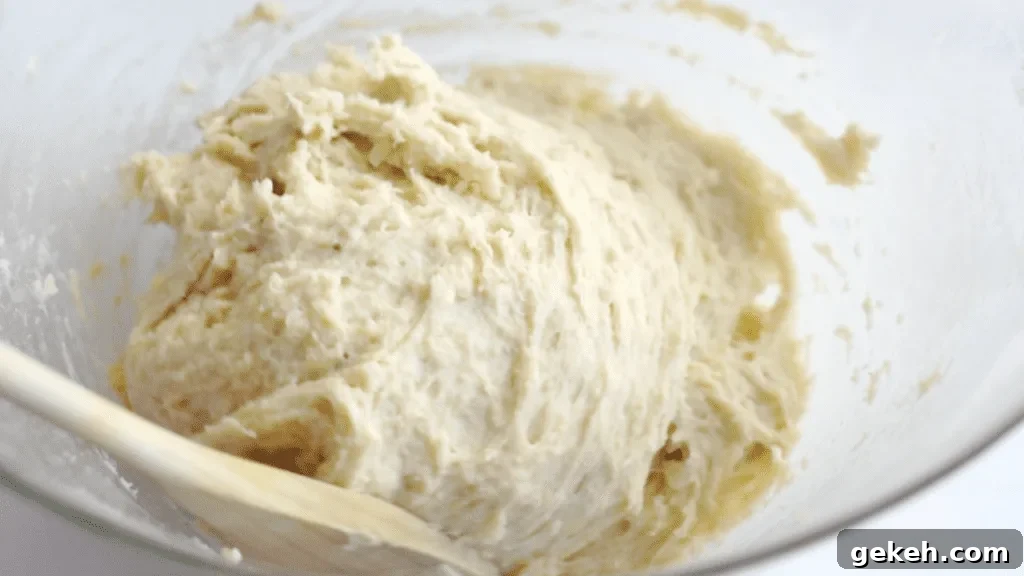
If using a stand mixer: combine the dry ingredients, then add the wet ingredients. Whisk on low for 30 seconds, then on high for 3 minutes. Switch to the dough hook and mix until the dough pulls away from the bowl and forms a ball.
2. First proofing
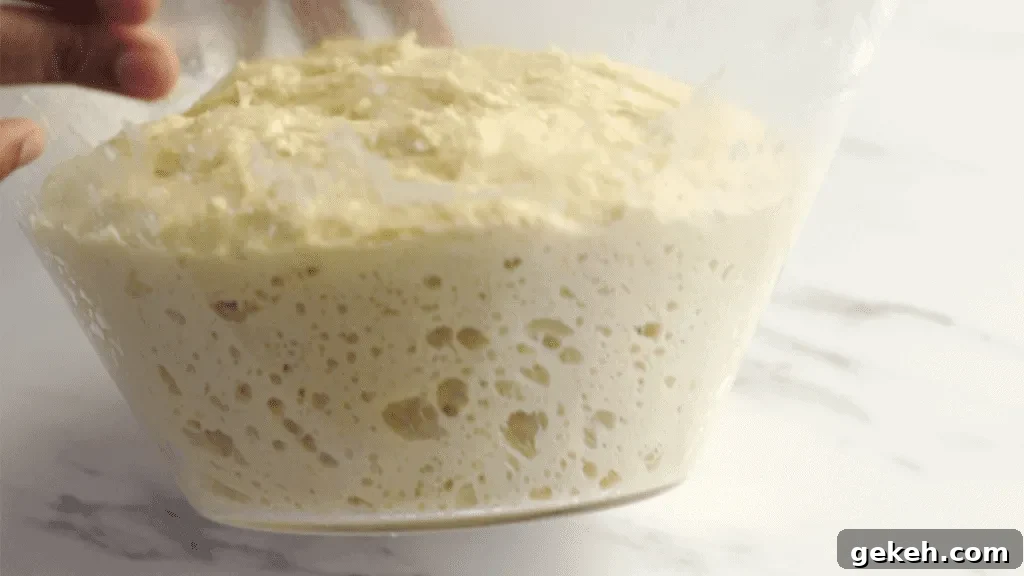
Cover the bowl with plastic wrap and let the dough rise in a warm place until doubled in size, about 90 minutes. Mashed potatoes help the dough rise reliably.
3. Divide and shape
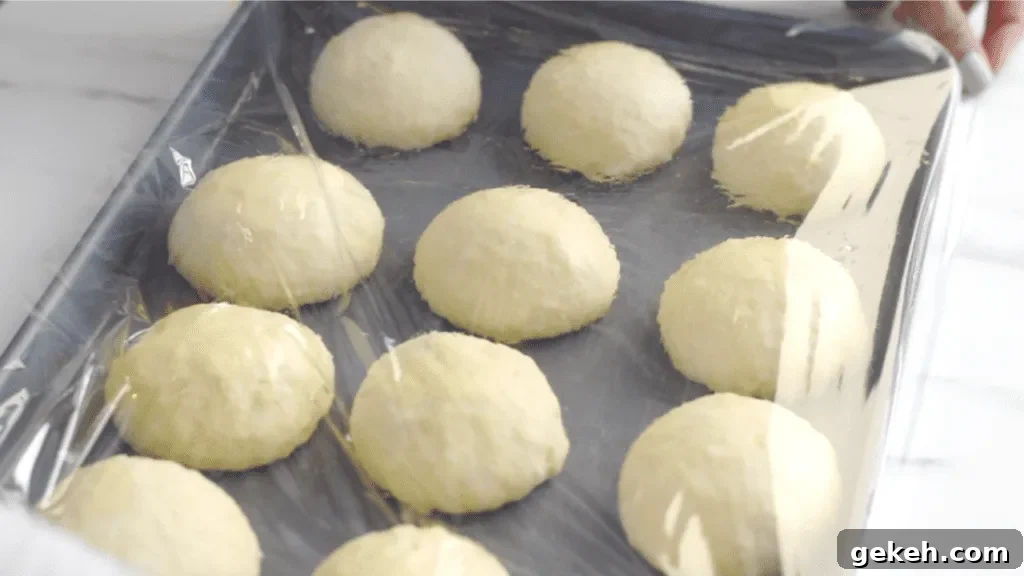
Turn the dough out onto a lightly floured surface and gently degas. This dough is sticky, so add just enough flour to handle it — too much will make the buns dense. Portion the dough into equal pieces by dividing the mass into quarters and then into smaller pieces. Shape each portion into a round ball by tucking edges under and rolling gently. Place the balls on a greased or parchment-lined baking tray.
4. Second proofing
Let the shaped buns rise again until puffy, about 30–40 minutes. Before baking, brush each bun with egg wash (1 beaten egg + 1 tablespoon milk) for a shiny, golden crust.
5. Bake
Preheat the oven to 350°F (175°C). Bake the buns on the lowest oven rack for about 20–25 minutes, depending on size. Smaller rolls will bake faster. Using the lower rack helps brown the crust evenly while ensuring the interior cooks through.
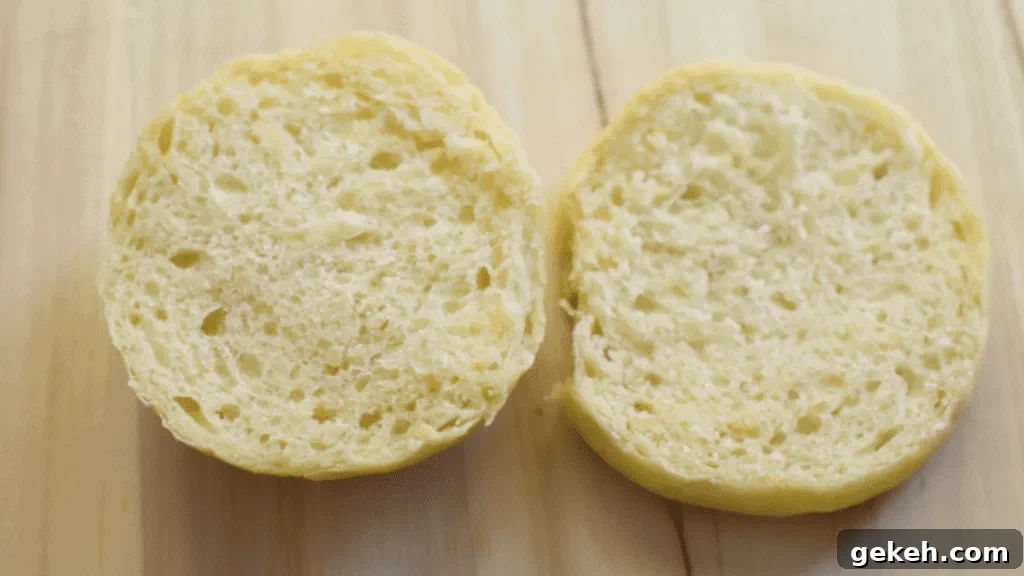
This easy potato bun recipe is a family favorite. Shape them however you like and enjoy warm with butter, honey, or as burger buns.
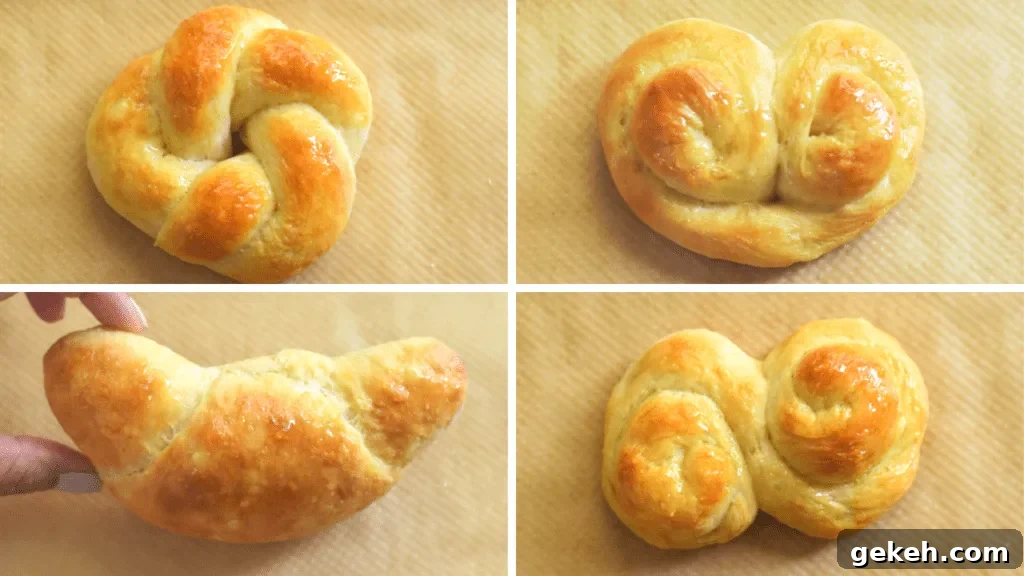
Happy baking!
Potato Bun Recipe
Soft, light, and fluffy potato rolls made in five simple steps.
Ingredients
- 325 g all-purpose flour (about 2 1/2 cups)
- 90 g whole wheat flour (about 3/4 cup)
- 310 g mashed potatoes (about 1 1/3 cups)
- 1 tsp active dry yeast
- 2 tbsp sugar (25 g)
- 1 1/2 tsp salt
- 3 tbsp butter (about 42.6 g)
- 1 egg
- 120 ml water (or potato starch water, or a mix)
Instructions
- Prepare the dough: Mix dry ingredients. Add mashed potatoes, water, egg, and butter. Stir until the dough is uniform. No intensive kneading required.
- First proof: Cover and let rise in a warm place until doubled, about 90 minutes.
- Divide and shape: Turn out onto a lightly floured surface. Divide into equal pieces and shape into rounds. Place on a greased or parchment-lined tray.
- Second proof: Let the buns rise until puffy, about 30–40 minutes. Brush with egg wash for a shiny crust.
- Bake: Bake at 350°F (175°C) for 20–25 minutes, adjusting for roll size. Use a lower rack for even browning.
Nutrition
Calories per bun: 145 kcal