[donotprint]
I’ve received a few questions recently about my favorite pie crusts. The truth is it depends on the recipe and how much time I have. When I’m making pie, I generally use one of two crusts — both simple, reliable, and suitable for home baking.
My go-to is what I call the “cheater’s pie crust.” It requires no rolling yet delivers a flaky, buttery crust that tastes homemade. When I serve pies or quiches made with this no-roll method, people are often surprised to learn I didn’t roll the dough. Many home bakers avoid making scratch pie crust because rolling the dough feels intimidating. I used to feel the same until I discovered this easier no-roll technique.
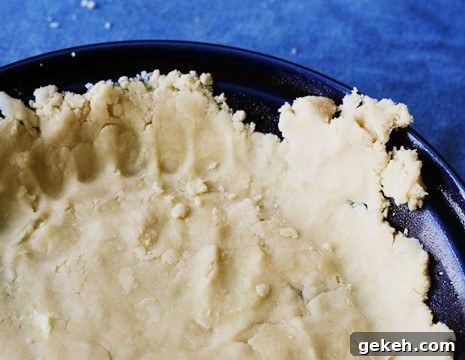
The key to the no-roll crust is a food processor to cut the fat into the flour, then pressing the dough directly into the pie plate until it’s evenly covered. If you don’t have a food processor, a fork or your fingers work fine — the processor just speeds things up and makes the texture very consistent. This technique works best for pies and quiches that require a bottom and side shell. If your recipe calls for a top crust, that portion will need to be rolled out separately.
For a pretty edge, use leftover dough to form strands by rolling small pieces between your palms until they form thin ropes. Lay the rope around the rim of the pie and press or crimp with the back of a fork for a clean, attractive finish, or use your thumb and forefinger to create a fluted edge. When the pie comes out of the oven, people will assume you spent a lot of time on the crust — your secret is safe with me.
I’ve used this no-roll method for recipes such as the Cherry Pie and Sweet Potato Pie found on Savory Sweet Life.
The second crust I use when pressed for time is a store-bought refrigerated pie crust, such as Pillsbury. The package typically contains two crusts; you unroll one, press it into the pie plate, and you’re done. I’ve tried generic refrigerated crusts as well, but I prefer the texture and fit of the Pillsbury crust. I avoid frozen crusts that come pre-formed in aluminum pans because they often look too commercial and small. If you’re going to shortcut, choosing a good-quality refrigerated crust helps the finished pie look more homemade.
I recently used a store-bought crust for the Spinach Ricotta Quiche recipe featured on Savory Sweet Life.
Now you know my pie crust secrets. If you keep them, I’ll keep mine. Deal? Deal.
[/donotprint]
Alice’s No-Roll Pie Crust Recipe
Ingredients:
Makes 1 shell
- 1 1/2 cups all-purpose flour
- 1/2 stick cold butter (4 tbsp), cubed
- 4 tbsp shortening
- Pinch of salt
- 1 tbsp sugar for sweet pies (omit for savory)
- 1 tsp white vinegar
- Up to 2 tbsp cold water, added as needed
Directions:
Into a food processor, pulse the flour, butter, shortening, salt, and sugar until the mixture resembles coarse cornmeal. If you don’t have a processor, use a fork or your fingers to cut the fat into the flour. Add the vinegar, then add cold water a half tablespoon at a time until the dough holds together. You want enough moisture that the dough is workable but not wet or sticky — add water sparingly.
Instead of rolling, take handfuls of dough and press them evenly into a pie plate coated with nonstick spray, aiming for an even thickness of about 1/8 inch. Reserve any extra dough to form a thin strand by rolling it between your palms, then place that strand around the rim and crimp with a fork or fingers for a finished edge. This crust works for any recipe that calls for a single pie shell.
Tip: Prick the bottom of the crust all over with a fork before baking to prevent bubbling.