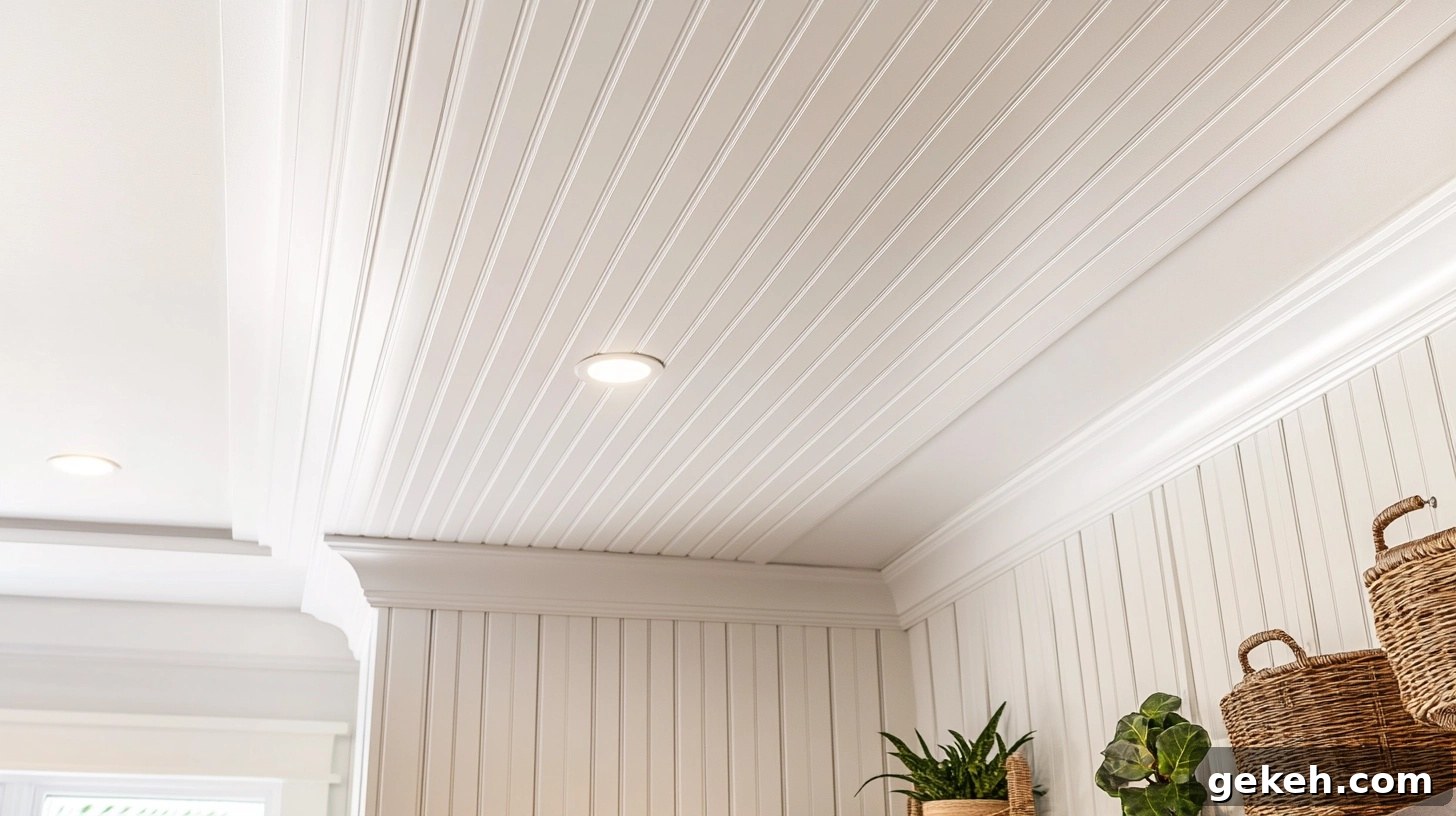
Are you tired of a dull, damaged, or outdated ceiling? Many homes show ceiling issues like cracks, stains, or old popcorn texture. One attractive and practical solution is installing beadboard on the ceiling. It’s relatively easy to install, budget-friendly, and enhances the look of almost any room.
This article explains what beadboard is, where it works best, how to install it, design suggestions, and common pitfalls to avoid. If you’re planning to refresh your ceiling, this guide provides clear steps and useful ideas to help you decide whether a beadboard ceiling is right for your space.
What Is a Beadboard Ceiling and Why Use It?
Beadboard consists of wood or engineered panels featuring evenly spaced grooves, or “beads.” Once popular in Victorian and cottage-style homes, beadboard adds visual texture and timeless character. It was traditionally used for wainscoting and ceilings in farmhouses and cottages and now comes in several formats to suit different needs:
- Panels: Large sheets that cover more area quickly and work well over existing ceilings.
- Planks: Narrow, tongue-and-groove boards that deliver an authentic, traditional appearance.
- Tiles: Lightweight foam or fiberboard tiles that provide fast, easy coverage and are often simpler to handle.
Beadboard does more than enhance aesthetics. It lends a classic or coastal feel, draws the eye upward to add visual interest, and effectively hides imperfections like popcorn texture or drywall marks. Compared with a full ceiling replacement, beadboard is a cost-effective option. It can be painted any color to match trim or walls and updated later with minimal effort.
DIY Beadboard Ceiling: Step-by-Step Guide
Installing a beadboard ceiling requires planning and patience but is feasible for a determined DIYer. Below are the essential tools, materials, and steps to complete the job.
Tools and Supplies
- Tape measure
- Level
- Pencil
- Saw (circular or miter saw recommended)
- Hammer
- Nails or screws
- Construction adhesive
- Safety gear (gloves, goggles, mask)
- Paintbrush or roller if painting
- Ladder or scaffold for ceiling access
Step 1: Plan the Layout
Measure the ceiling and mark the placement of each board or panel. Arrange boards so seams land near edges and cuts are unobtrusive, creating a balanced, professional appearance. Identify light fixtures, vents, and other obstructions and plan how to work around them before cutting or fastening materials.
Step 2: Installing Over Joists or Drywall
If the ceiling exposes joists, fasten boards directly to the wood. If there’s existing drywall, locate the ceiling joists or use suitable anchors. Adhesive helps hold panels in place while you fasten them. Always ensure panels are flat and level as you work.
Step 3: Use Adhesive, Nails, and Screws
For the most secure installation, combine construction adhesive with mechanical fasteners. Apply adhesive to the back of panels to hold them temporarily, then finish with nails or screws. Fasten into the tongue edge where possible so the fasteners are less visible. Press boards tightly together to avoid gaps along seams.
Step 4: Trim, Paint, and Finish
After installing the beadboard, add trim or crown molding along edges to hide rough cuts and create a finished look. Fill nail holes and seams with caulk or wood filler. Sand if needed, then paint or stain to match your room’s palette. A clean finish elevates the installation and produces a polished result.
Video note: The original article referenced a video for additional details. If you choose to consult video guidance, look for reputable tutorials that match the materials and techniques you plan to use.
Where to Use Beadboard Ceilings
Beadboard works well in most rooms and can transform a space by adding texture and hiding ceiling flaws. Below are recommended locations and considerations for each.
Kitchens and Dining Rooms
Beadboard creates a cozy, traditional feel in kitchens and dining areas and helps visually lift the space. In humid kitchens, use a moisture-resistant finish or a painted surface that can withstand steam and cooking-related humidity.
Bathrooms
Bathrooms demand moisture-resistant options. Choose vinyl beadboard or properly sealed wood and high-quality, water-resistant paint to prevent swelling and peeling. With the right materials, beadboard can add a spa-like calm to a bathroom while concealing imperfections.
Bedrooms and Living Areas
In bedrooms and living rooms, beadboard adds warmth and texture. It’s effective across an entire ceiling or used within a bordered center panel. Both painted and natural wood finishes work well depending on the desired mood—bright and airy or warm and rustic.
Porches and Covered Outdoor Spaces
Beadboard suits covered porches and sunrooms when constructed from vinyl or treated wood to resist humidity, rain, and temperature changes. Properly chosen materials make exterior beadboard installations durable and visually cohesive with the rest of the home.
Design Ideas
Beadboard adapts to many styles, from cottage to contemporary. Here are some direction ideas:
Cottage and Farmhouse
Use soft white or off-white painted planks and consider adding exposed beams for warmth. This approach creates a welcoming, country-inspired atmosphere suitable for kitchens, hallways, and bedrooms.
Beach-Inspired
Light blue or soft gray beadboard evokes a coastal feel, especially in bathrooms, porches, or sunrooms. Pair with white trim and light wood tones for a breezy, open ambiance.
Contemporary
For a modern look, choose narrower boards, match the beadboard color to the ceiling or trim, and consider darker hues like navy or charcoal for dramatic impact. White keeps the style crisp and minimal.
Painted vs. Natural Finish
Painted beadboard offers endless color options, from classic white to bold accents. Natural finishes—clear-coated or stained wood—highlight the grain and provide a rustic, textured appearance. Select the finish that best complements your room’s aesthetic.
Common Mistakes to Avoid
Watch for these common errors to ensure a successful ceiling installation:
- Don’t install over sagging ceilings—repair any droop or unevenness first.
- Measure and locate joists accurately; don’t guess their position.
- Use a strong adhesive designed for ceilings; standard wall glue may not hold heavy panels.
- Fasten into joists or solid backing rather than relying solely on drywall.
- Choose moisture-resistant materials in bathrooms and outdoor areas to prevent warping.
- Carefully plan the layout to avoid uneven rows or awkward edge gaps.
Conclusion
Beadboard is a versatile, attractive solution for updating ceilings, concealing imperfections, and adding character across many rooms. You’ve learned about different materials, installation steps, design options, and common pitfalls to avoid. A beadboard ceiling can be a manageable DIY project that significantly improves your space’s look and feel—just take it step by step and choose materials suited to your environment.
If you want more project ideas or detailed techniques, consider exploring additional resources or guides that match your specific materials and room conditions.