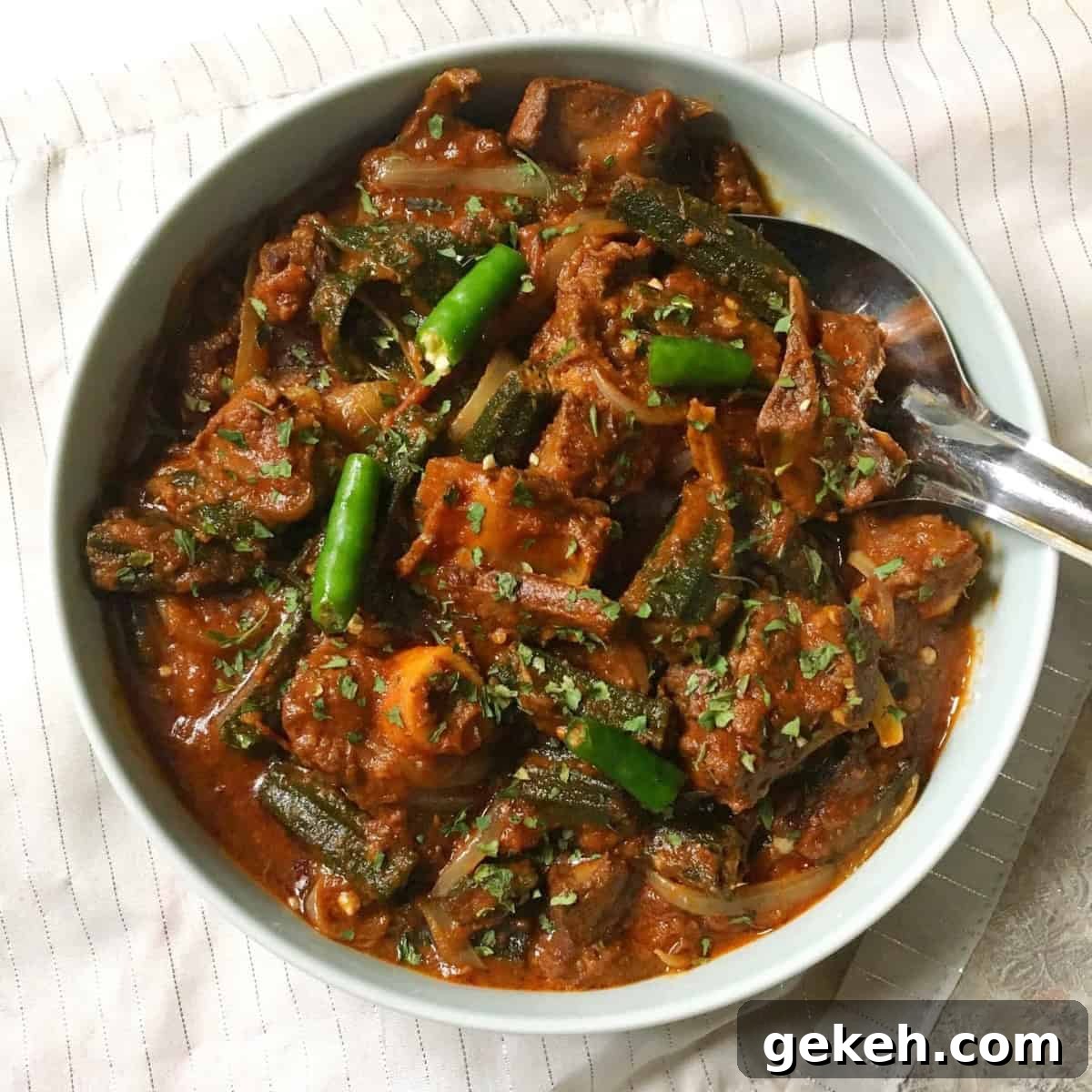
Pakistanis have a well-known tendency to combine vegetables with meat, and I’ll be honest — in my childhood home vegetables rarely appeared on the plate without some meat alongside. We love adding lamb or chicken to simple veggies, and bhindi gosht (okra with lamb or mutton) is a perfect example.
We often justify it by saying “there’s okra in it, so it’s healthy” or “it’s a good way to get vegetables in.” Some people even insist they wouldn’t eat certain vegetables at all unless they’re cooked with meat. Other familiar combinations include karela gosht (bitter gourd and meat), phali gosht (green beans with meat) and palak murgh (spinach with chicken).
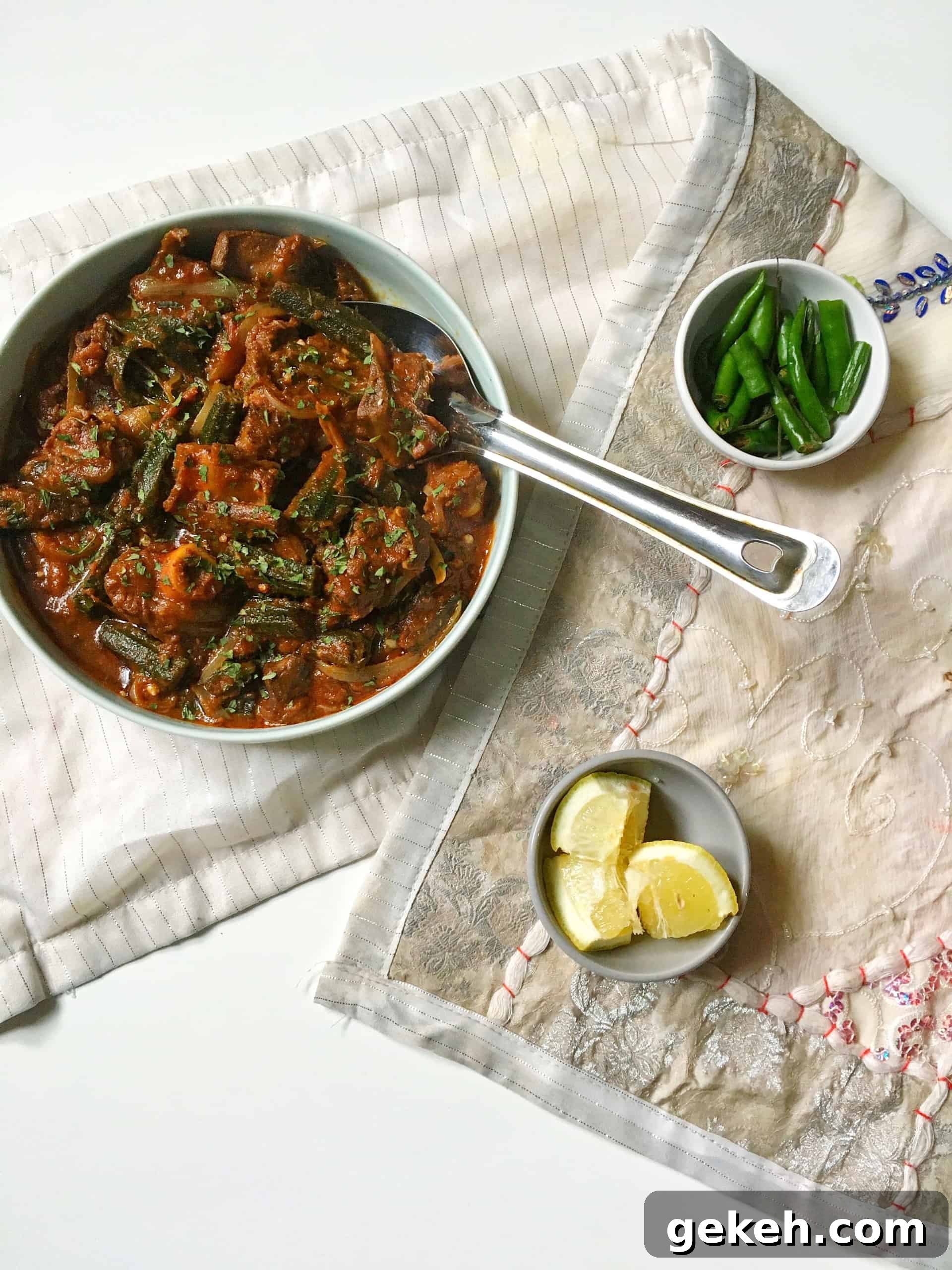
When the COVID-19 pandemic hit, my local Tesco had been picked clean by panic buying. I could only find a few fresh items, including okra — bhindi — which reminded me I hadn’t made bhindi gosht in ages. My original plan was aloo gosht (potato and meat curry), but with potatoes unavailable I grabbed the okra and decided to revive this favourite.
(And no, there was no hand sanitiser or tissues to be found either.)
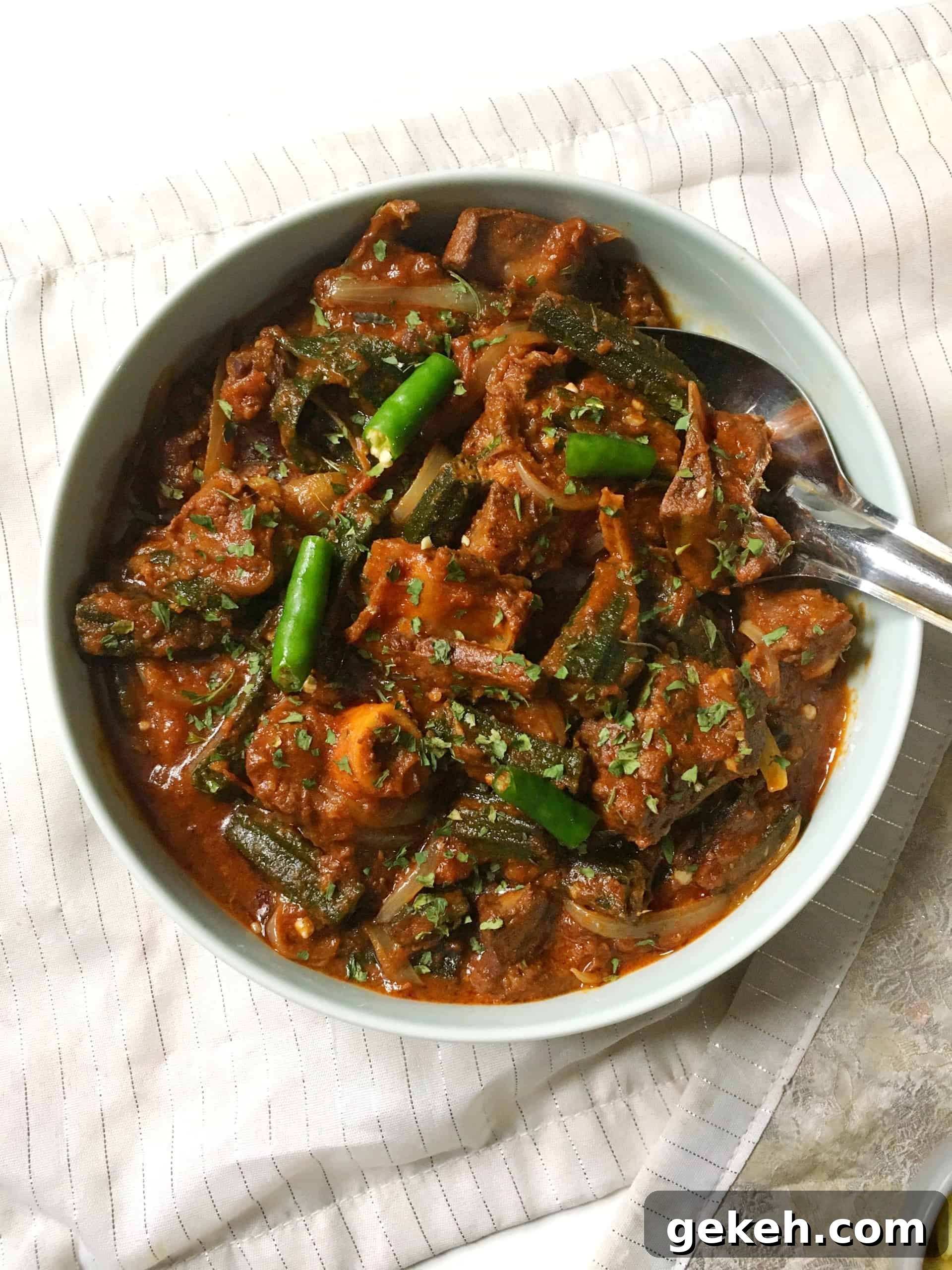
I used to make bhindi gosht regularly early in my marriage, but it slipped out of my routine. Revisiting it reminded me how much I enjoy it — and I’ve resolved to buy that overlooked packet of okra more often.
A useful rule of thumb I learned is to use roughly double the quantity of meat compared to okra, and to keep the amounts of onions and tomatoes similar to the okra. If that sounds too precise, don’t worry — exact quantities are included in the recipe below.
🥄 Method
Below is a step-by-step method with photos. The complete recipe with quantities is at the bottom.
Prep the okra by washing it and allowing it to air-dry. Trim the ends and cut into halves or 1″ segments. If the okra is very short, you can leave it whole.
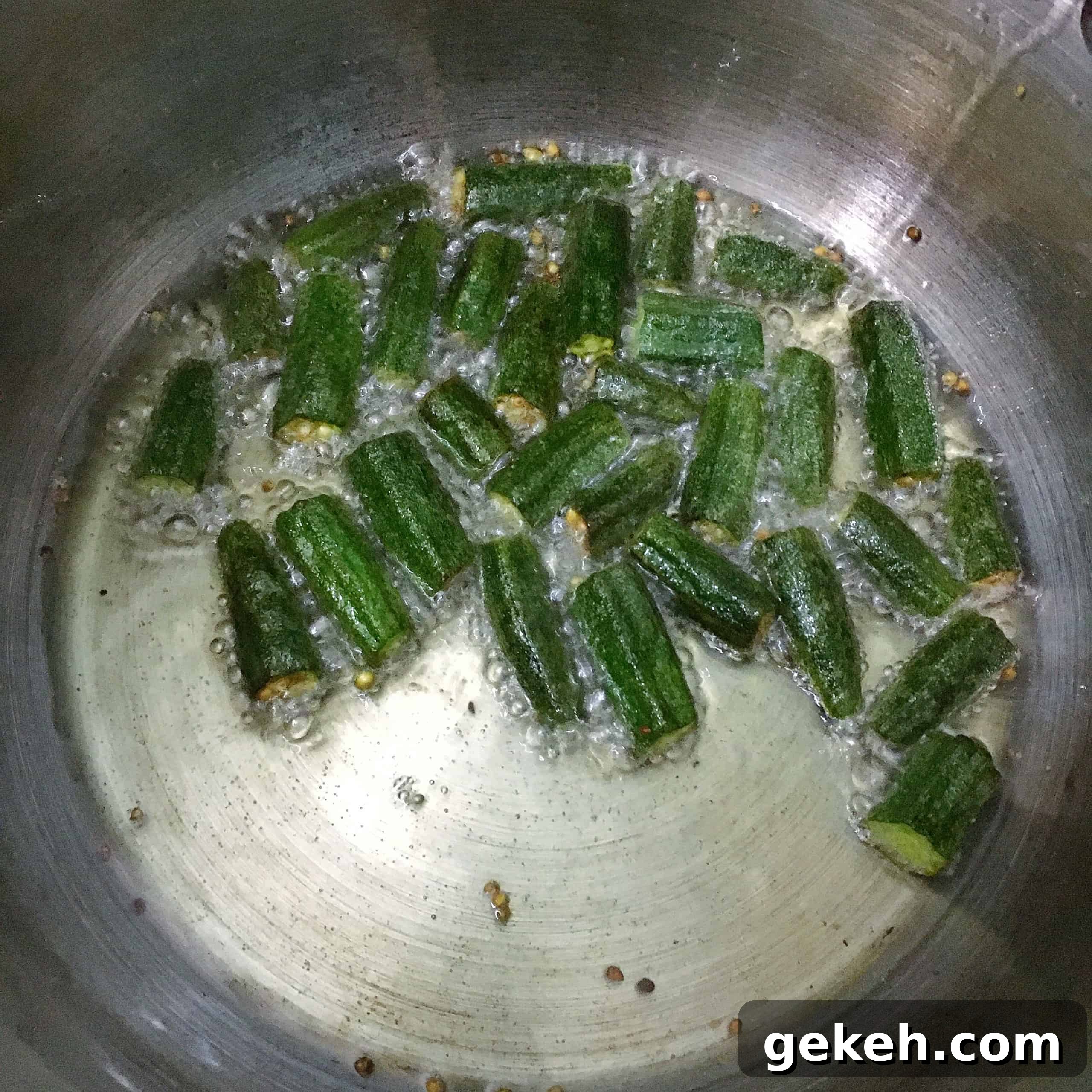
Begin by frying the chopped okra in hot oil for a few minutes. This reduces the slimy texture that can be off-putting to some. If you don’t mind a bit of slime, you can skip this step.
When the okra turns lightly golden, remove it with a slotted spoon and set it aside.
In the same pot, cook sliced onions over medium-high heat until they become translucent with a slight golden tint. Then add the meat, along with minced garlic and ginger, and fry until the meat is no longer pink.
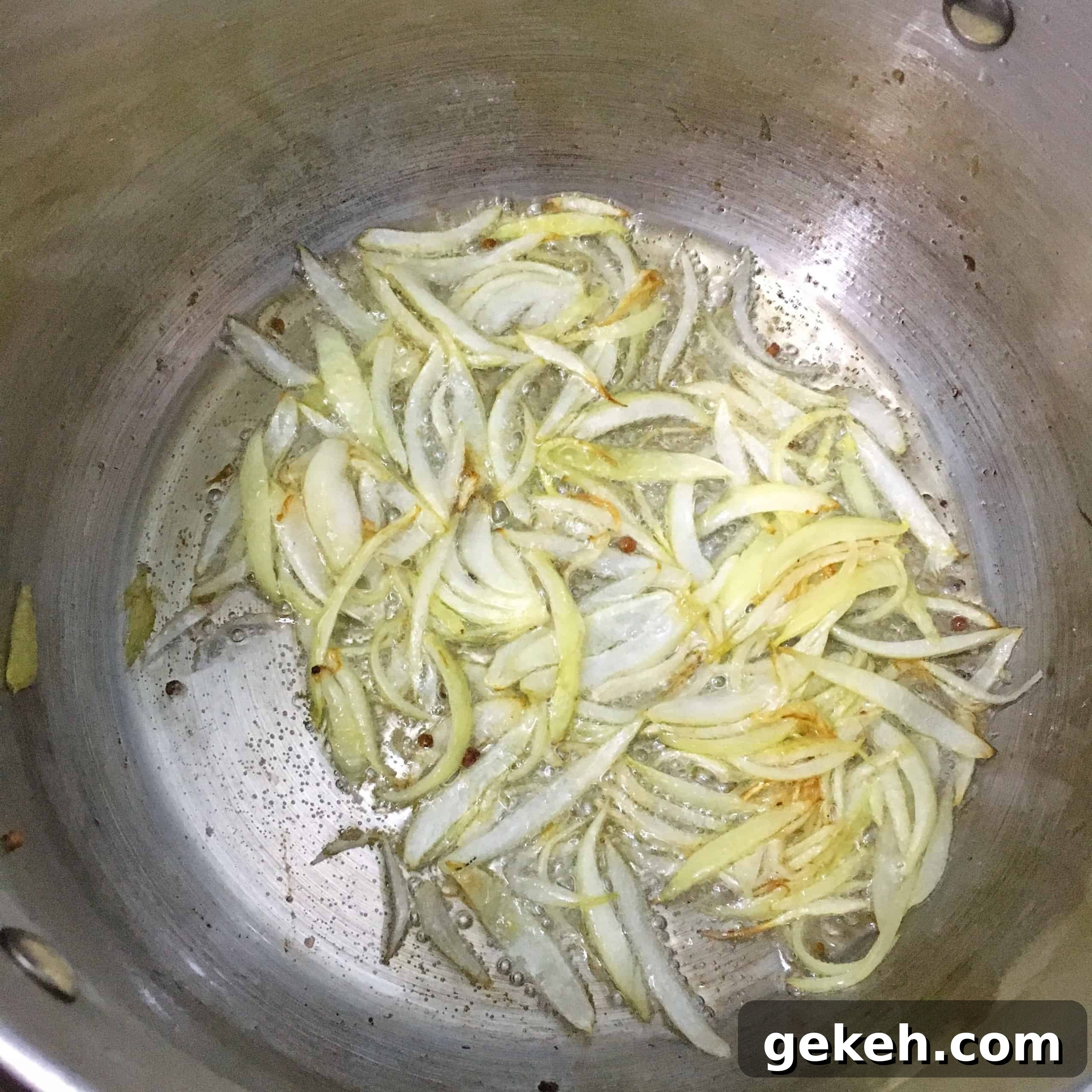
Add tomatoes, spices and water (see the recipe for exact amounts). Bring to a boil, cover, and simmer: about 1 hour for lamb, and around 1 hour 45 minutes or longer for tougher mutton. Cook until the meat is done but not falling apart — it should still hold its shape for the next step.
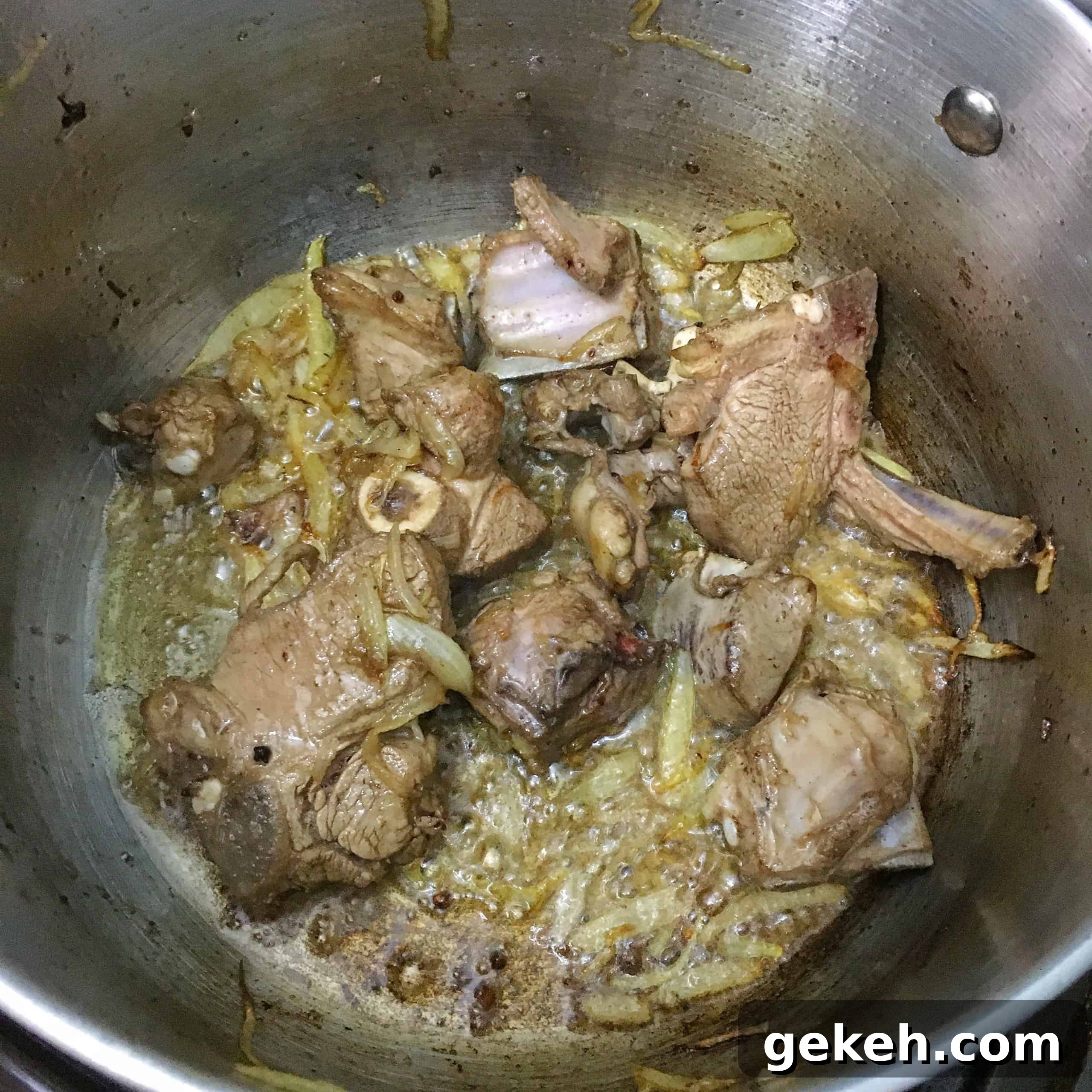
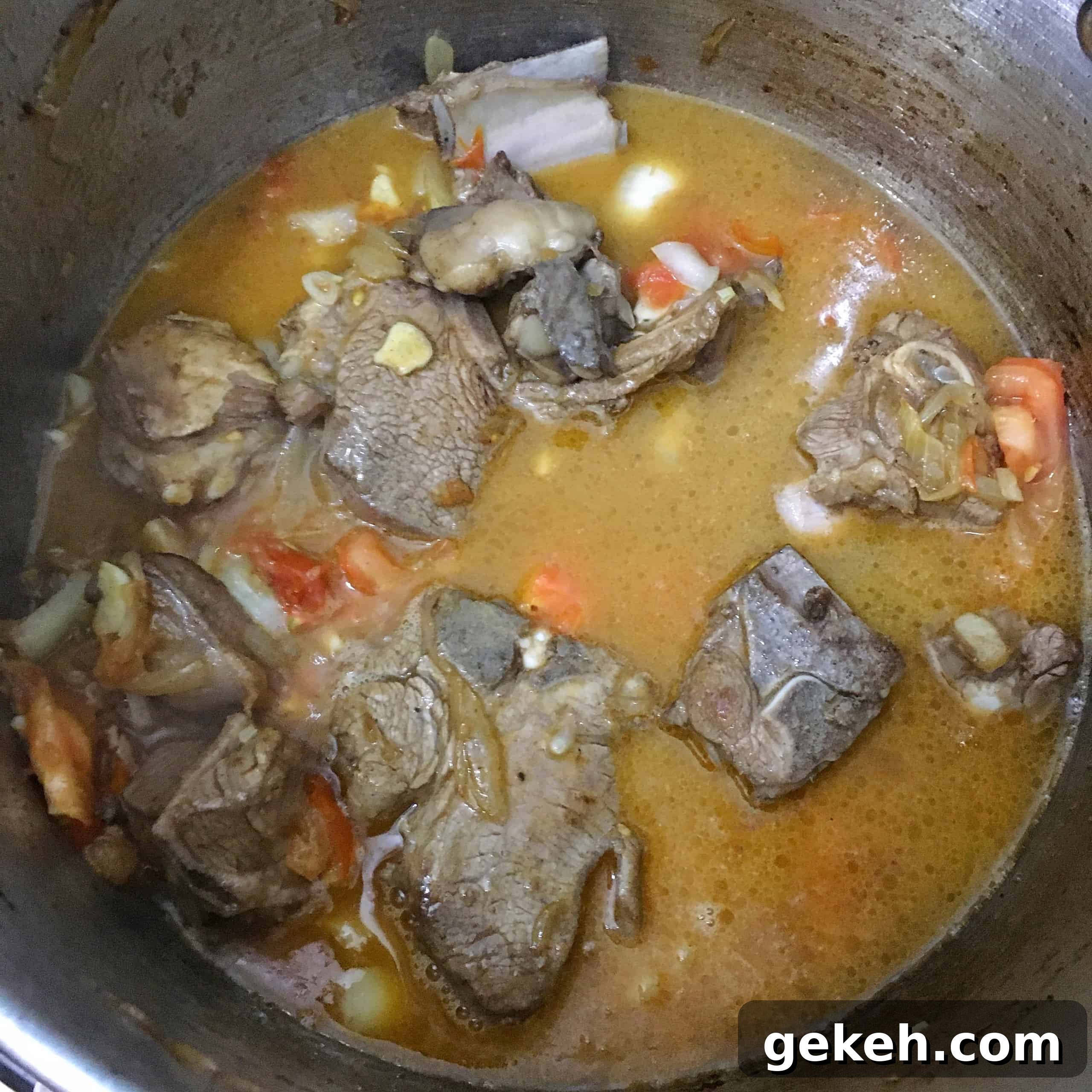
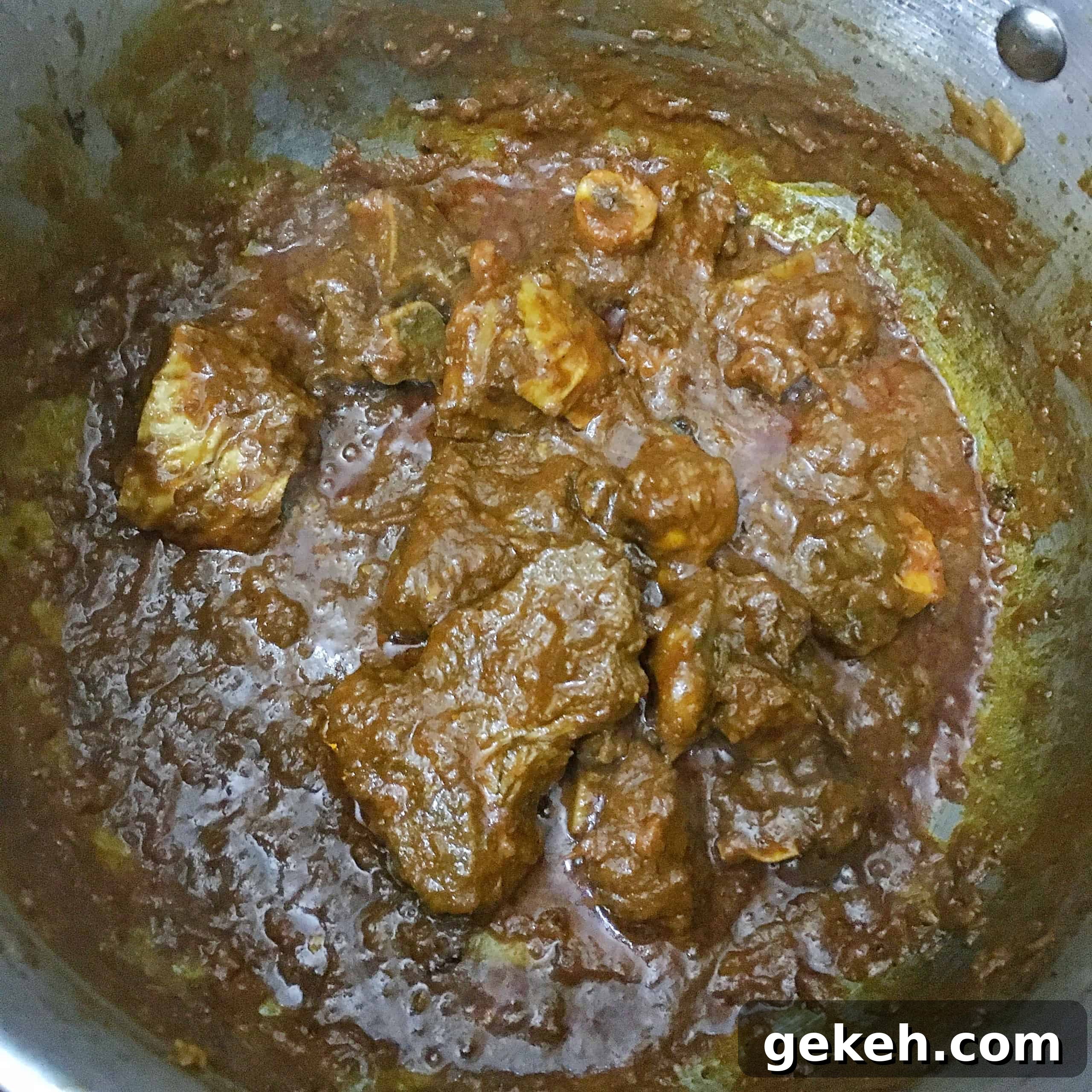
Remove the lid. Add a little oil and increase the heat to high. Start to “bhoon” — sauté over high heat to evaporate excess moisture while stirring constantly. Keep going until the sauce becomes glossy and thick and the oil separates to the top.
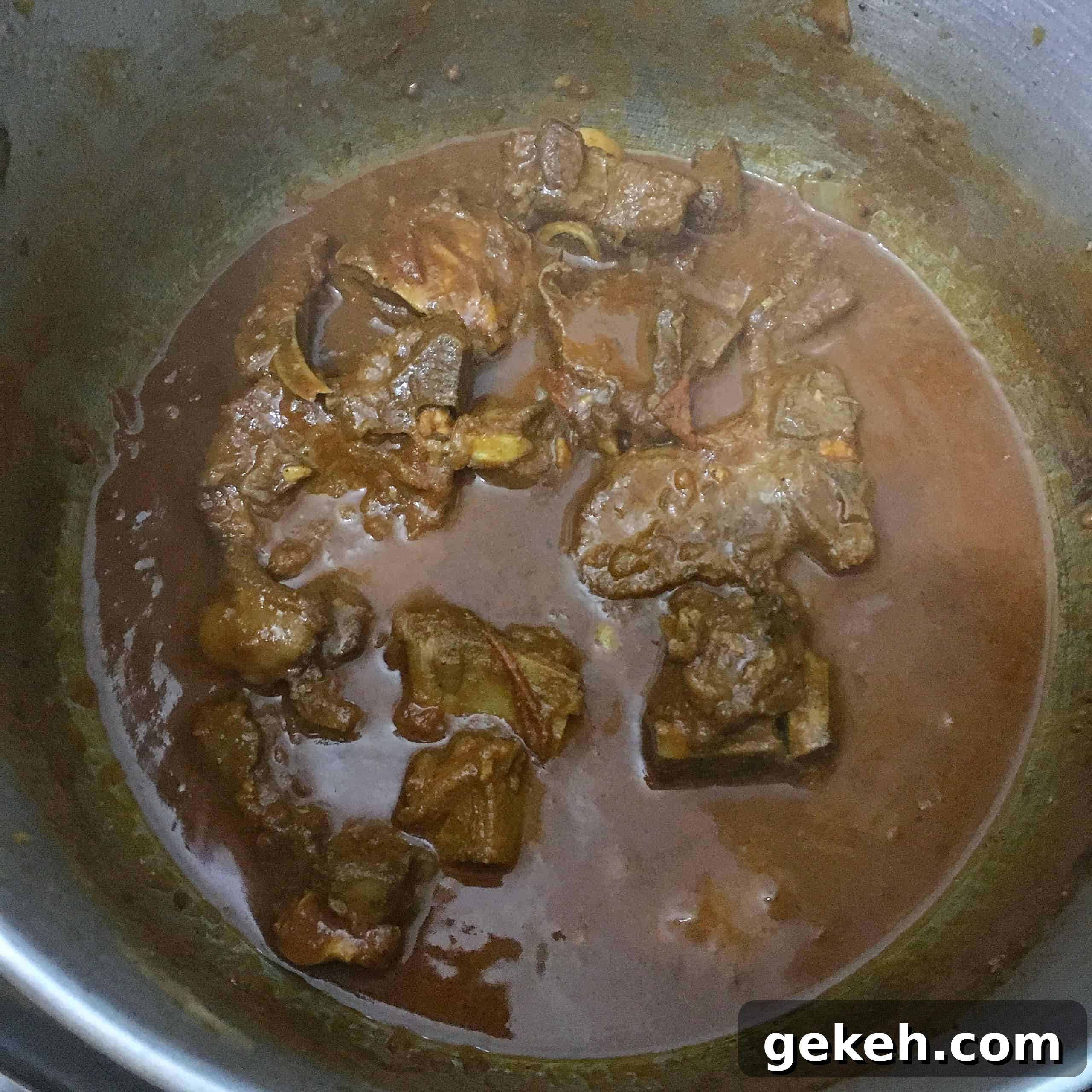
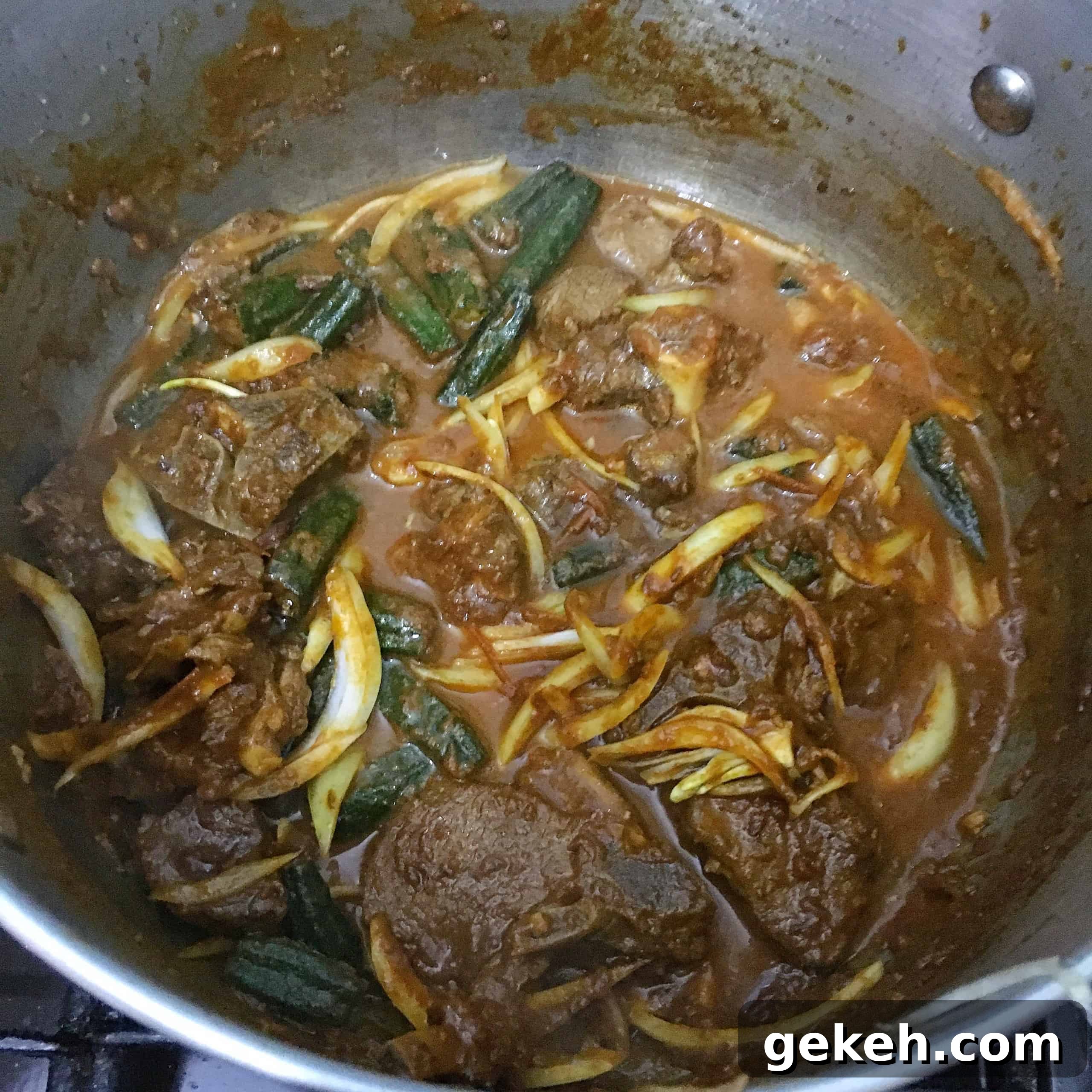
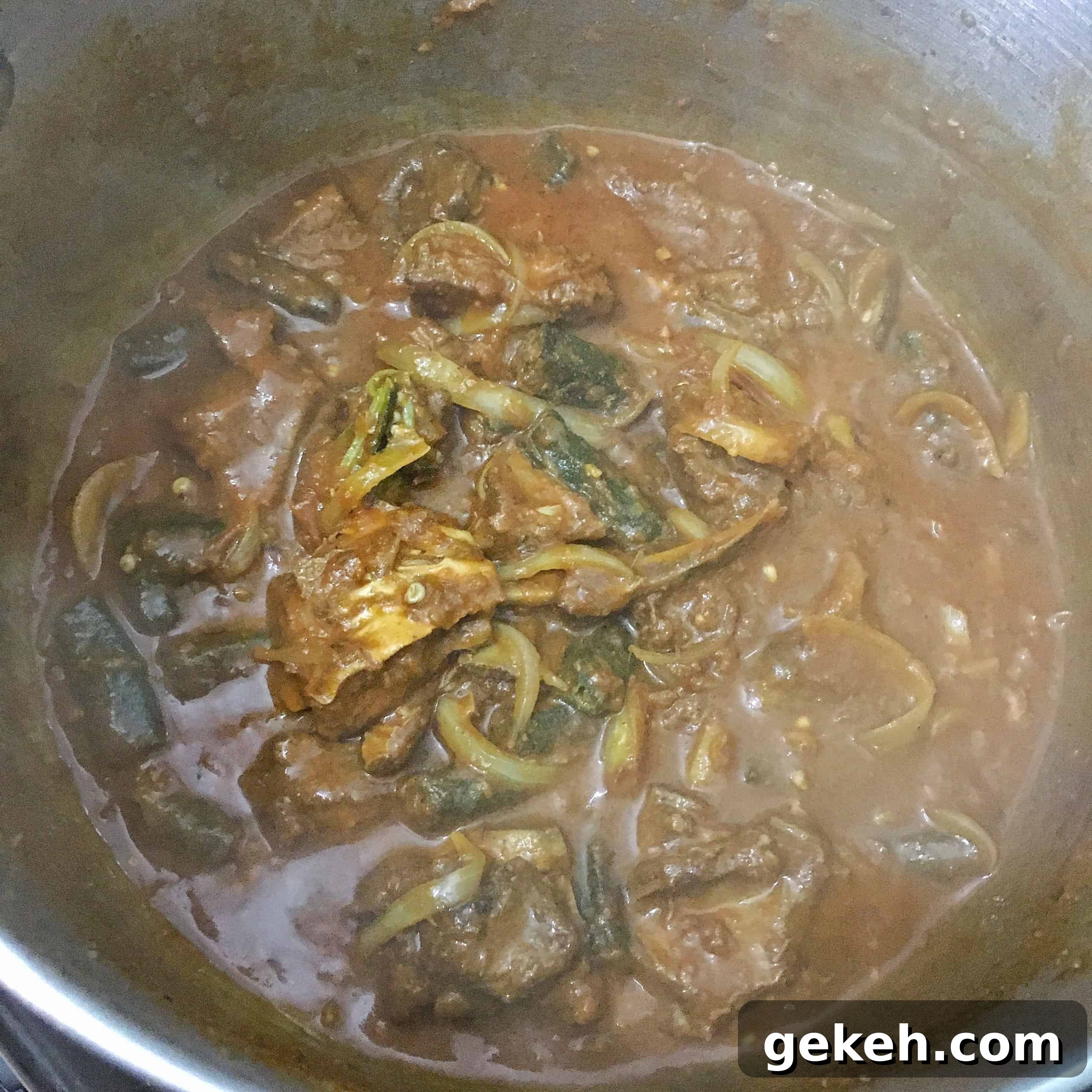
Add the reserved fried okra, the sliced onions set aside for the end, and a small splash of water to loosen the mixture. Cover and simmer on low for 10–15 minutes so the onions soften and the flavours combine.
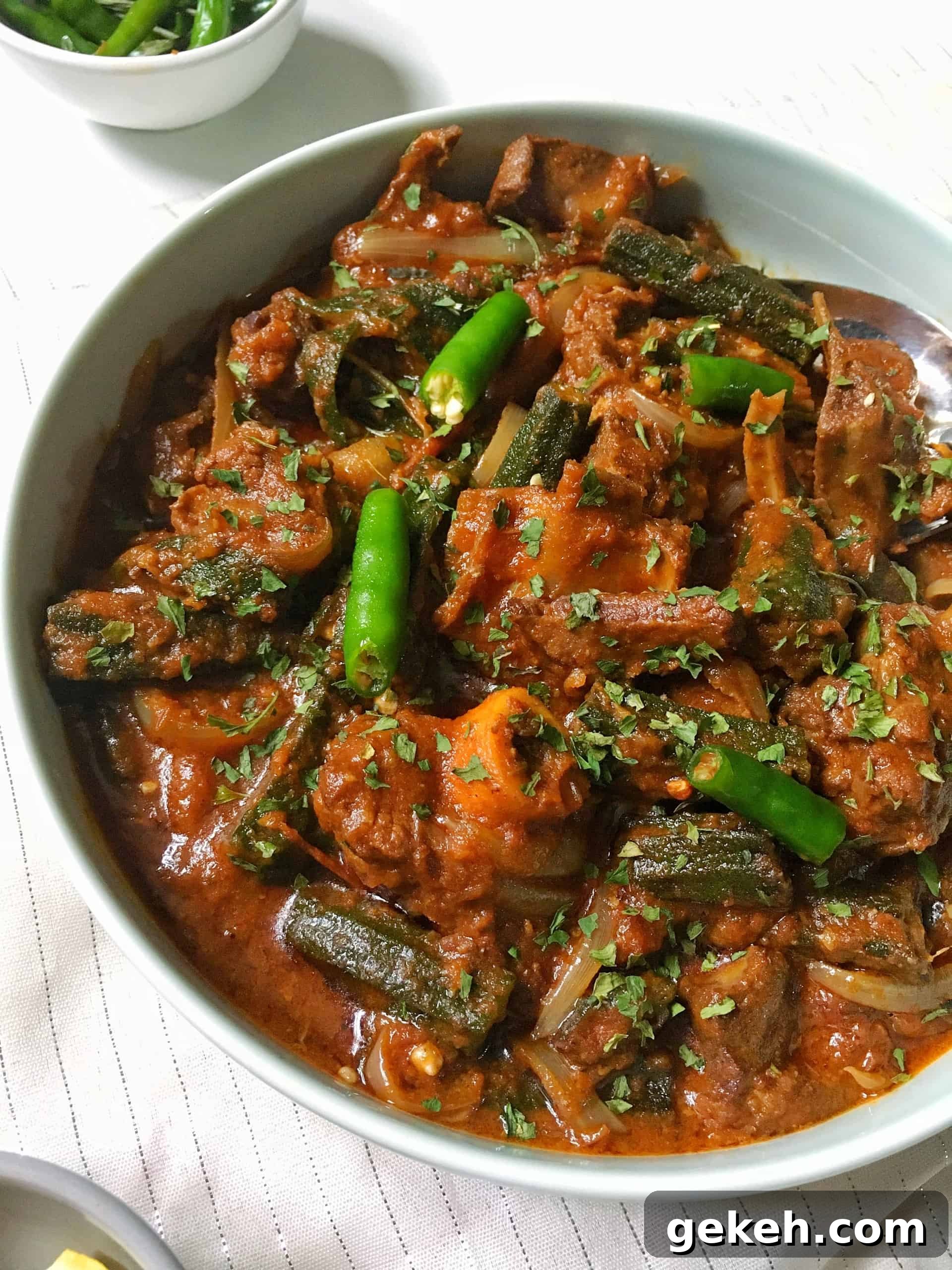
Finish by garnishing with chopped fresh coriander just before serving.
⭐ Tips and tricks
- Use fresh ingredients where possible. Fresh okra, tomatoes, ginger, garlic and coriander will give the best flavour. If fresh okra isn’t available, use the best substitute you can find.
- To reduce slime, fry the okra first. Frying the chopped okra before adding it to the curry helps remove the slimy texture. If you’re short on time or don’t mind the texture, you can skip this.
- Wash and fully dry okra before cutting. Washing and then air-drying or thoroughly patting the okra dry prevents excess slime when you slice it. Cutting wet okra releases more mucilage.
- Use paprika or Kashmiri red chilli powder for colour. These give a vibrant red hue without too much heat. Regular red chilli powder works too — just reduce the quantity if it’s spicier.
- Ratio tip: I like roughly double the amount of meat to okra. Feel free to adjust — if you want more okra, increase it and reduce some of the other vegetables proportionally (but keep the meat substantial).
- Add red onions at the end, if available. Sliced red onions added near the end give sweetness and bright colour. If you don’t have them, regular onions work fine.
On to the recipe — enjoy, with love x
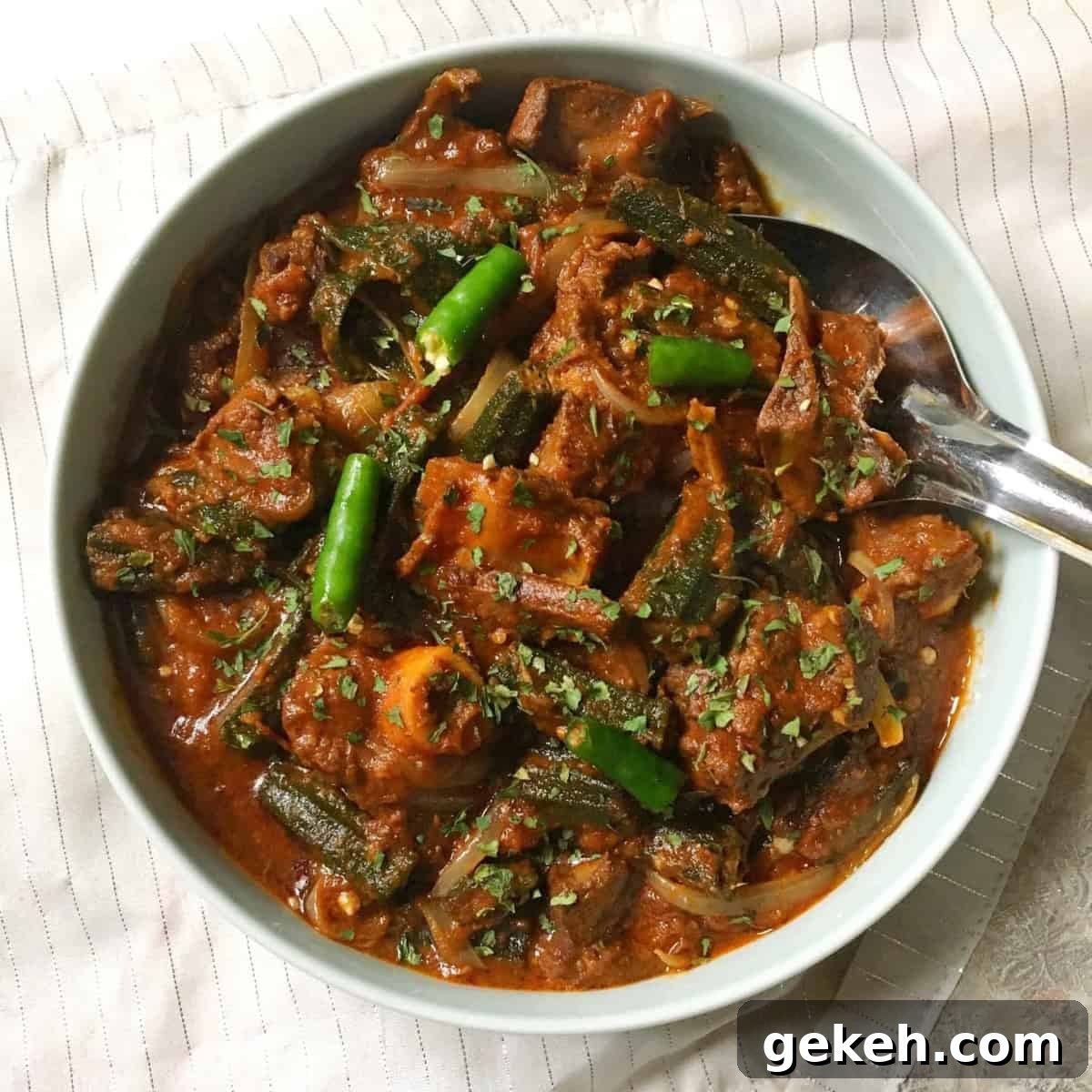
Bhindi Gosht Recipe – Okra with Lamb / Mutton Curry
Ingredients
- ½ cup (125 ml) oil
- 6 oz (175 g) fresh okra washed and chopped into 1″ segments with heads and tails chopped off
- 1 (150 g) medium-sized onion
- 0.8 lb (350 g) lamb or mutton, bone in
- 2 (175 g) small tomatoes, chopped
- 4 cloves garlic minced
- small chunk of ginger minced (about 1 tbsp)
- 1 teaspoon cumin seeds
- 2 teaspoon coriander powder
- 2 teaspoon paprika/kashmiri red chilli powder
- 2 teaspoon salt or to taste
- 0.5 teaspoon turmeric
- ½ (75 g) a medium sized onion, finely sliced to add at the end
- chopped coriander for garnishing
Instructions
- In a deep pot, heat the oil. Add the chopped okra and fry for about 5 minutes on medium-high heat until lightly golden.
- Remove the okra with a slotted spoon and set aside.
- Remove half the oil from the pot (you can reserve it for later use).
- Add the onions and fry on medium-high heat until they start to turn translucent.
- Add the meat, garlic and ginger. Fry, stirring often, until the meat is no longer pink.
- Add all the spices, tomatoes and 375ml (1.5 cups) water for lamb, or 750ml (3 cups) water for mutton.
- Bring to a boil, then cover and simmer: 1 hour for lamb, or 1 hour 45 minutes for mutton. Check occasionally to ensure there’s enough water and nothing is burning.
- Remove the lid. There should be some moisture in the pot.
- Turn the heat to high and cook off the moisture, stirring constantly, until the gravy thickens, starts to catch slightly at the pan and the oil separates.
- Add the reserved okra, the sliced onions for the end and 125ml (½ cup) water.
- Turn the heat to low, cover and simmer for 10–15 minutes.
- Garnish with chopped coriander just before serving. Enjoy!