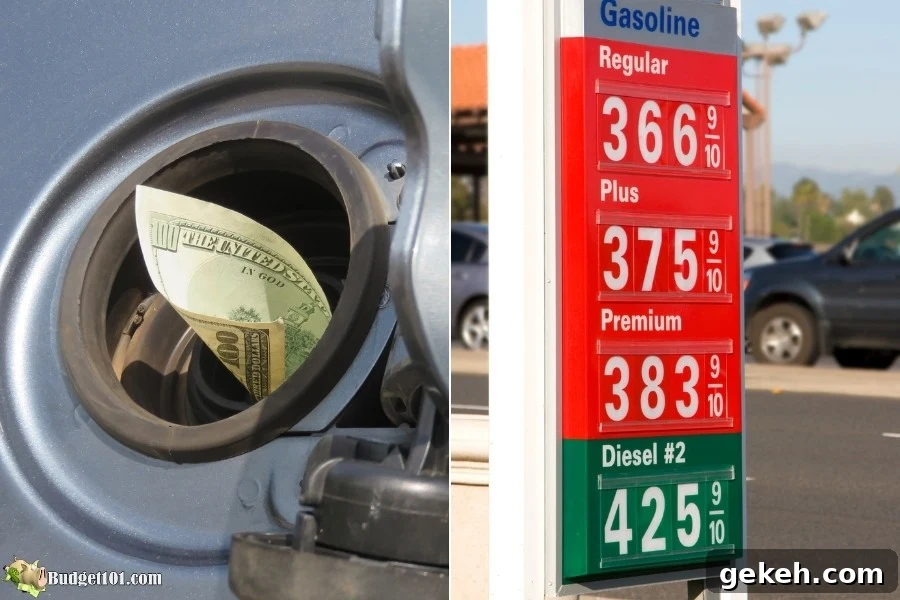
In our original piece, “Gas Tank: To Top or Not to Top,” we listed several strategies to reduce vehicle fuel costs. With current shortages and higher prices, here are a dozen more practical, easy-to-follow tips to stretch each tank of gas further.
12 More Tips for Stretching a Tank of Gas
 Many small maintenance tasks can be done at home without a trip to the service shop. One of the easiest is replacing a clogged air filter. When an air filter is dirty, the engine receives less air and runs a richer fuel mixture, which reduces fuel economy. A clogged filter can cost about 1 mpg, so check and replace it regularly. Air filters are inexpensive and widely available at department and auto stores.
 Change your oil on the manufacturer’s recommended schedule. Dirty oil increases engine friction and reduces efficiency. Changing your own oil is straightforward: use a wrench to remove the drain plug, catch the old oil in a container, and buy oil in bulk to save money. Always dispose of used oil responsibly at an authorized recycling site.
 Check the fan or drive belts. If a belt is too tight, the engine works harder and wastes fuel. With the engine off, the belt should have a small amount of give under finger pressure; if it’s overly tight you can usually adjust the tension with basic hand tools.
 Worn spark plugs reduce engine efficiency and can cost as much as 2 mpg. Replacing spark plugs is often best handled by a trained technician unless you’re comfortable working on engines.
 Consider alternatives to driving when possible. Public transit, cycling, walking, and carpooling can significantly lower your fuel use and transportation costs.
 Reduce unnecessary weight. Every extra pound requires more energy to move. Cutting about 200 pounds from your vehicle can typically improve fuel economy by nearly 5 percent. Remove heavy items from your trunk and avoid carrying unneeded cargo.
 Use the air conditioning sparingly. Running the A/C increases fuel consumption, especially in stop-and-go traffic. When weather permits, roll down the windows to save gas.
 Use cruise control on highways. Maintaining a steady speed on the open road reduces unnecessary acceleration and braking, which improves fuel efficiency.
 Plan trips to avoid peak traffic times. Starting early in the day or scheduling travel when traffic is lighter reduces time spent idling and in slow-moving traffic, saving both time and fuel.
 Avoid long idling. Warming your car briefly is fine, but extended idling wastes more fuel than restarting your engine. Modern engines warm up faster when driven gently, so limit idle time.
 Don’t rev the engine before shutting it off. High revs followed by an immediate shutdown can push raw fuel into the cylinder walls, washing away protective oil films and increasing engine wear while wasting fuel.
 Keep your tires properly inflated. Your owner’s manual lists the correct pressures. Underinflated tires increase rolling resistance and can reduce fuel economy by about 1 mpg. Consider radials if upgrading tires—radial construction generally lowers rolling resistance and can improve fuel economy by 3 to 19 percent, depending on tire design.
Submitted to Budget101.com discussion by Nancy Green.