
Today’s teen tidbit is number five, and it goes straight to the heart of what’s happening in your teenager’s mind right now.
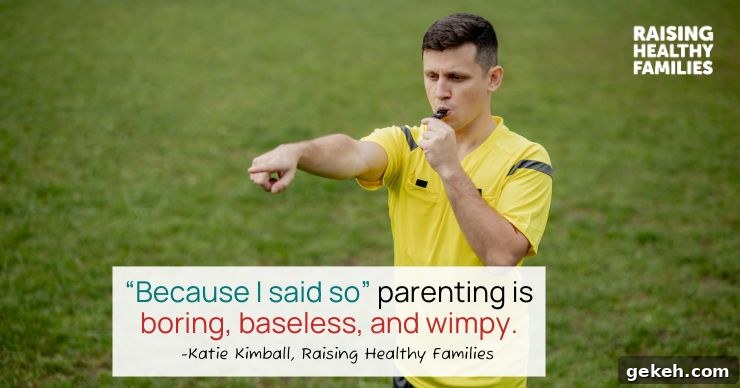
Around ages 11 or 12, many children shift from thinking in black-and-white terms to noticing nuance, complexity, and questions—so “because I said so” often loses its power. That change is a healthy part of development, not a problem to be fixed.
In this short episode, we’ll explain why teens are inclined to push boundaries, why that behavior is developmentally appropriate, and how parents can respond effectively by maintaining clear limits while also inviting conversation, offering choices, and fostering understanding. I’ll also share how cooking became one of my favorite safe places to practice these skills, including when it’s okay to bend a rule and when a rule exists for an important reason.
Let’s dive in.
Check out Teens Cook Real Food at raisinghealthyfamilies.com/teens
Find all the episodes of the Healthy Parenting Handbook here, or wherever you get your podcasts:
Don’t forget to leave us a review on Apple Podcasts too! Thank you!
Can’t see the video? Watch here on YouTube!
No time for the video? Here are the notes.
Time Stamps for Passing on Healthy Boundaries for Teens
0:59 – The world your teen sees isn’t black and white anymore. By about 11 or 12 years old, they’ve been exposed to more information and perspectives. This makes them more likely to ask “why” about rules and boundaries.
We can show teens how to test and how to break boundaries appropriately. – Katie Kimball, Raising Healthy Families
2:18 – There still needs to be a clear level of respect. While teens should be allowed to question and push, parents should not simply permit rule-breaking without context.
2:33 – Empower teens by inviting them into the conversation about certain boundaries. When teens feel heard, they’re more likely to accept limits.
3:15 – I share an example from cooking where I intentionally stretched a rule and explained the reasoning to the teens in Teens Cook Real Food.
4:03 – How do you decide when to relax a boundary? Consider the purpose of the rule, the level of risk, and whether bending it will teach responsibility.
Teaching teens anything where you can give them choices and give them opportunities to push boundaries is wonderful. – Katie Kimball, Raising Healthy Families
4:44 – From students I learned that some “rules”—like how to peel a cucumber—have room for flexibility.
5:11 – A teen once learned a lesson when he tasted cumin powder off his finger—small experiments can be memorable learning moments.
5:50 – If a rule involves a moral or ethical issue, it should remain firm. But for practical or stylistic rules, admitting when you’re willing to be flexible and collaborating with your teen can strengthen your relationship.
Resources We Mention for Boundaries for Teens
- Teens Cook Real Food course
- Teen Tidbit 1 on ownership
- Teen Tidbit 2 on agency
- Teen Tidbit 3 on overcoming perfectionism
- Teen Tidbit 4 on passing on family values