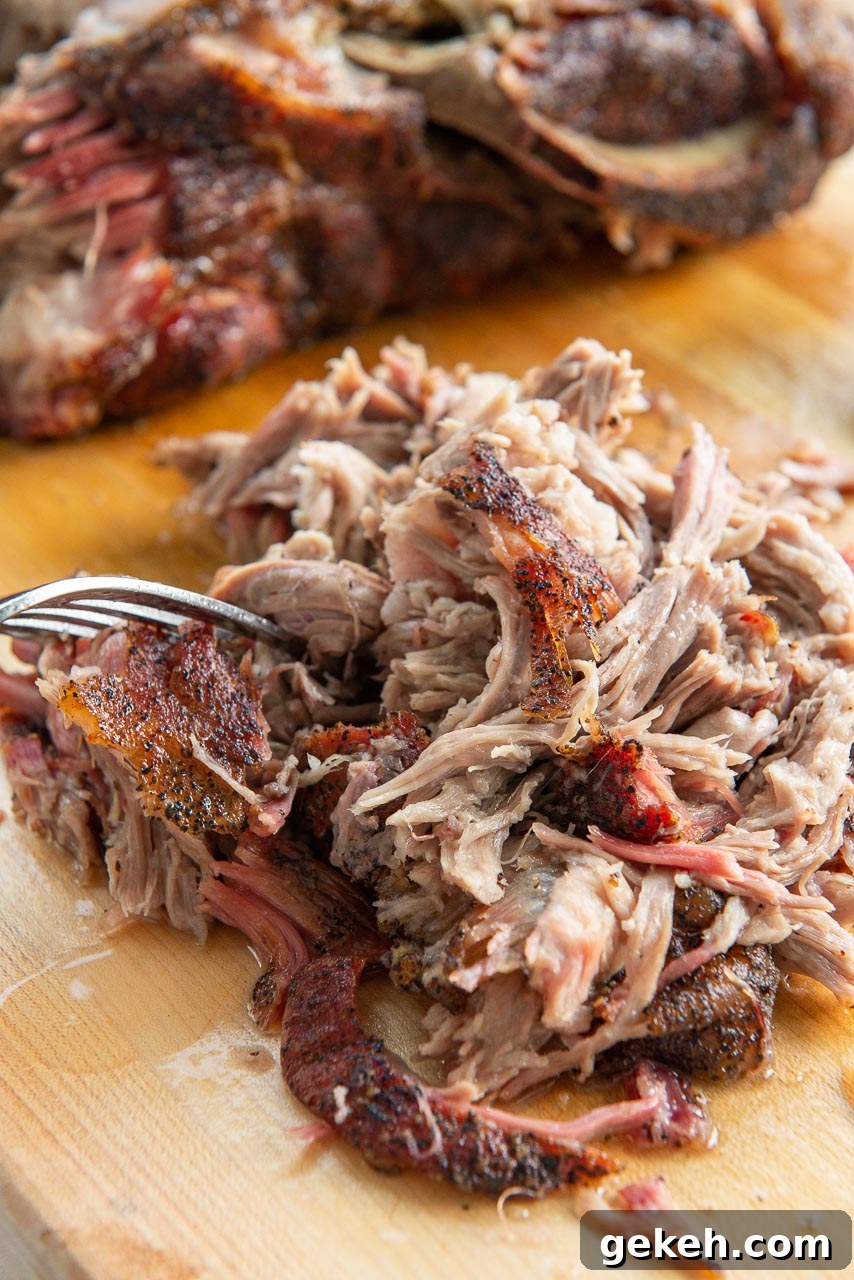
This smoked pork butt pulls apart into incredibly tender, juicy, and flavorful pulled pork. Inspired by techniques from BBQ master Aaron Franklin, it’s delicious eaten on its own or piled into sandwiches. It’s also one of the simplest smoker projects to master.
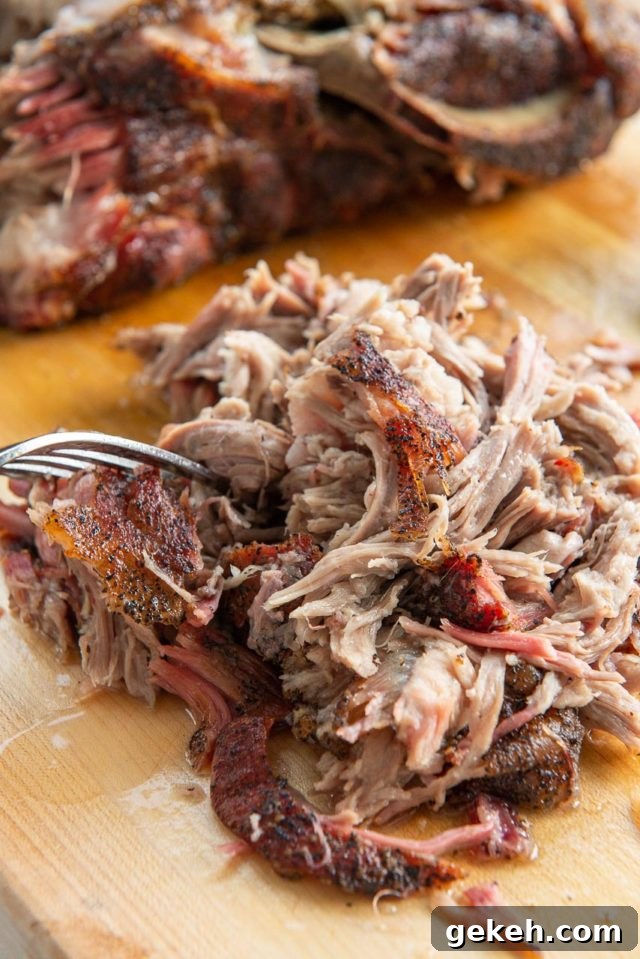
Smoked pork is a crowd-pleaser, and this recipe delivers deep smoke, a tender interior, and a well-seasoned crust without masking the meat’s natural flavor. Serve with sides like coleslaw, creamed corn, or cornbread for a full BBQ spread.
The method here focuses on a great cut of pork, a simple rub, consistent smoking, and a few key techniques to retain moisture. It’s a straightforward approach that produces reliably excellent pulled pork.
Why This Recipe Is The Best
The meat is the star. This preparation highlights a quality pork butt instead of relying on heavy rubs or sauces. A light coating of mustard helps the seasoning adhere, and the rub itself is simply kosher salt, coarsely ground black pepper, and a touch of paprika. That restraint lets the pork’s flavor shine.
Balanced smoke flavor. The pork spends long periods in the smoker unwrapped so smoke can build a savory bark that complements the meat without overpowering it.
Juicy, tender results. The process—spritzing, wrapping, and finishing at a higher temperature—preserves moisture and breaks down connective tissue, producing meat that shreds easily.
Minimal fuss. Compared with other smoked proteins, pork butt is forgiving and easier for beginners while still rewarding advanced smokers with fantastic results.
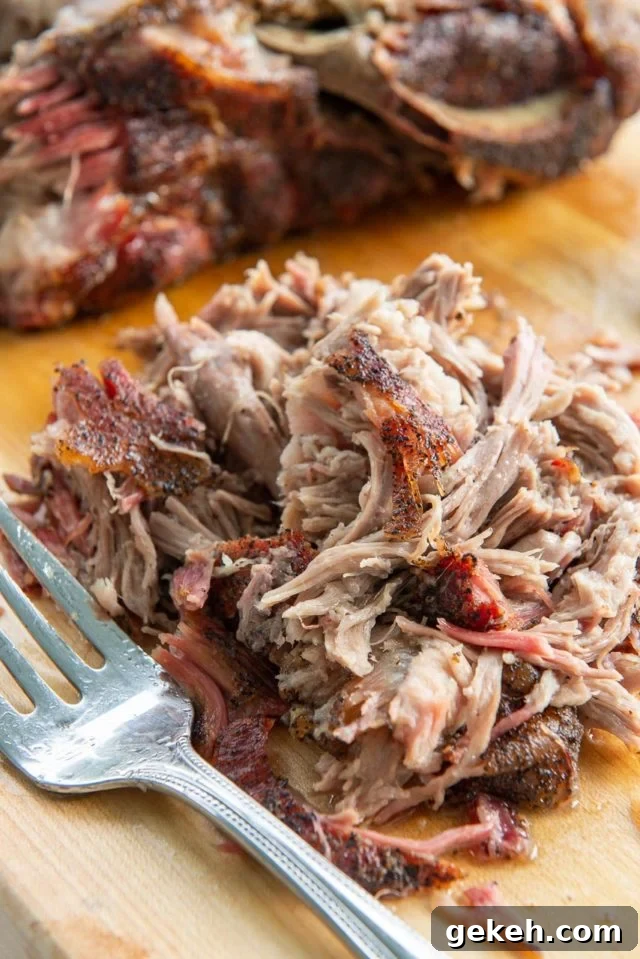
Tips for Best Results
Pick the right wood. Fruitwoods and nutwoods pair nicely with pork—apple, cherry, and pecan are excellent choices for a mild, slightly sweet smoke.
Use a bone-in pork butt. The bone helps the roast cook more evenly, adds flavor, and helps retain moisture. A boneless cut can cook unevenly because of its irregular shape.
Wrap and spritz. Wrapping helps you move through the stall and keeps juices from evaporating away. Spritzing with water or apple cider vinegar during the cook cools the exterior slightly and helps retain moisture, improving the final texture.
Step by Step Overview:
This is a simple, sauce-free approach (you can always offer BBQ sauce at the table). The pork is brushed with mustard to help the rub stick, generously seasoned on the exterior, smoked low and slow, spritzed periodically, then wrapped and finished until very tender.
The temperatures and timing here work with a pellet smoker but can be adapted to other smokers or charcoal setups. The important part is maintaining consistent smoking temperatures and monitoring internal meat temperature.
How much meat do you need?
Plan about one pound of raw pork per person. For an 8 lb bone-in pork butt, expect to serve roughly eight people. Portions may vary depending on appetite and sides.
Coat the Meat
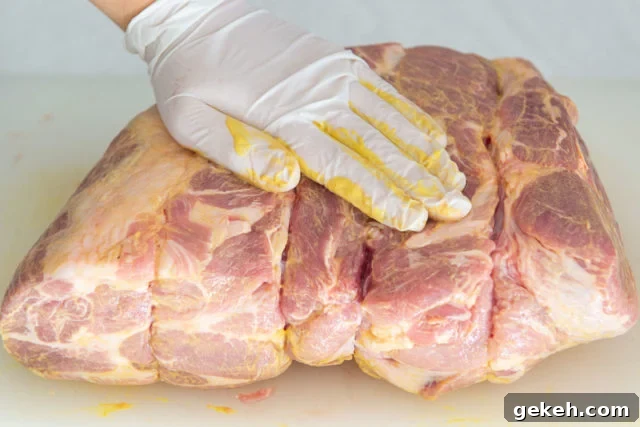
Start by rubbing yellow mustard all over an 8 lb bone-in pork shoulder (a.k.a. Boston butt). The mustard acts as a binder and isn’t noticeable after cooking.
Sprinkle On the Seasoning
Mix kosher salt, coarsely ground black pepper, and a little paprika. Generously coat the outside of the pork—most of the seasoning goes on the exterior, since the center won’t absorb much.
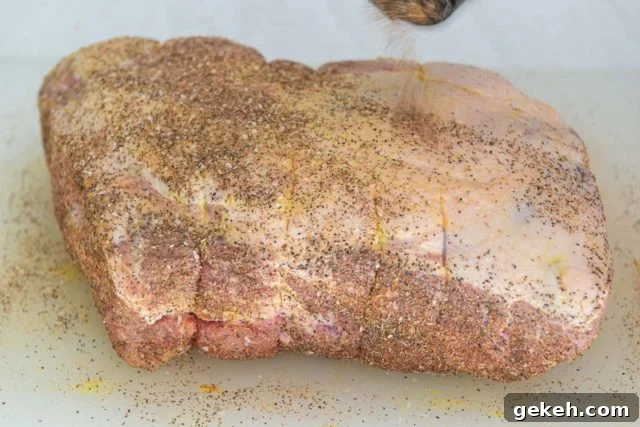
Even seasoning and generous coverage help form a rich bark and balanced flavor.
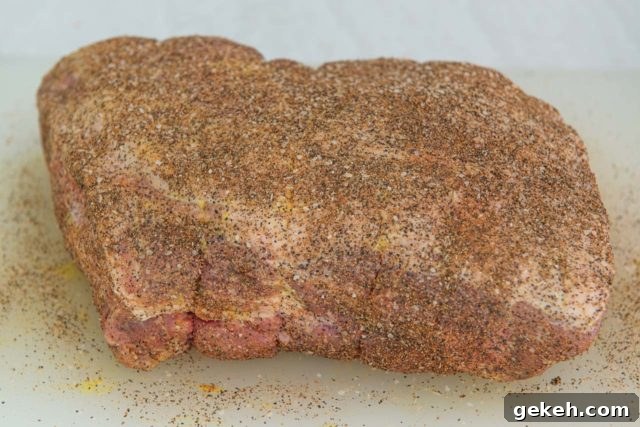
Get the Meat On The Smoker
Preheat your smoker to 275°F. Place a pan of water inside the smoker to maintain humidity, then put the pork butt on the grate fat side up. Smoke undisturbed for 3 hours to build smoke penetration and a good exterior.
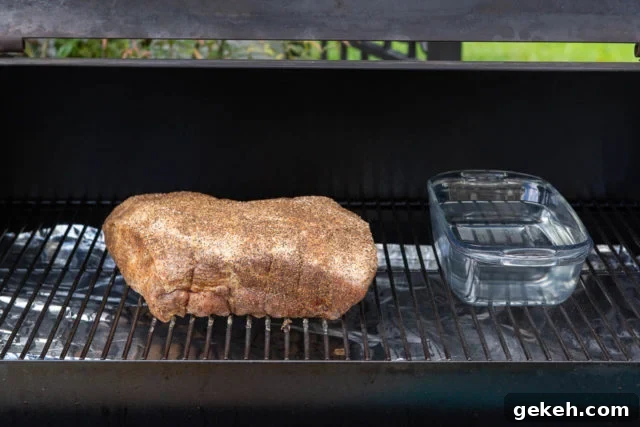
The water pan makes a noticeable difference in moisture retention—don’t skip it if you want the juiciest results.
After the initial 3 hours, the meat should have a developed exterior and be ready for spritzing.
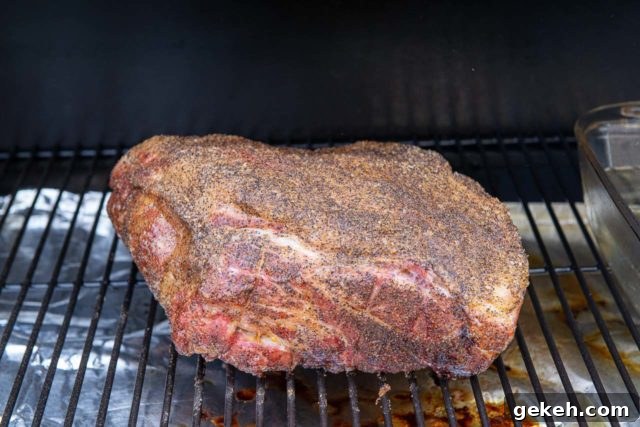
Spritz
Spritz the pork with water or apple cider vinegar using a spray bottle, then continue cooking for another 3 hours. Spritz once each hour during this period to help cool the surface and keep moisture in the meat.
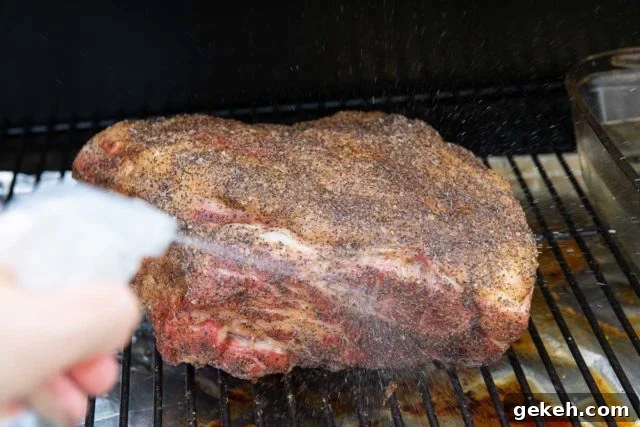
Why Do You Spritz The Meat?
Spritzing cools the meat’s surface slightly, minimizing evaporative drying and helping get through the stall while preserving a moist interior. It’s a simple technique that improves texture.
After this second three-hour block, check the internal temperature. You’ll commonly see around 165°F and the fat cap may begin to split.
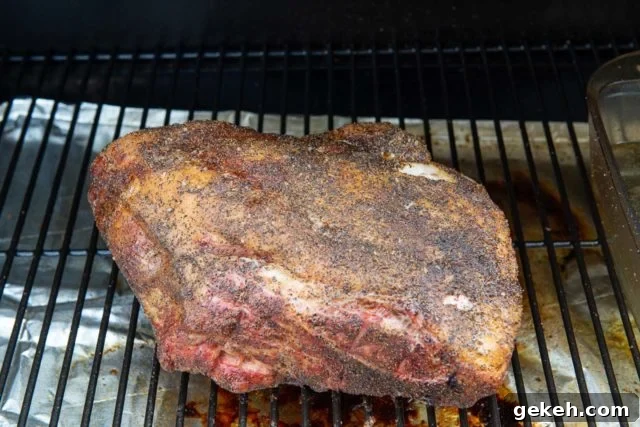
The Stall
Around 160–165°F you may hit the stall: evaporative cooling from moisture on the surface can pause temperature rise. To move through it, increase the smoker temperature and wrap the meat to retain heat and juices until you reach the target final temperature.
Time to Wrap
When the pork reaches about 160–165°F and the fat cap has split, remove it and wrap tightly in heavy-duty aluminum foil. Spritz the inside of the foil and the pork before sealing so the meat steams in its own juices.
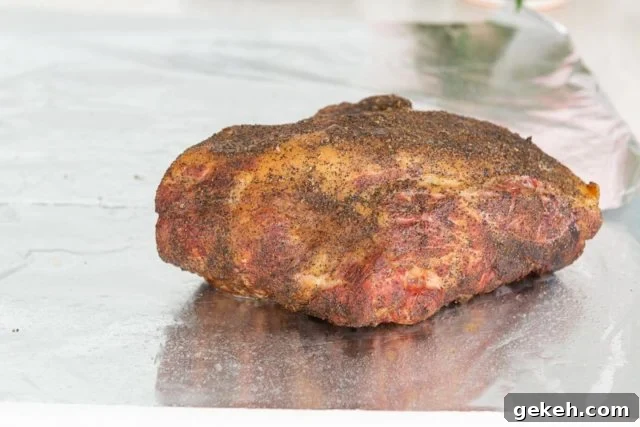
Use generous foil and seal it well to prevent juice loss during the final phase of cooking.
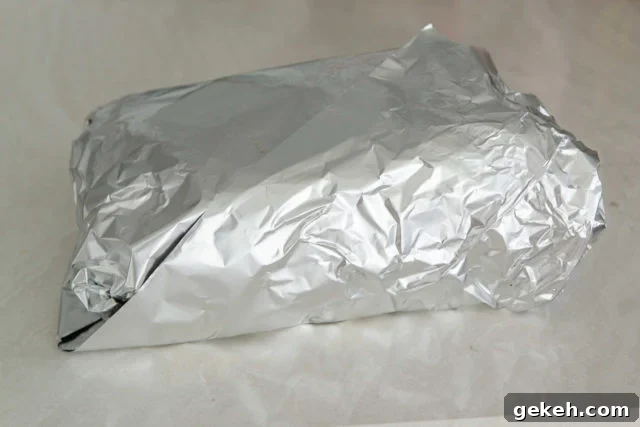
Cook Even More
Return the wrapped pork to the smoker, raise the temperature to about 300°F, and cook for another hour or until the internal temperature reaches at least 200°F. Many cooks prefer pulling the roast closer to 203–205°F so the connective tissue is fully broken down and the meat is extremely tender.
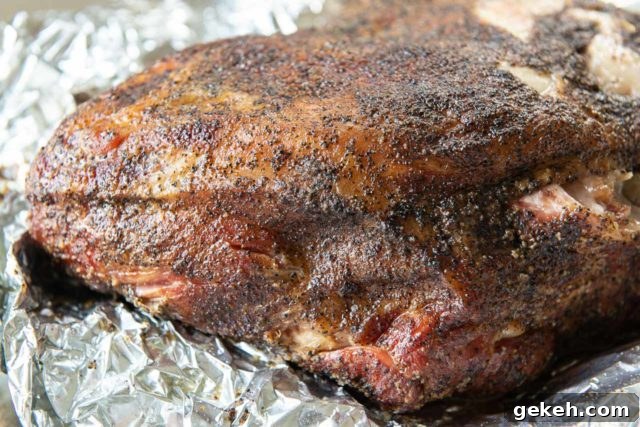
Let the Meat Rest
Remove the foil-wrapped pork and let it rest for about one hour. Keep it wrapped so it stays warm while juices redistribute. This rest makes shredding easier and improves texture.
Use the resting time to prepare sides like coleslaw, cornbread, or roasted potatoes.
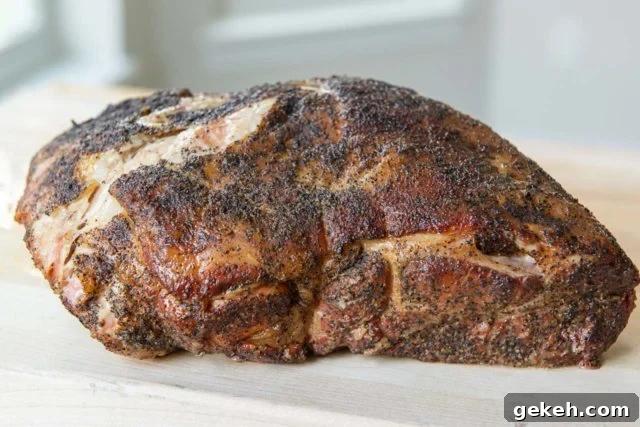
After resting, unwrap the pork over a tray to catch the juices. Shred with forks and toss the meat with any rendered juices from the foil to keep it moist.
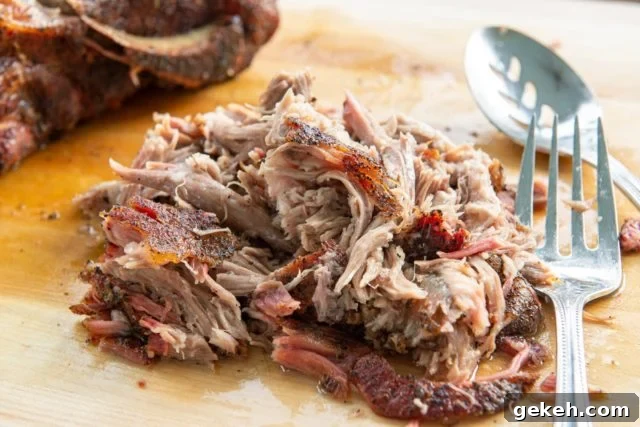
How to Serve It
This pork is flavorful enough to serve without sauce; a plain shredded plate lets the smoke and seasoning stand out. Serve with cornbread, coleslaw, or a fresh bean and corn salad for balanced textures and temperatures.
You can also pile the pork into sandwiches, top bruschetta with it, or press it in a panini for a crispy contrast. Offer barbecue sauce on the side for guests who prefer it sweeter or tangier.
Recipe FAQ
The terms are often used interchangeably since both come from the shoulder region. Pork butt (Boston butt) is cut from the upper shoulder and tends to be well-marbled and suitable for long, slow smoking.
Shred while warm if possible (it’s easier). Store in an airtight container in the refrigerator for up to 5 days.
Yes. Freeze in an airtight container for up to 2 months. Thaw in the refrigerator overnight before reheating.
Sautéing leftover pulled pork in a skillet with a tablespoon or two of fat (butter, lard, or oil) crisps the edges and keeps it moist. Reheat over medium-high until warmed through and slightly browned.
Bone-in is recommended for more even cooking, better flavor, and improved moisture retention. Boneless works too, but can cook less evenly.
Spritzing cools the meat surface slightly and helps prevent excessive drying from evaporative cooling, improving overall juiciness.
Recipe Variations
If you prefer a sweeter profile, use a rub that includes brown sugar, spritz with apple juice instead of water, or serve the finished pork with a sweet or tangy barbecue sauce. These adjustments are optional and can be tailored to taste.
If you try this method, shred the pork warm, save the pan juices, and enjoy the contrast of smoky meat with bright, simple sides. The steps above produce tender, flavorful pulled pork that holds up for sandwiches, plates, or reheating for future meals.
Smoked Pork Butt
Ingredients
- 8 lb bone-in pork shoulder butt roast
- 2 tbsp yellow mustard (approximately)
- 1/3 cup salt, pepper, paprika mix*
- water or apple cider vinegar** in a spray bottle
Instructions
-
Rub the pork all over with the mustard, spreading it as evenly as you can. The amount doesn’t matter so much as making sure that the entire outside is coated in a thin layer.
-
Season the pork all over with the salt, pepper, and paprika mix. Try to use an even back and forth motion to make the coating as even as possible. Now let the meat sit at room temperature for 30 minutes while you heat up the smoker.
-
Prepare the smoker and preheat to 275F. Place a container full of water in the smoker, then add the pork butt so that the fat cap is facing up. Cook for 3 hours, undisturbed.
-
Spritz the pork all over, then continue cooking for 3 more hours, spritzing at one hour intervals. As you spritz, try to sweep across using your wrist to disperse the spray, instead of hitting any one spot too hard.
-
Check the meat with a thermometer, and ideally it should be around 165F. If it’s not at least 160F, check to see if the fat cap on top is split. If it is, proceed to the wrap. If it’s not, keep cooking in 15 minute intervals, until the temperature reaches 160F.
-
Get a really large piece of aluminum foil that’s four times as long as the pork, spritz the inside, then place the pork on the spritzed area, and spritz the pork as well. Wrap the pork up tightly with the foil. There should be a generous amount of foil encasing it, so the juices don’t spill out.
-
Put the meat back on the smoker, and increase the temperature to 300F. Cook for one final hour.
-
Using oven mitts, pick up the pork and check for tenderness by shifting it around in your hands. If it feels tender, insert a thermometer through the foil and check that it’s over 200F.
-
Let the smoked pork butt rest in the foil wrap for one hour.
-
Carefully unwrap the foil over some sort of surface that can catch the juices, then shred the pork with a couple forks, making sure to toss it in any juices from the foil. Serve immediately as is, or stuff it into some homemade buns. Enjoy!
Notes
**Water works well for spritzing; apple cider vinegar or apple juice are fine alternatives if you prefer a slightly tangy or sweet spray.
Timing will vary by size of roast and smoker precision. Larger butts may need extra time at 275°F before wrapping. Do not finish at higher heat until the meat reaches at least 160°F.
Storing leftovers: Refrigerate in an airtight container up to 5 days.
Freezing: Freeze in an airtight container up to 2 months. Thaw in the fridge overnight before reheating.
Reheating: Sear leftover pulled pork in a skillet with a bit of fat to reheat while adding crisp texture. Heat until warmed through and lightly browned.
Nutrition
Nutrition is estimated and provided as a guideline.