Ever wondered “when can a child stay home alone”? This guide will help you decide whether your child is ready to be left at home and what to consider before doing so.
A friend recently shared a chart with suggested guidelines for leaving kids home alone, and it sparked the kind of conversation many parents recognize. There’s a wide range of opinions on this topic, and rules vary across the United States. Some places have specific laws, others offer only recommendations. This article isn’t intended to provoke debate but to provide clear information and encourage thoughtful decision-making. If you’ve ever asked “when can a child stay home alone,” read on for practical guidance.
When I was young I began babysitting at about 10 years old. I looked after several younger children, tidied the house and earned a few dollars an hour. Back then it felt normal to be left to our own devices and play outside until dusk without frequent check-ins. Today’s world is different—parents are more cautious because of safety concerns, media coverage and greater awareness of risks. Because of those changes, leaving kids home alone is less common and requires more intentional preparation.
What Age Can Kids Stay Home Alone?
Age matters, but it isn’t the only factor. No five-year-old should be left alone, regardless of perceived maturity. At the same time, children mature at different rates: a child who is steady, trustworthy, and comfortable on their own may be ready earlier than a peer who is more anxious or impulsive.
Factors to consider
- How long will you be gone? Short durations require different planning than extended absences.
- Does your child follow directions and stick to rules when you’re not present?
- Will siblings be home too? How many and what ages are they?
- How safe is your neighborhood, including proximity to emergency services?
- Would your child feel secure staying alone, or would they be anxious and distressed?
Topics to review with your child before leaving them alone
- Clear house rules: Spell out what they may and may not do so there’s no ambiguity.
- How to lock and unlock doors and windows: Practice these steps so they’re confident. Explain the importance of not answering the door or letting strangers in.
- Emergency information: Make a visible list of emergency contacts, address, and instructions. Keep a phone nearby and review how and when to call 911.
- Neighborhood and friend rules: Be explicit about whether they may go outside, meet friends, or let anyone in.
- Kitchen safety: Younger children should not use the stove or oven without supervision. Older children can be taught safe cooking practices—go over what’s allowed and what’s not.
- Open conversation: Invite questions and address concerns. Don’t overload them with alarming details, but make sure they feel comfortable and know what to do if something goes wrong.
Note: The recommendations in this article are compiled from a variety of public resources and conversations with local law enforcement contacts. Laws and advice can vary by state and locality, so check your state, county, or city resources for specific legal guidance.
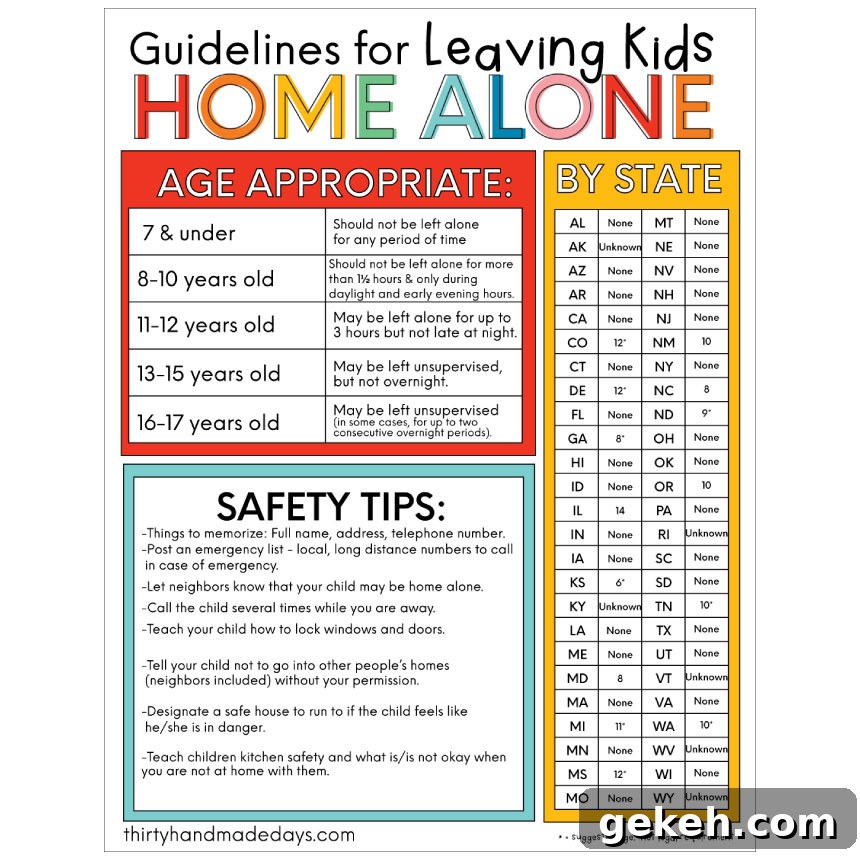
Ages Kids Can Stay Home Alone
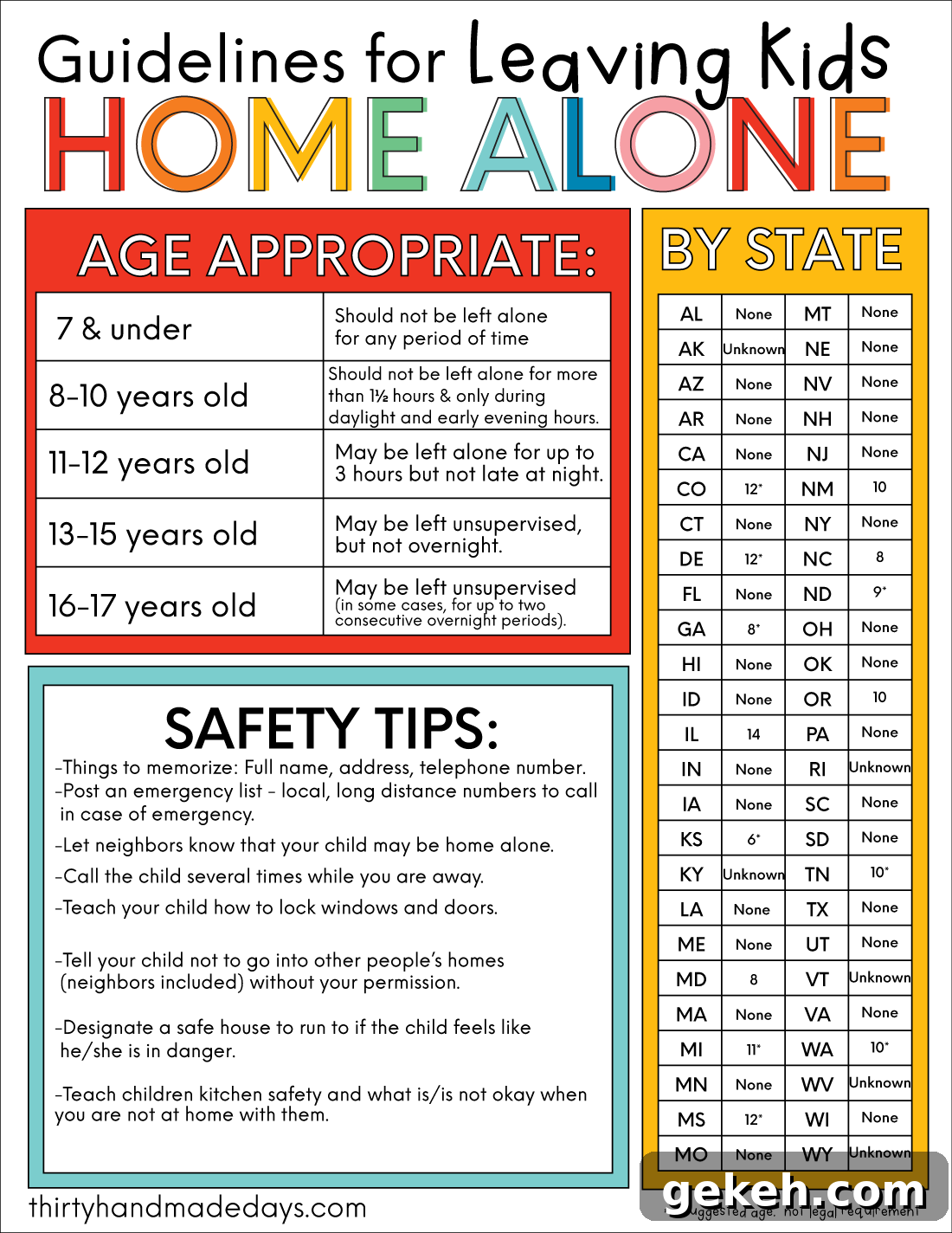
If you’d like a printable or downloadable version of guidelines, consider creating a short checklist with emergency contacts, house rules, and basic safety steps to post in a visible place at home.
Related guideline topics
If this guide was helpful, you may also find these related topics useful when preparing children for independence and responsibility:
- After-school rules
- Social media guidelines for kids
- Guidelines for teaching manners
- Practical life skills for children
- Children’s technology rules
- Guidelines for teaching kids about money
- Accountability and organization tools for families