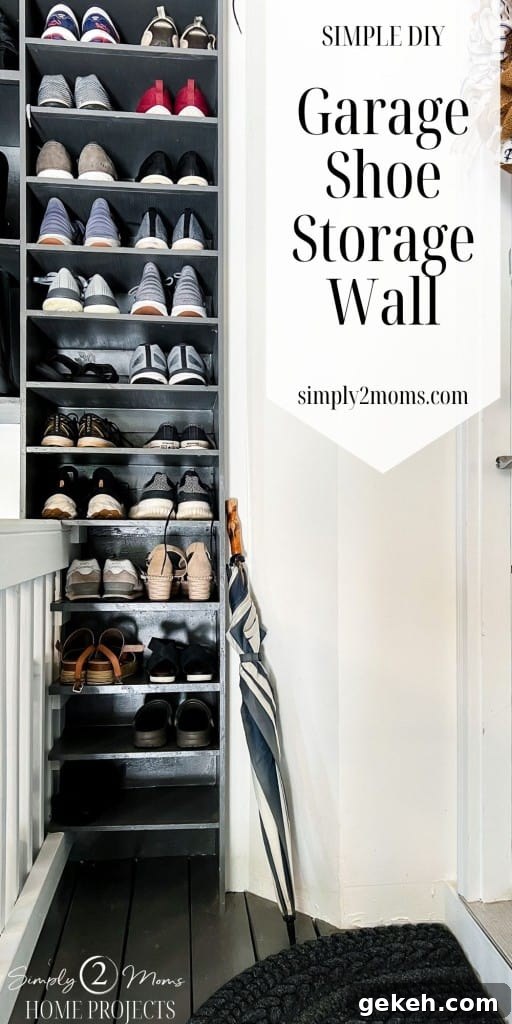
Struggling to find organized shoe storage for your family? This straightforward DIY shelving project for the garage can be customized to fit shoes and boots of all sizes and styles.
When we built our home in 2005, functional mudrooms weren’t common in our area. The modern mudrooms with drop zones you see in new homes now simply didn’t exist for us then.
We chose a floor plan with the laundry room on the same level as the bedrooms. With three small children (ages 3, 3, and 6 at the time), that layout was a lifesaver for managing the laundry pile.
I still love having the laundry room near our bedroom—especially after giving it a makeover. But putting the laundry upstairs meant the garage door opened directly into the kitchen, and we didn’t have a place to stash shoes despite a strict “no shoes in the house” rule.
Our First Shoe Storage Solution
My husband built simple cubbies in an awkward corner at the top of the landing. Those cubbies worked fine when the kids were small, but as they grew the system quickly became inadequate.
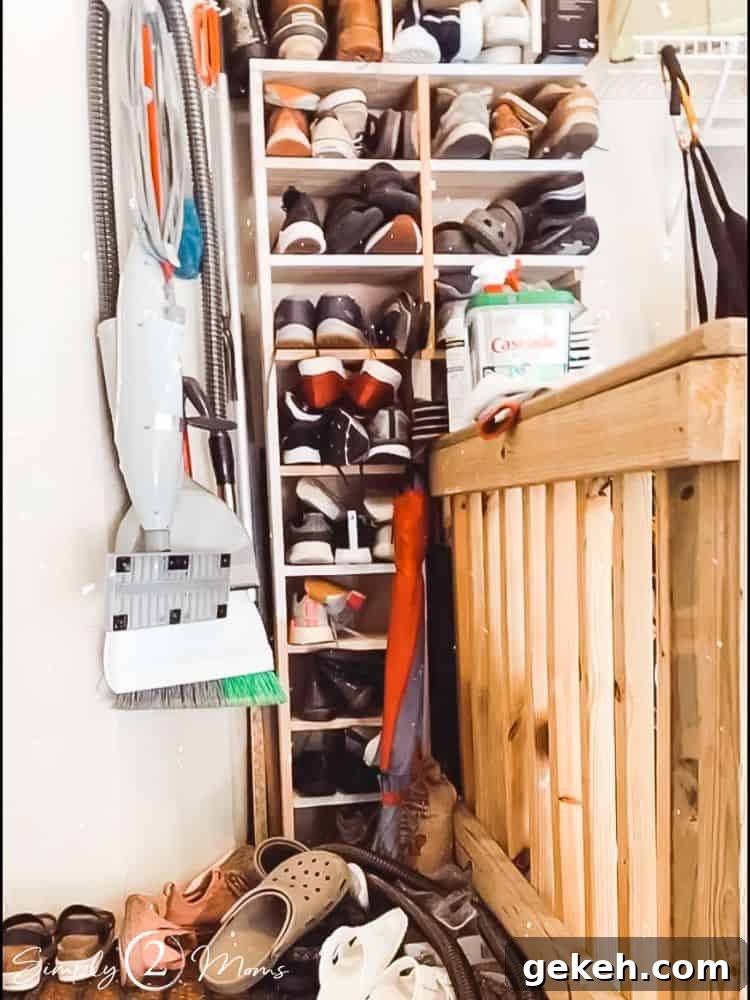
With adult shoes—size 10 for my husband and son—plus twins in size 7 and my size 6, the old cubbies wasted vertical space and weren’t wide enough. Each cubby only fit three shoes across, so you couldn’t store two pairs side by side without shoving them in messily. We purged regularly, but the storage still overflowed onto the landing. It was time for a better solution.
Creating a Garage Drop Zone
The entry area from the garage was cluttered, so in 2020 we turned it into a proper drop zone. We rebuilt the space using leftover wood, hardware, and paint from other projects. It was a big job, but it transformed a messy corner into a functional area.
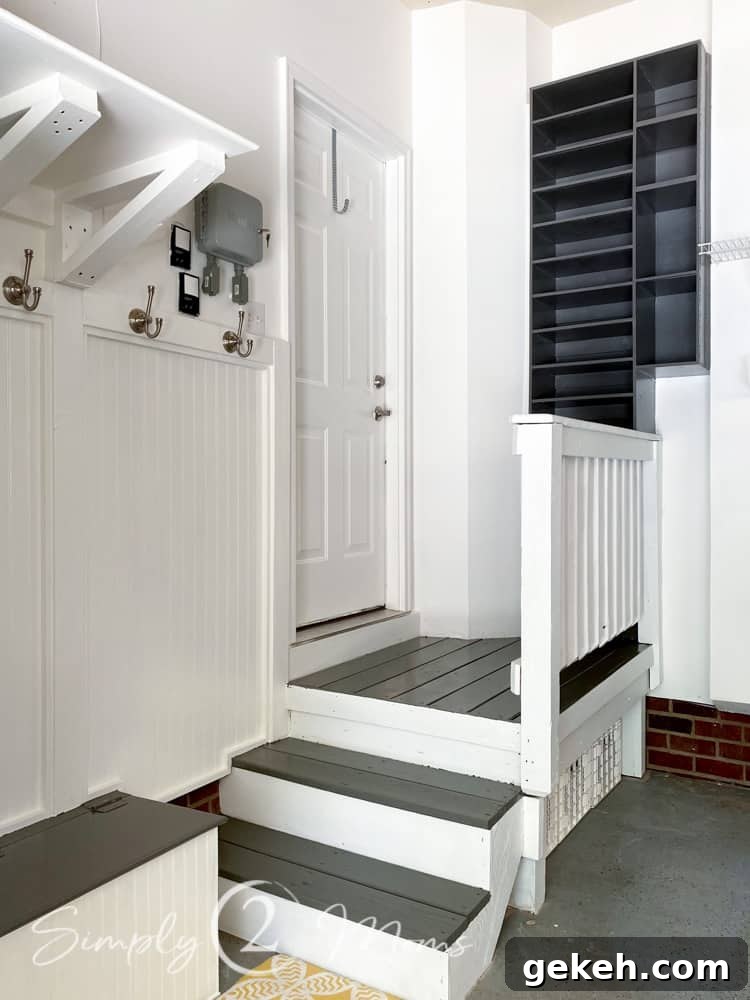
The feature people ask about most is the shoe wall. We made several changes to the original cubbies that made the new solution far more practical, and the nicer look encourages everyone to actually put their shoes away.
Posts may contain affiliate links which can earn a small commission at no extra cost to you.
Materials You’ll Need for This Shoe Storage Project
We saved money by using scrap materials left over from other builds; we didn’t have to buy the plywood. The exact materials will depend on your space and shelving plan, but here’s what we used:
- 1/2″ plywood (we used roughly 1½ sheets of 4×8)
- Trim to cover plywood edges or half-round molding
- 1×2 boards for framing and trim
- Wood glue
- 18-gauge 2″ brad nails
- Paintable caulk
- 3″ wood screws
Tools You’ll Need to Build These Shoe Shelves
Some tools are essential while others just make the job easier. We used the following:
- Tape measure
- Caulk gun
- Rotary tool (handy for small corrections)
- 2-foot level
- Drill/driver
- Circular saw (table saw preferred if available)
- Circular saw guide for long straight cuts
- Painting supplies
- Nail gun (we used a cordless brad/nailer)
Re-Building the Outer Frame
We removed the old cubbies and salvaged what we could. There’s an inset section of wall at the top of the stair landing with a lot of unused vertical space. Our old cubbies only reached the level of a wire shelf, so we planned a taller, more efficient frame using 1/2″ plywood ripped down to size.
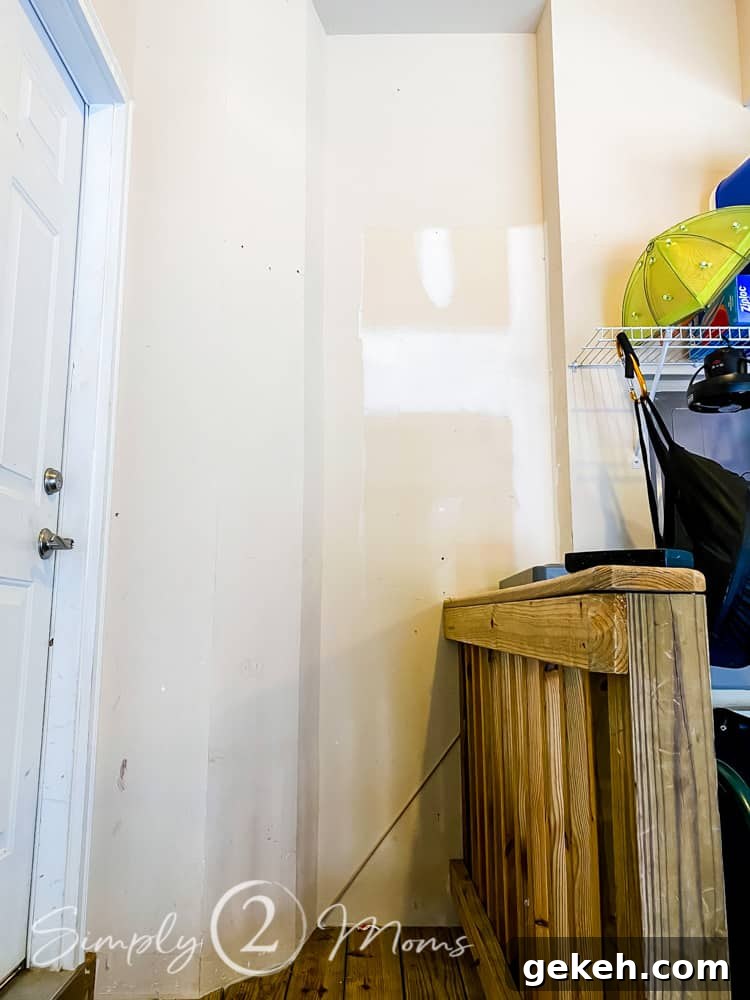
We divided the recessed wall into two columns using the stair railing as a natural divider. The landing-side section was planned for everyday shoes, and the narrower outside section would hold rain boots, snow boots, and work shoes. We framed everything so the shelves would be vertical, and a 1×2 board closes any angled gaps for a clean finish.
Reminder: This is a Garage Project!
These shelves live in the garage and will hold dirty shoes, so our priorities were durability and function rather than perfect finish work. We did minimal sanding and used caulk and paint where needed without obsessing over every small gap. If you’re building a similar project for an interior space, feel free to take extra time for sanding, filling, and finishing.
Adding More Shelves
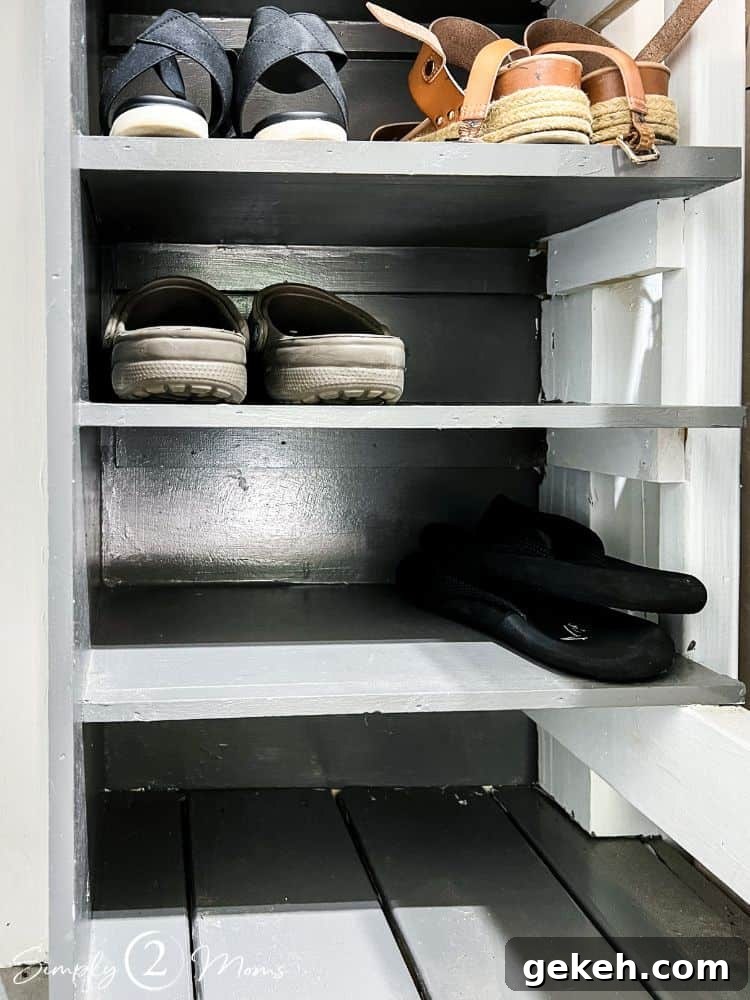
We measured the height of athletic shoes and set the shelf spacing at 6 inches. That allowed us to fit 13 cubbies on the landing side, up from 9 before. Because plywood has exposed edges, we applied trim—furring strips worked for us, but half-round or screen moulding would also work.
Each shelf has a rear cleat for support; shelves on the bottom also have a side cleat where the railing leaves one side unsupported. Above the railing, the frame extends on both sides so shelves only needed rear cleats and strong screw attachment.
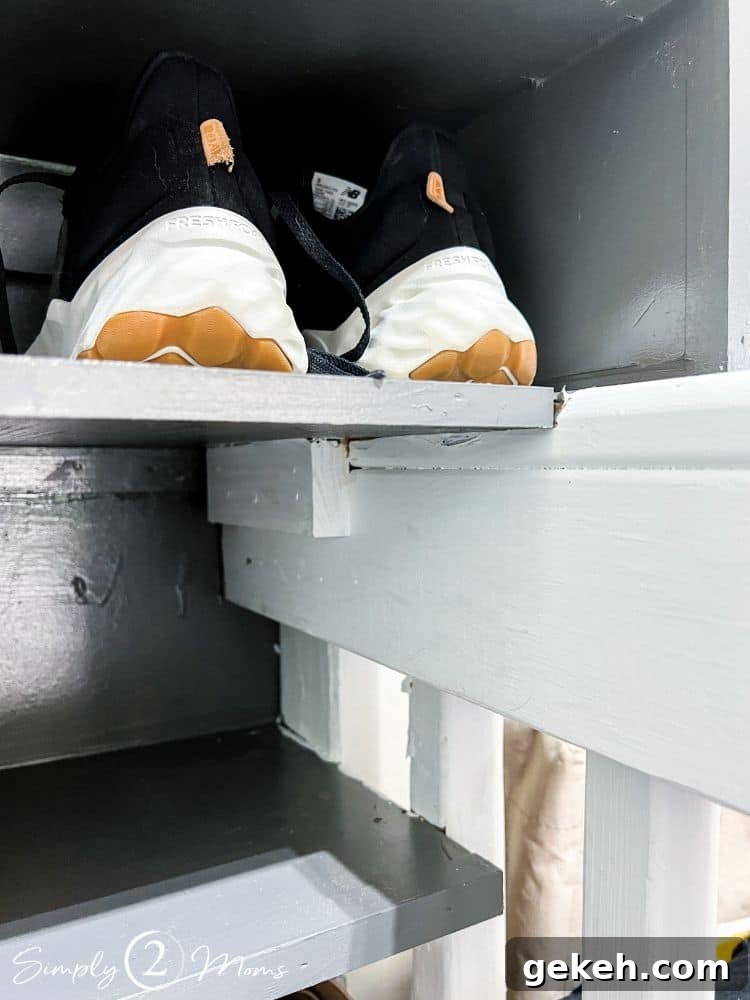
We made one measuring mistake where a shelf intersected the top rail. Instead of reworking everything, we removed a small portion of the railing with a rotary tool so the shelf could sit into the railing. For this garage application that fix was perfectly acceptable.
How We Fit More Shoes On The Shelves

Stacking shoes lets you fit more pairs: you can squeeze four pairs of athletic shoes per shelf by stacking them. I considered 6.5-inch shelf heights for less cramped stacking, but 6 inches works well when shoes are placed side-by-side. You can mix shelf heights to accommodate sandals or flip-flops as well.
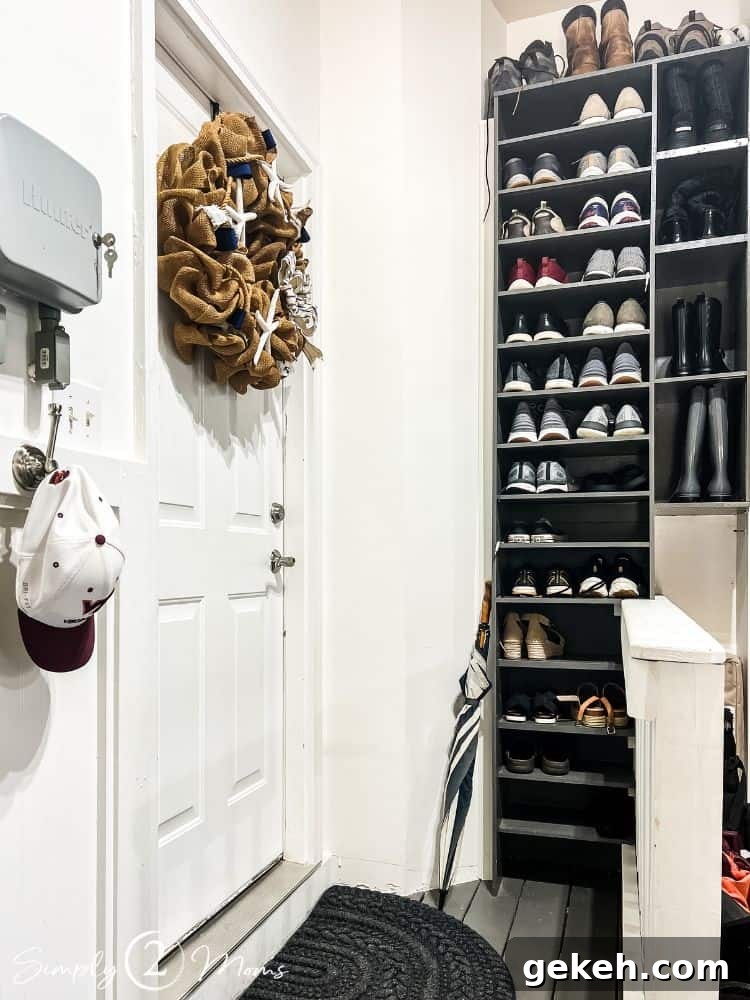
We weren’t able to add another shelf on the narrow side because it stores a pop-up canopy, but the layout maximizes the space we have. My garage often looks like a Tetris board, and this project helped make the most of an awkward area.
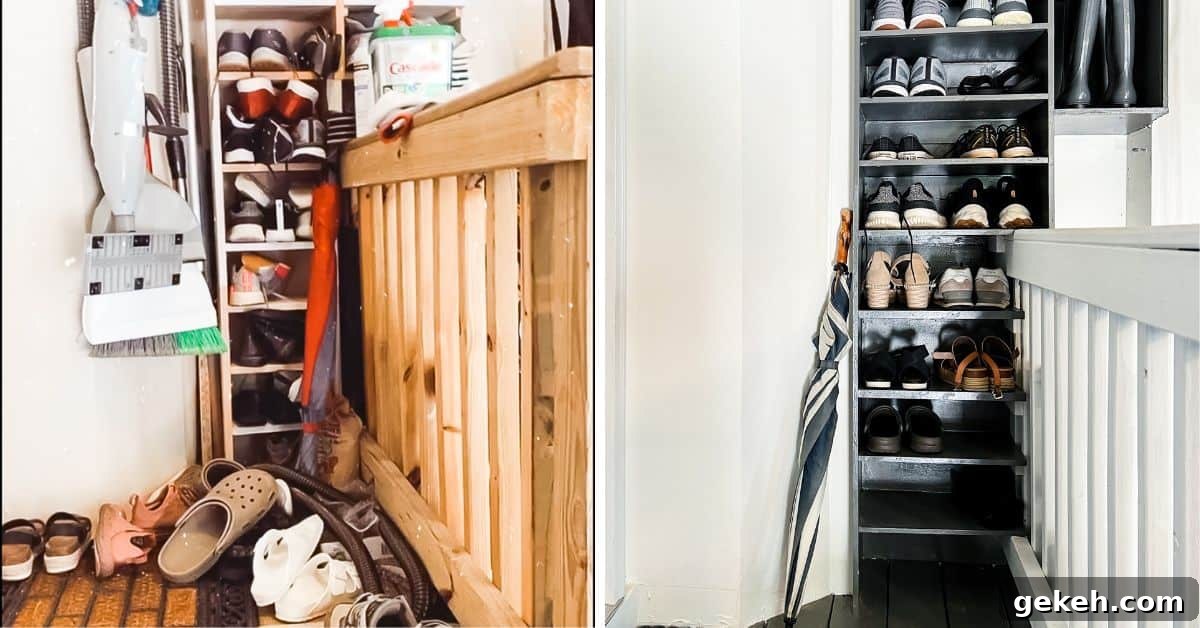
Before and After
The new shelving may not be perfect, but it’s a major improvement. Now that our kids are older and some have moved out, there are even empty spots for guests to leave shoes.
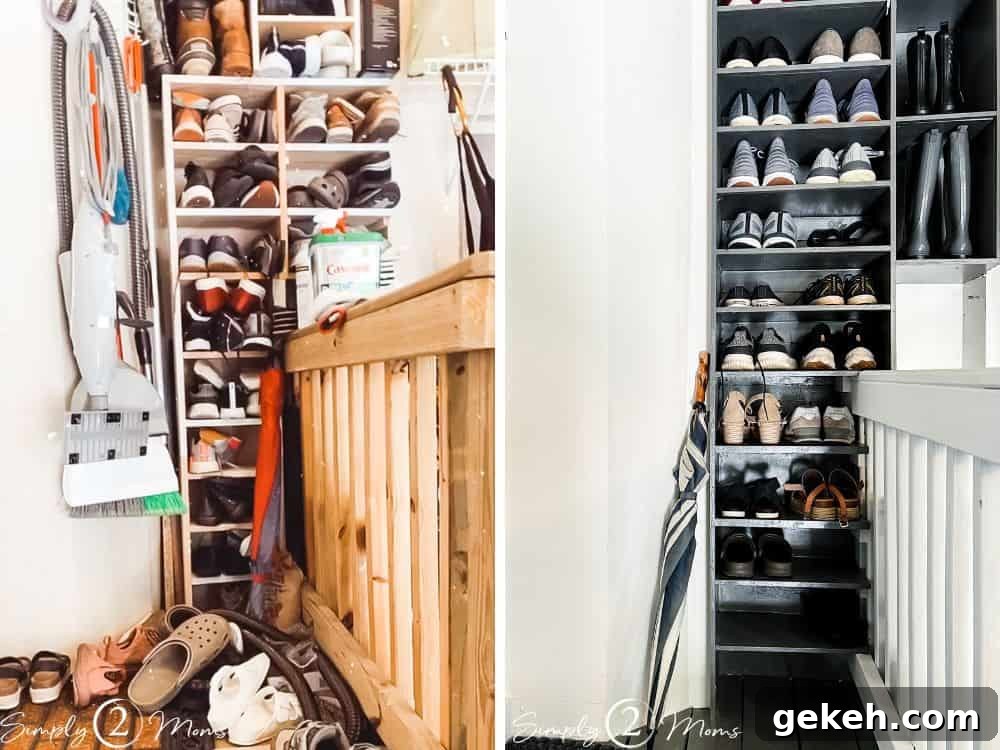
If you’re considering a similar project, my biggest regret is not building these better shelves sooner.
Resources and Shopping Links

Click on any image to view the tools and materials used for this project.
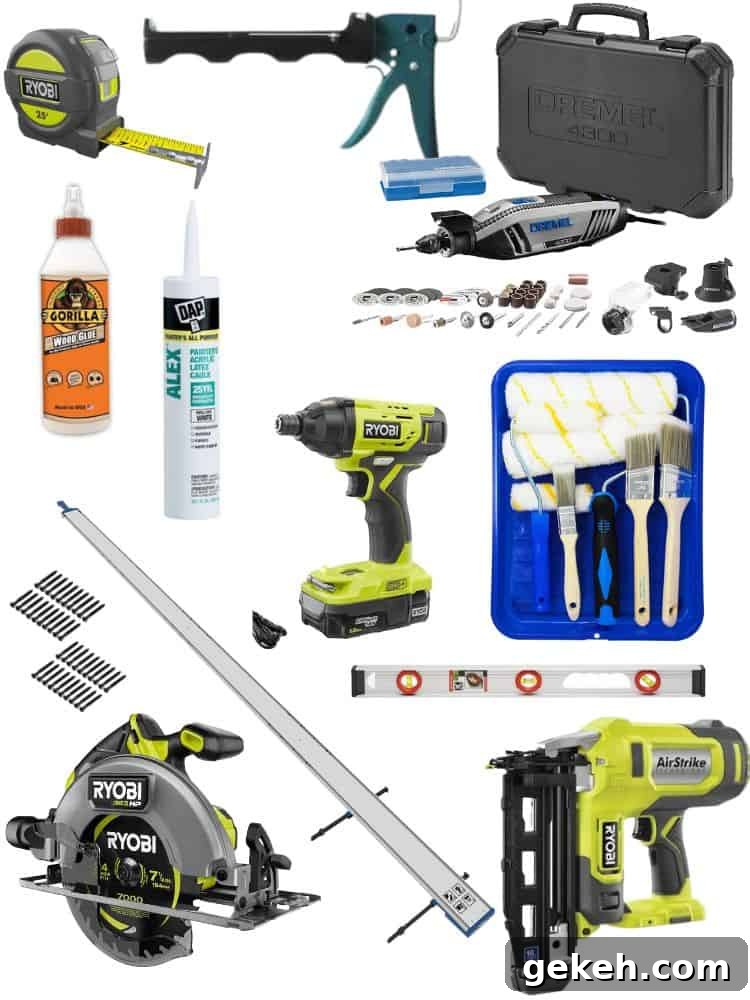
Key tools and supplies to consider: tape measure, caulk gun, rotary tool, wood glue, brad nails, paintable caulk, screws, circular saw, level, painting supplies, and a nail gun.
If you have questions or suggestions, feel free to contact me or leave a comment. Don’t miss any of our DIY tips—follow us on social media to see more projects and inspiration.

Pin it to Remember it!