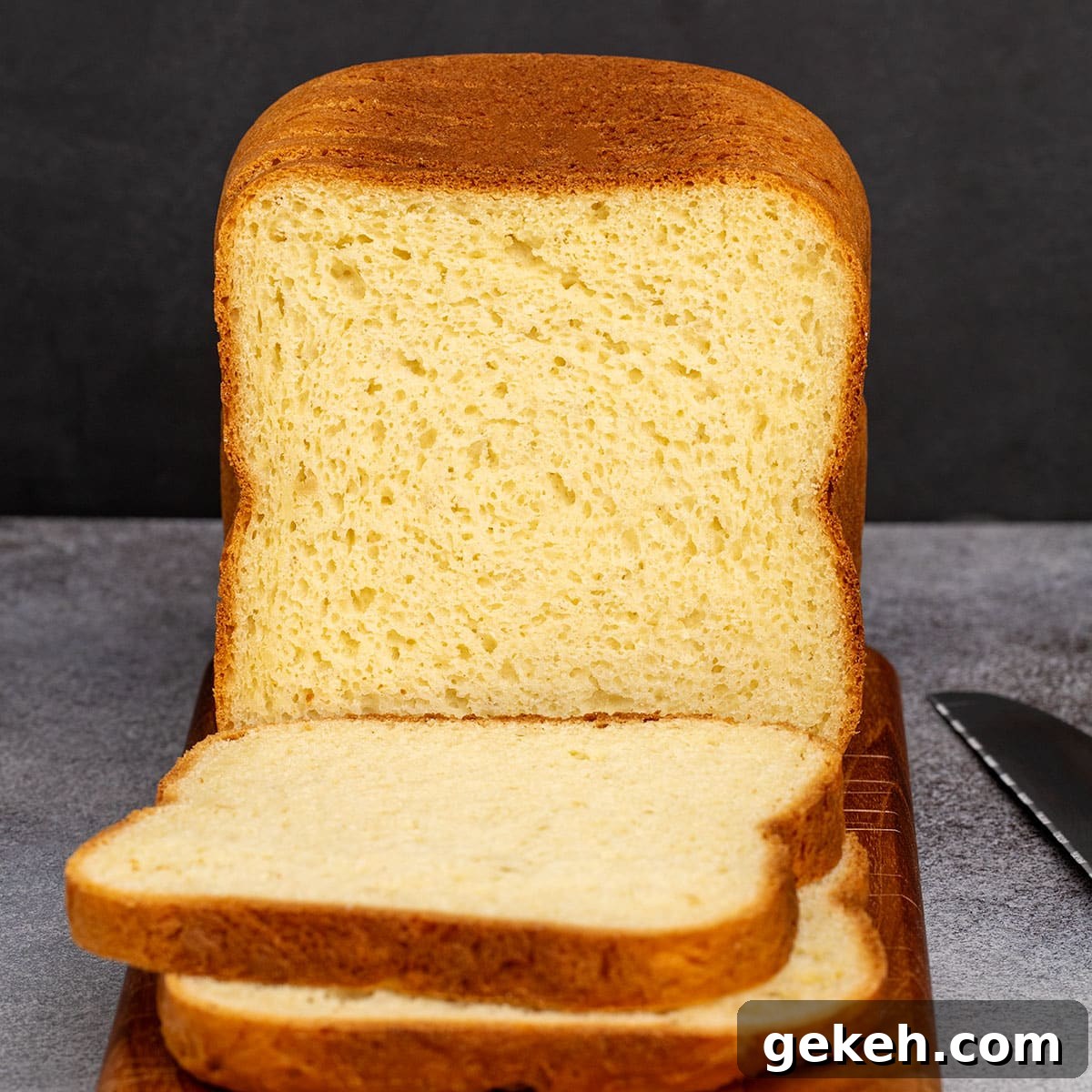
For years I’ve been asked for a gluten-free bread recipe that actually works in a bread machine. If you’d rather bake in the oven, try my classic gluten-free bread recipe. But if you own a bread machine, this recipe delivers consistent results with straightforward ingredients and an easy dairy-free option.
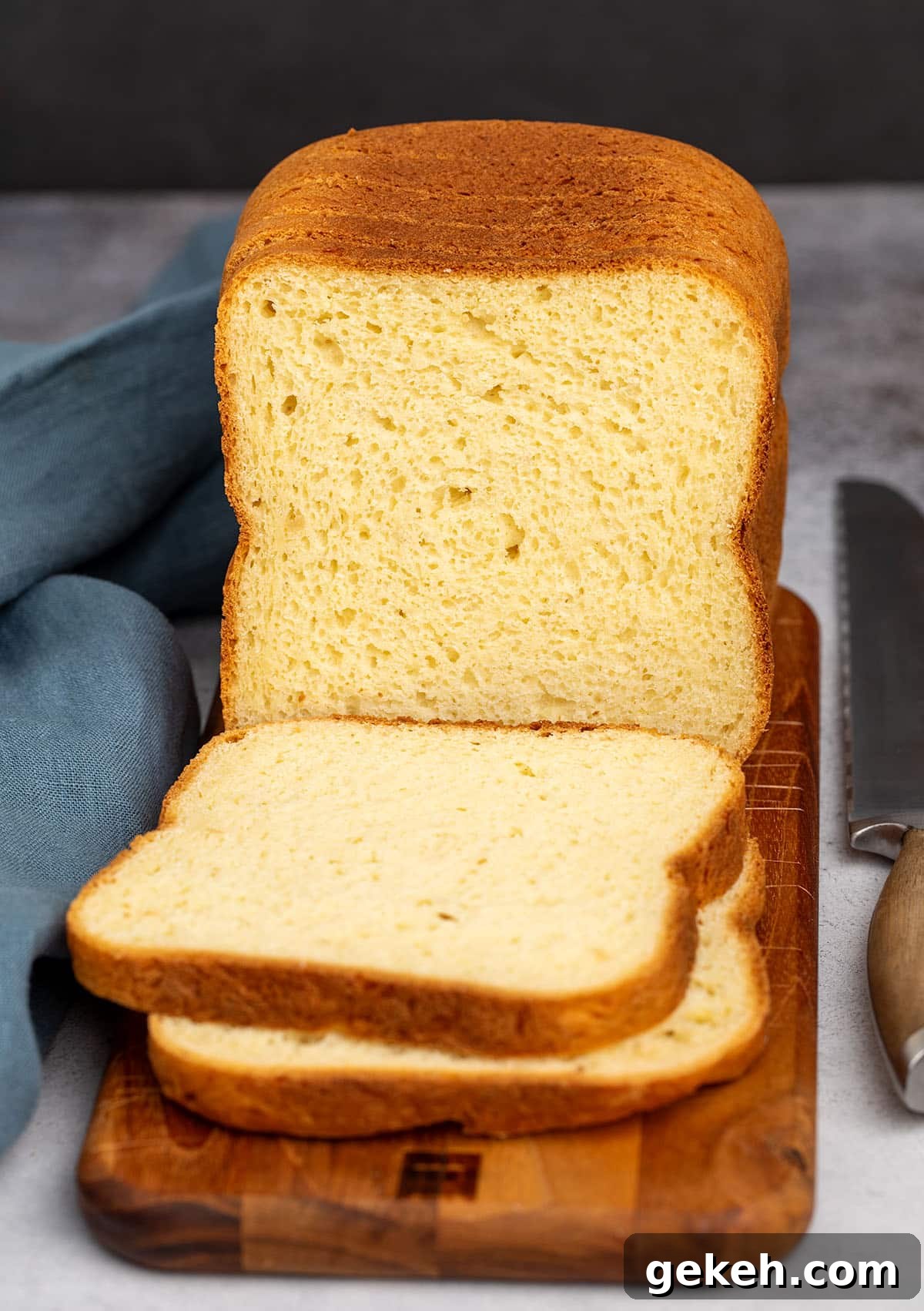
Why this recipe works in a bread machine
Not every gluten-free dough performs well in a bread maker. This one is formulated to match the typical machine cycle and produce a reliable loaf:
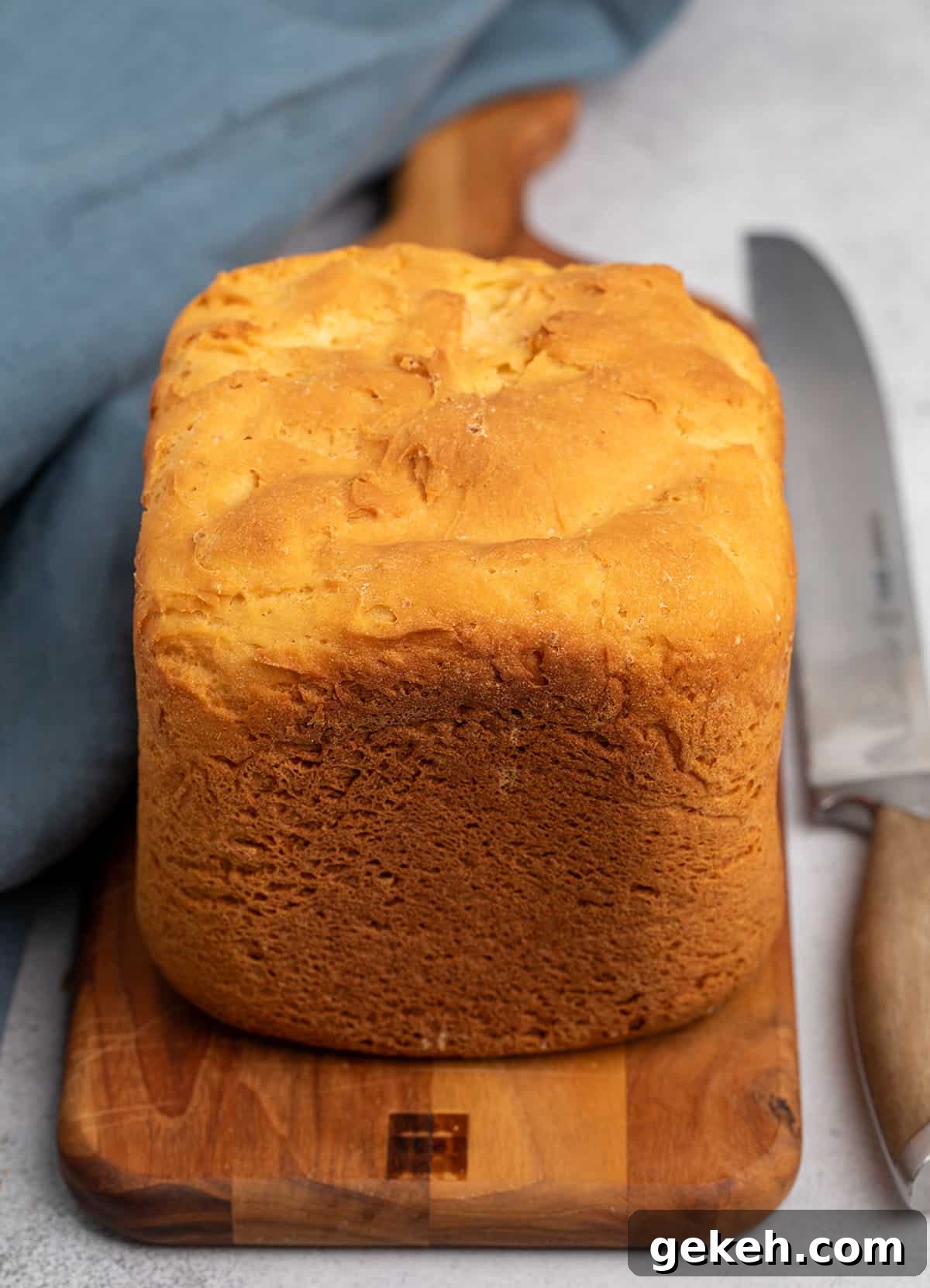
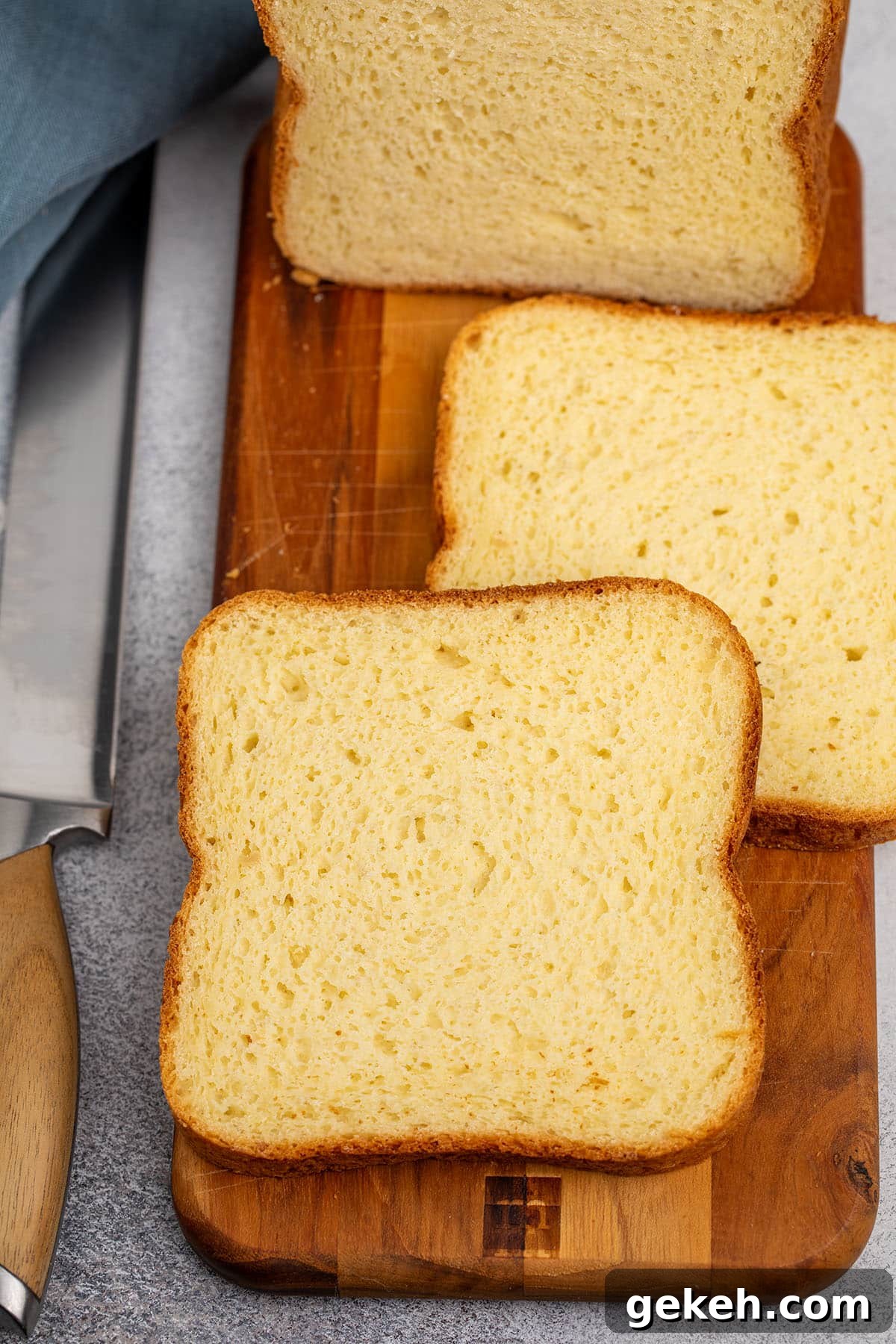
Soft, open crumb with a crisp crust: The loaf bakes to a tender interior and a golden top that isn’t overly tough.
Buttery, slightly tangy flavor: Even with a single rise, the bread develops depth and a rich mouthfeel.
Dough texture tuned for paddles: The mix is soft enough for a bread machine paddle to handle, but not so wet that the loaf collapses as it cools.
Works with most modern machines: Fits machines that use a single rise and a longer bake time; you can also use standard “gluten free,” “basic,” or “rapid” cycles when necessary.
Recipe ingredients
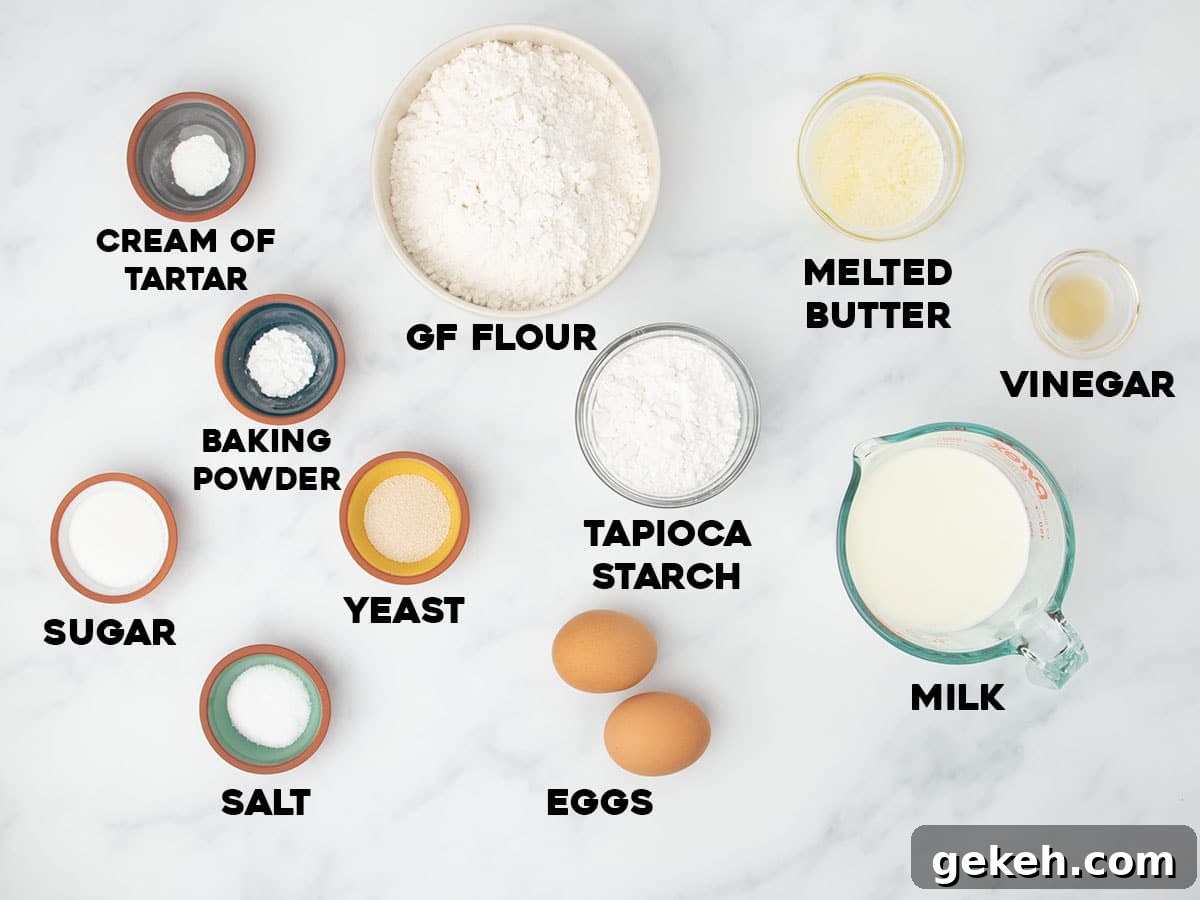
This bread uses a few extra ingredients to improve rise, structure, and flavor. Here’s what matters and why:
- Gluten-free all-purpose flour blend: Use a rice-based blend designed for yeast breads. If your blend lacks xanthan gum, add it separately. Avoid Measure for Measure-style blends for this recipe.
- Tapioca starch: Adds stretch and flexibility to the crumb; include it even if your blend already contains some.
- Cream of tartar & vinegar: Add gentle acidity to help yeast activity and flavor.
- Baking powder: Gives an extra instant lift, a safeguard if the machine’s rise time is short.
- Sugar: Feeds the yeast and tenderizes the crumb.
- Salt: Regulates yeast and rounds out flavor.
- Instant yeast: Supplies the main rise and some flavor without a first rise. Active dry yeast can be used with a slight method change.
- Milk: Provides moisture and richness; can be substituted for nondairy milk in the dairy-free version.
- Eggs: Improve rise and structure and add richness from the yolks.
- Butter: Adds tenderness and flavor; swap for vegan butter or neutral oil for dairy-free results (oil yields a less rich loaf).
How to make this gluten-free bread in a bread machine
Making this loaf in a bread machine is simple: whisk the wet ingredients, combine the dry ingredients separately, layer them in the pan, and run the correct cycle. Follow these steps for consistent results.
1. Remove the loaf pan from your bread machine and attach the mixing paddle.
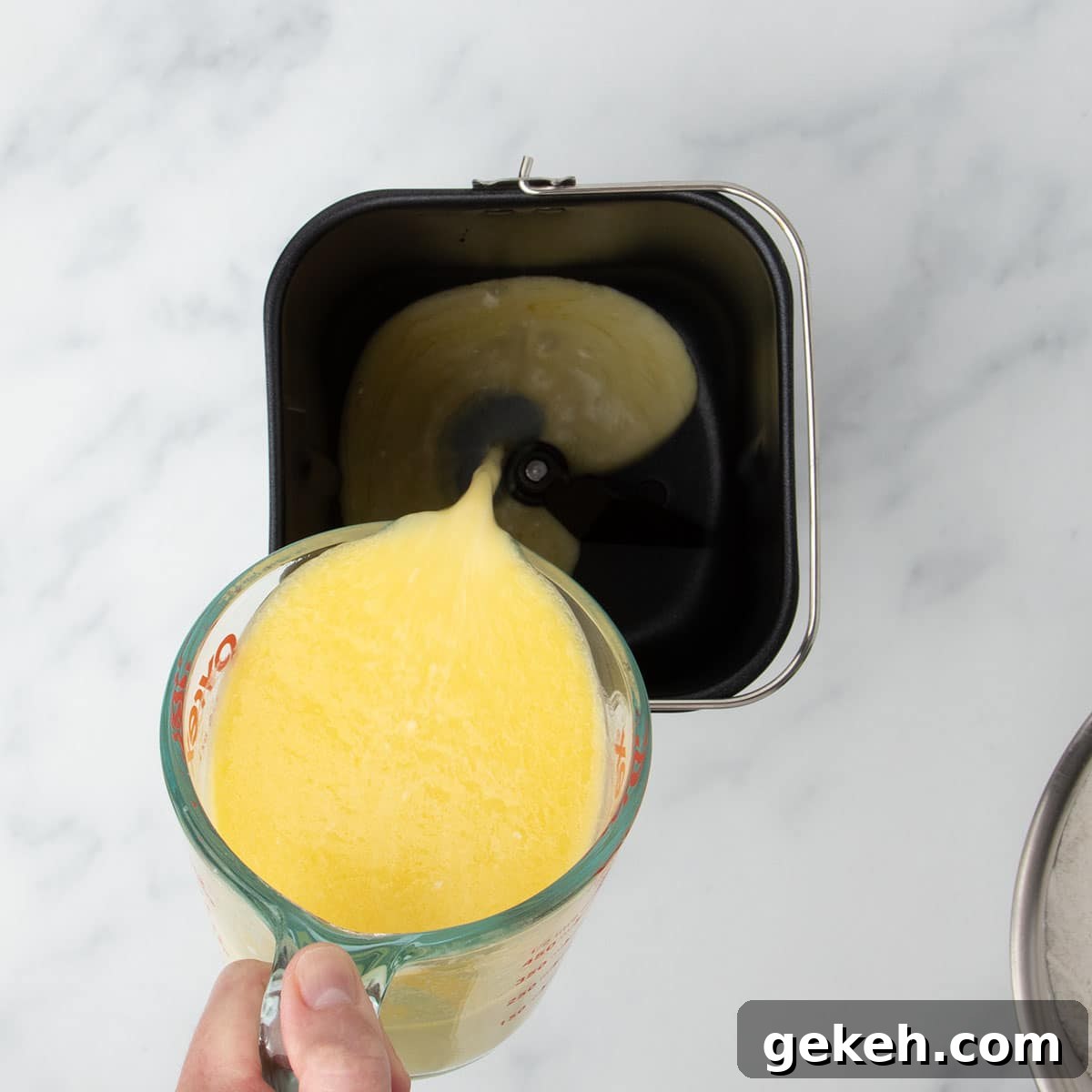
2. In a large liquid measuring cup or bowl, whisk together warm whole milk, melted cooled butter, apple cider vinegar, and room-temperature eggs until combined.
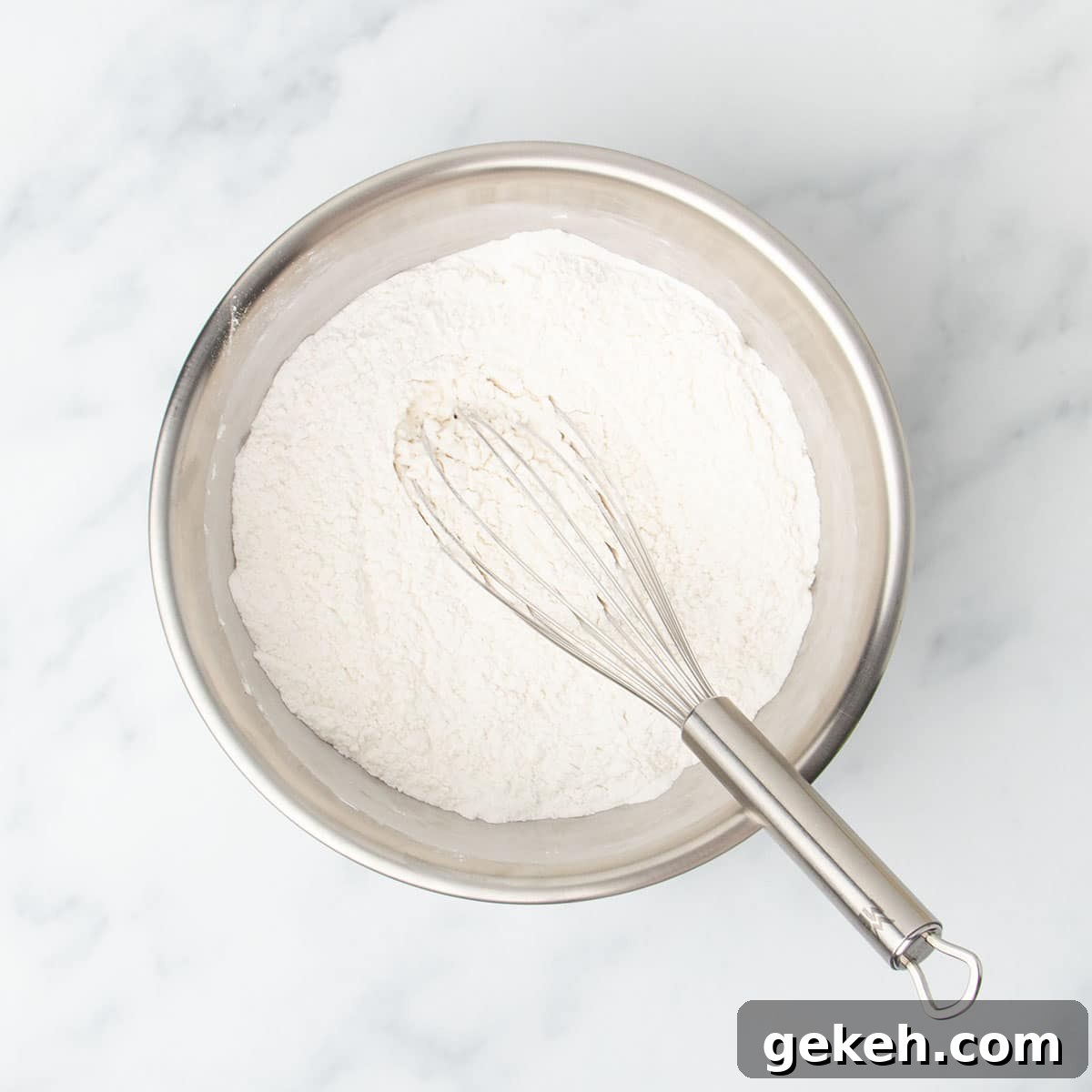
3. In a separate bowl, whisk the gluten-free flour blend (with xanthan gum if needed), tapioca starch, cream of tartar, baking powder, sugar, and salt.
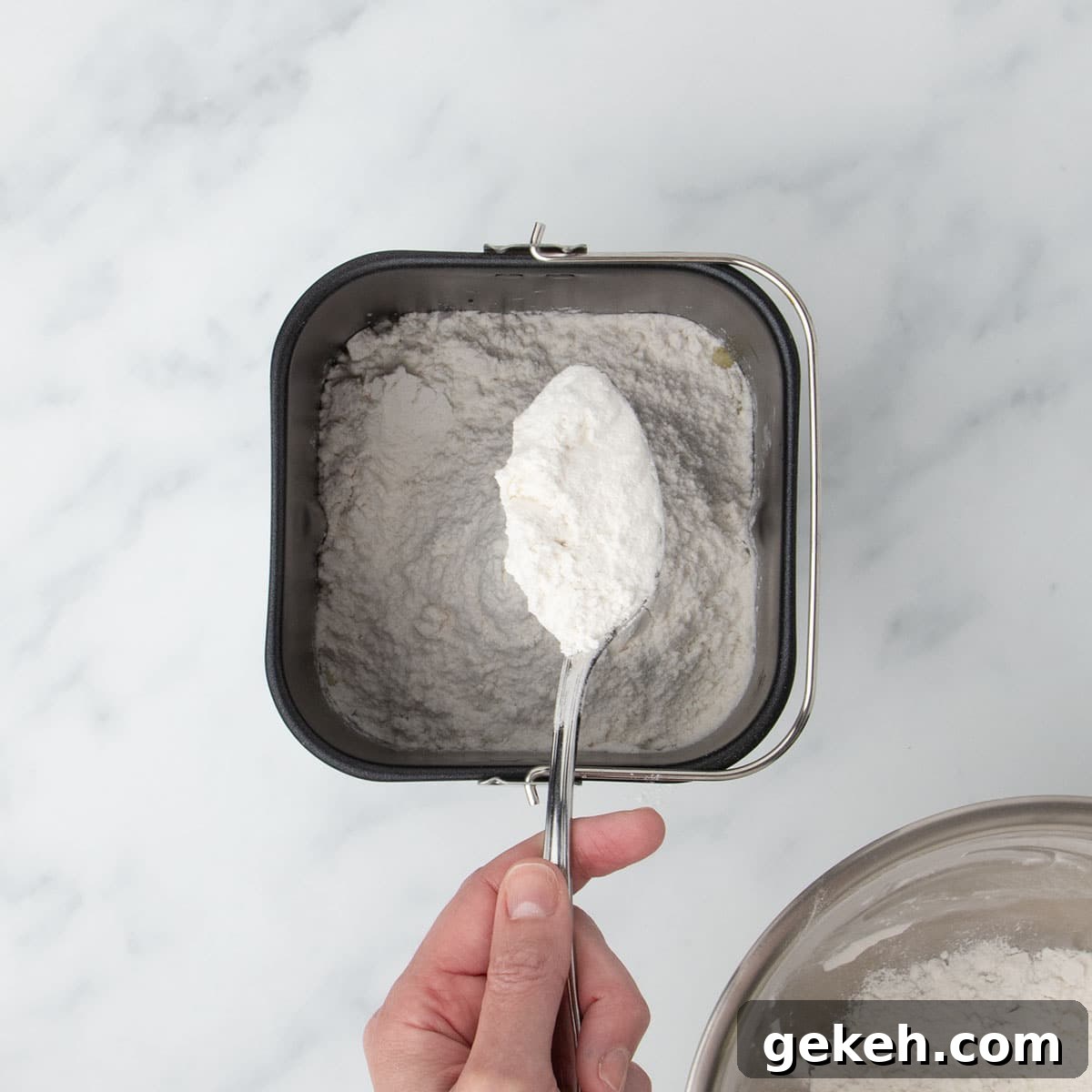
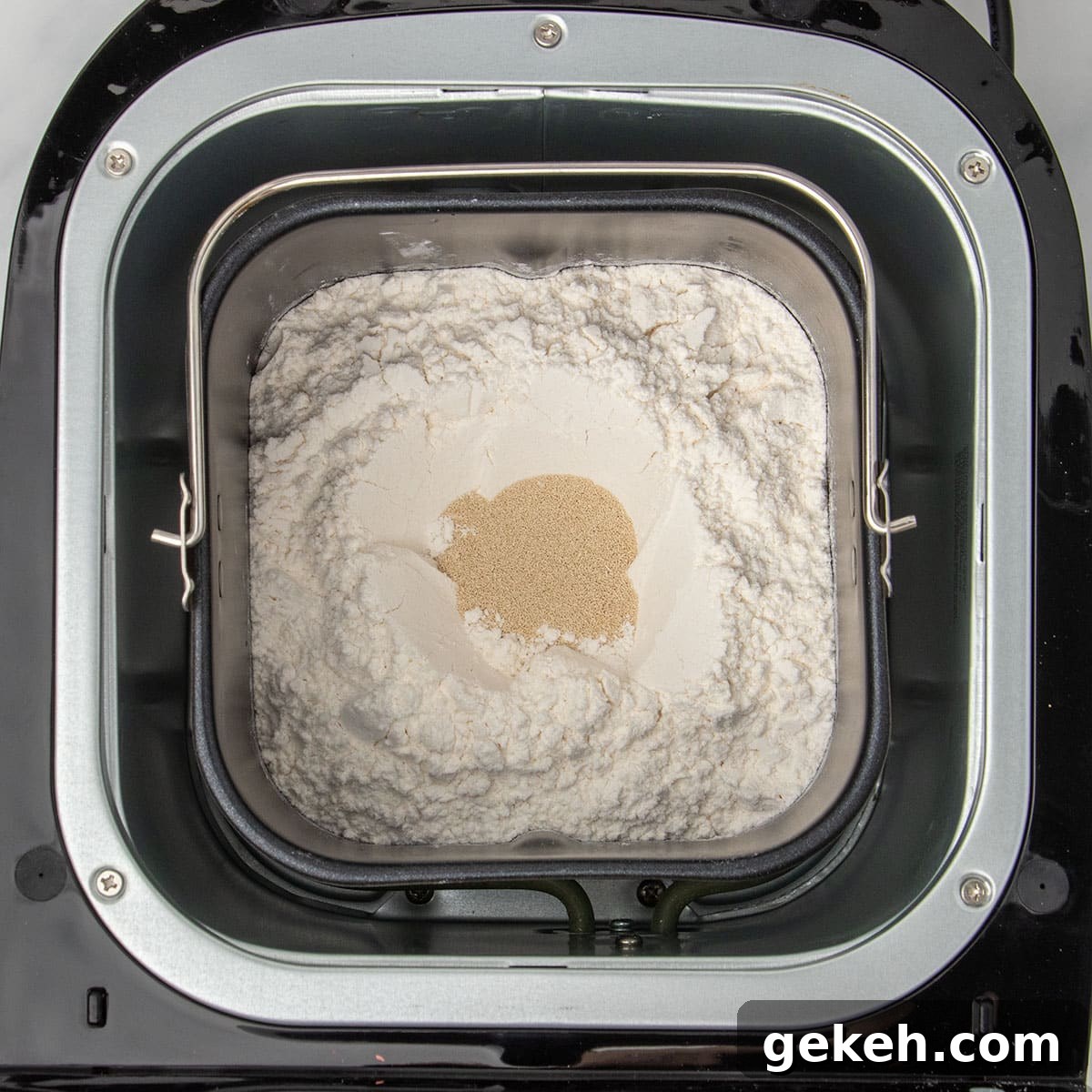
4. Pour the wet mixture into the loaf pan. Carefully spoon the dry mixture on top in an even layer; do not mix. Use a clean finger to make a small well in the center of the dry mix and add the instant yeast to that well so it does not touch the liquid.
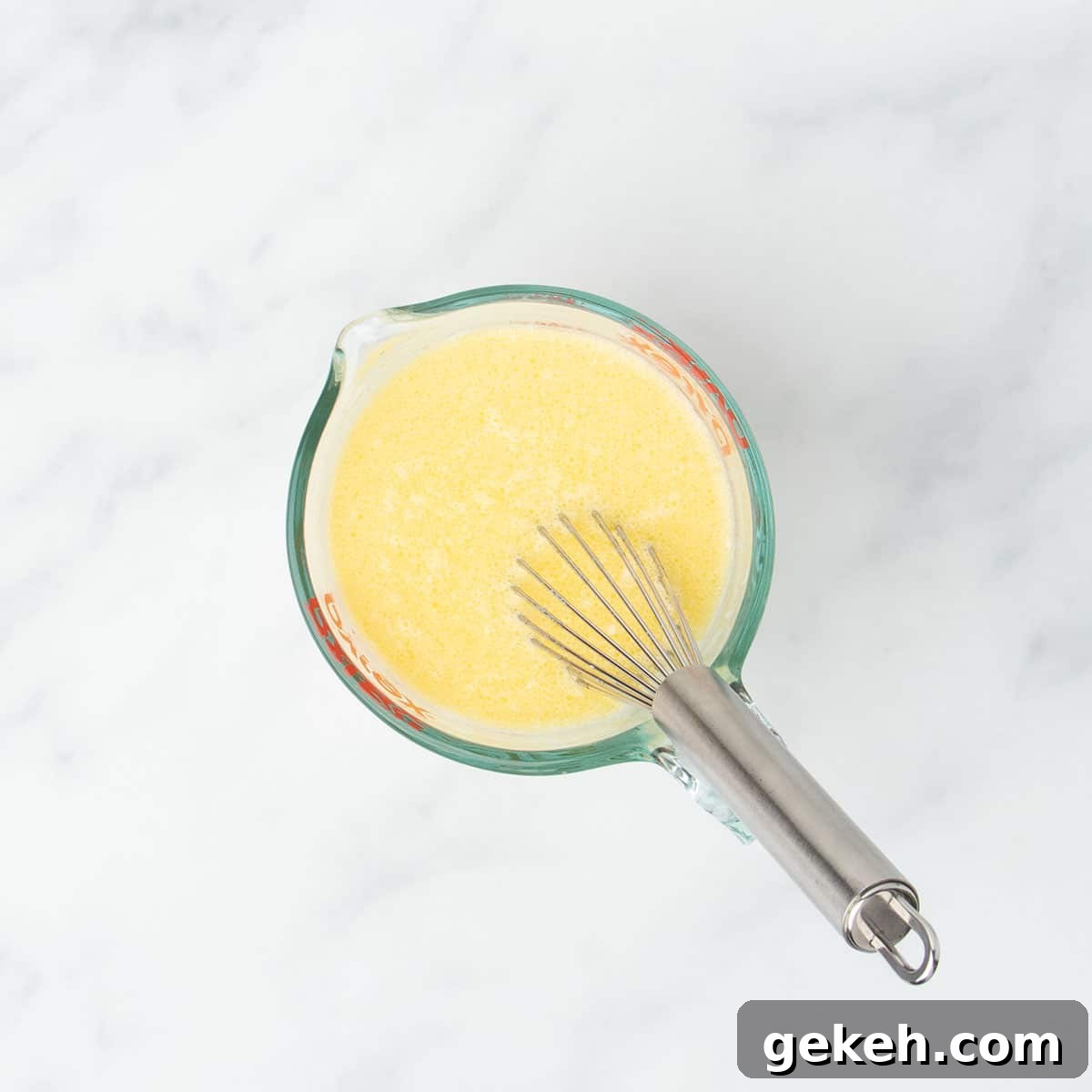
5. Insert the pan into the machine and choose the appropriate program. If your machine has a “homemade” or custom setting, set it for a 1.5-pound loaf with roughly 20 minutes mixing/kneading (one cycle only), a single rise of 1 hour, about 1.5 hours baking, and the darkest crust available. If you cannot set times manually, use a “gluten free,” “basic,” “rapid rise,” or “one rise” cycle.
6. When the mixing/kneading cycle finishes, open the lid and use a silicone spatula to scrape down the pan sides and incorporate any loose flour. Wet the spatula and smooth the top of the dough.
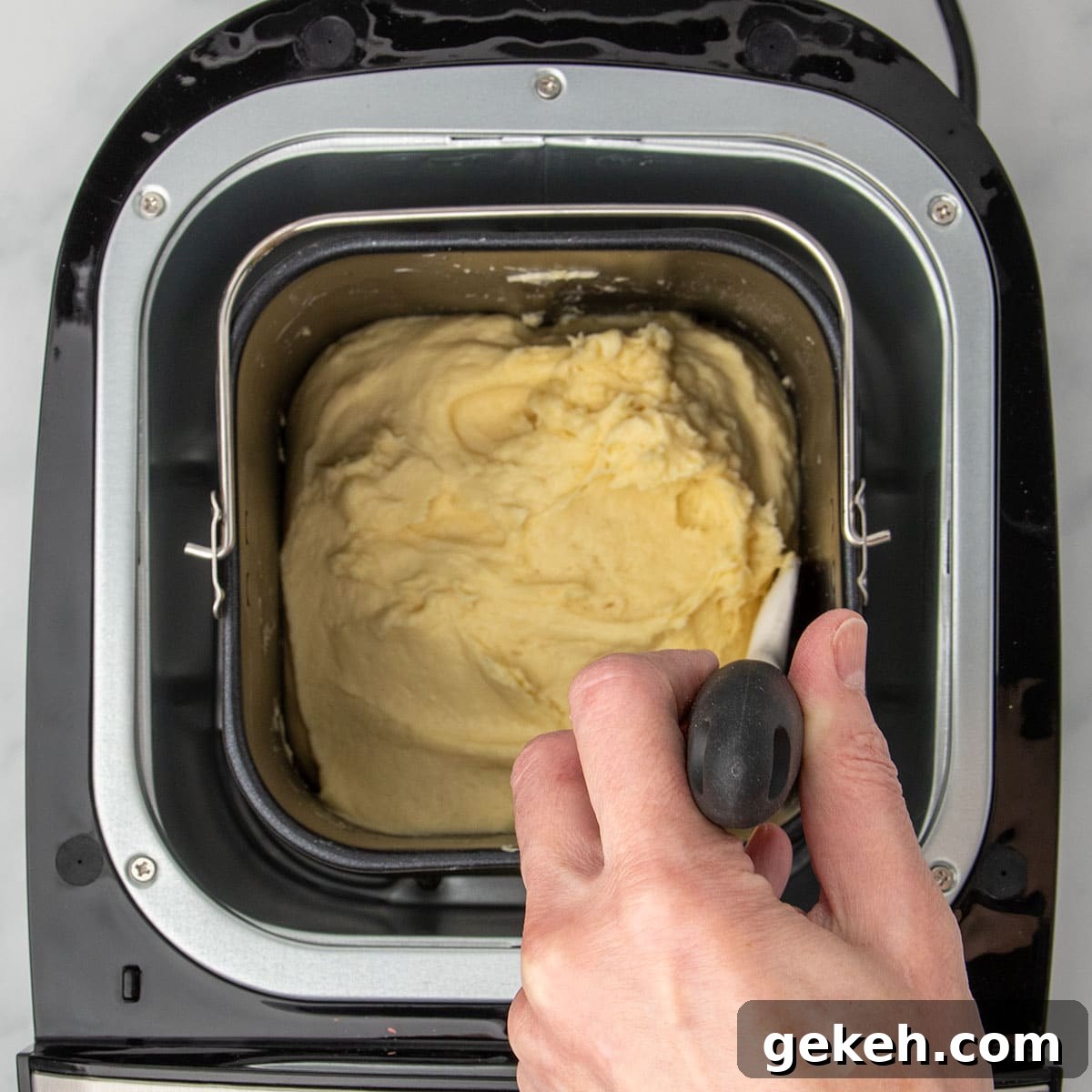
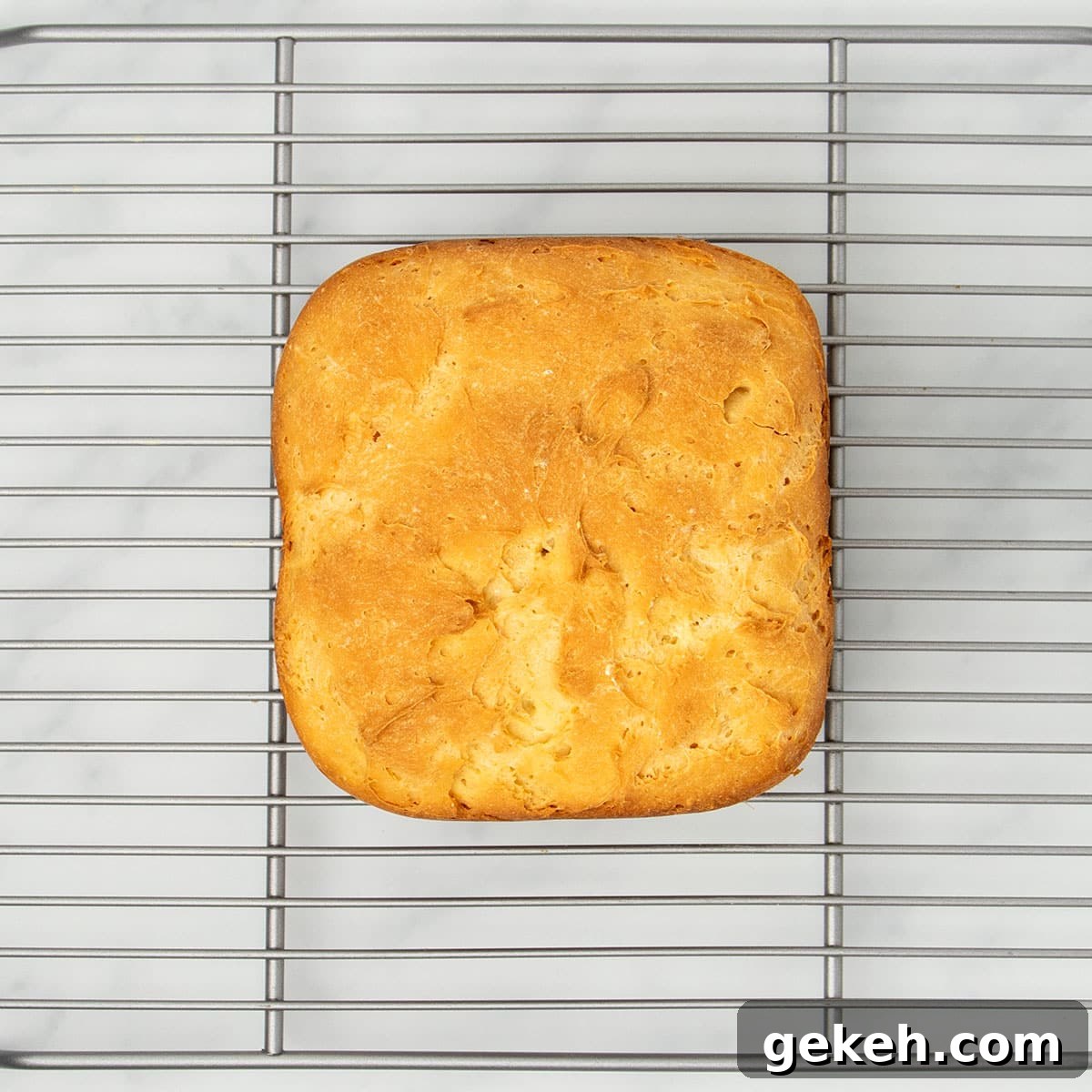
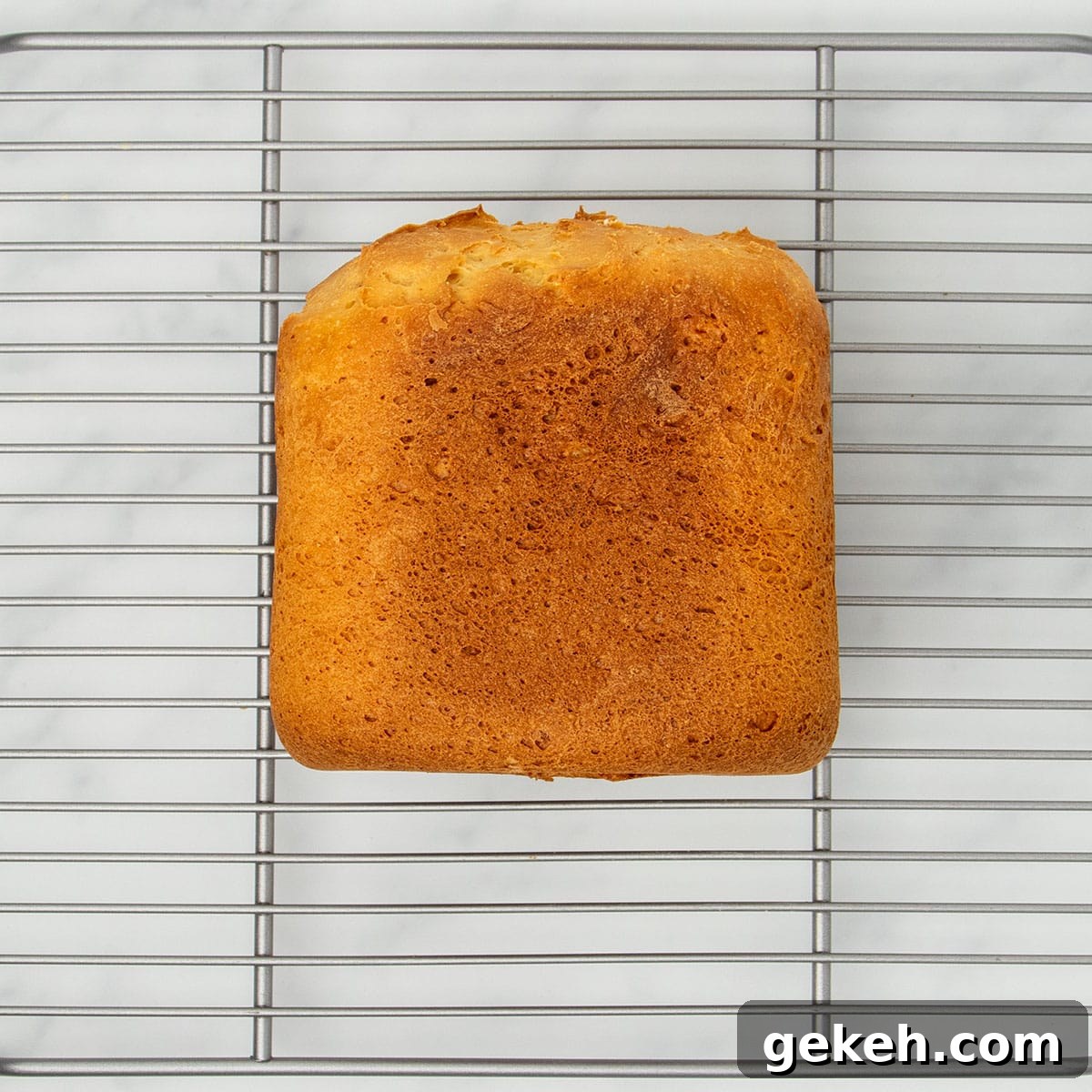
7. Allow the machine to complete the rise and bake. The loaf should bake until its center reaches 205°F on an instant-read thermometer, about 1 hour of baking in the machine plus additional time if needed for browning. If the top doesn’t brown sufficiently, transfer the loaf (removed from the pan) to a 400°F oven for 10 minutes to finish the color and firm the crust.
8. As soon as baking is complete, remove the pan, turn the loaf out onto a wire rack, and remove the paddle if it’s stuck. Cool at least 1 hour (preferably 2) before slicing so the crumb can set—cutting too early yields gummy slices.
My Pro Tip
Bread machine tips for the best gluten-free loaf
Choose a one-rise cycle or “homemade”: Use a program with a single knead and one rise. Skip two-rise cycles or punch-down options—gluten-free dough doesn’t tolerate them well.
Start with warm or room-temperature ingredients: Bread machines can’t adjust for cold ingredients. Use the temperatures specified so the yeast activates reliably.
Get a golden top: Use the darkest crust setting if available. If the top remains pale, finish the loaf in a 400°F oven for 10 minutes to brown and firm the crust.
Cool before slicing: Wait at least one hour—ideally two—before cutting to avoid gummy slices.
Ingredient substitutions and allergy-friendly options
Dairy-free: Use unsweetened almond or another smooth, neutral nondairy milk (avoid gritty oat milks). Replace butter with vegan stick butter for best flavor, or use about 35 g (2½ tbsp) neutral oil for a lighter loaf.
Egg-free: Try two flax or chia “eggs” (1 tbsp ground seed + 3 tbsp water per egg). Commercial egg replacers or refrigerated Just Egg may work, but textures will vary.
Tapioca starch: This ingredient adds chew and flexibility; if you must substitute, replace by weight with your flour blend or superfine glutinous rice flour, though tapioca gives the best result.
Yeast: Instant yeast is recommended. To use active dry yeast, increase to 10 g total, dissolve it in the milk mixture, and wait until bubbly before proceeding.
Thinking of using your oven?
This recipe was developed specifically for bread machines. If you want an oven-baked loaf, use the classic gluten-free bread recipe mentioned at the top.
Gluten Free Bread Recipe For Bread Machine
Equipment
- Bread machine with a “homemade” or adjustable setting, or at least a “gluten free” setting (see notes)
Ingredients
- 1 ½ cups (12 fl oz) whole milk, warm (about 95°F)
- 3 tablespoons (42 g) unsalted butter, melted and cooled
- 1 teaspoon apple cider vinegar
- 2 eggs (about 100 g out of shell), at room temperature
- 2 ⅝ cups (368 g) all-purpose gluten-free flour blend (see notes)
- 3 teaspoons xanthan gum (omit if your blend already contains it)
- ½ cup (72 g) tapioca starch
- ¼ teaspoon cream of tartar
- ½ teaspoon baking powder
- 2 tablespoons (24 g) granulated sugar
- 2 teaspoons (12 g) kosher salt
- 2 ½ teaspoons (8 g) instant yeast
Instructions
- Remove the loaf pan and attach the mixing paddle.
- Whisk warm milk, melted butter, apple cider vinegar, and eggs in a large liquid measuring cup or bowl.
- Whisk together the flour blend, xanthan gum, tapioca starch, cream of tartar, baking powder, sugar, and salt in a separate bowl.
- Pour wet ingredients into the loaf pan. Spoon the dry mixture on top in an even layer. Make a small well in the center of the dry mix and add the yeast to the well.
- Insert the pan in the machine and set the program: 1.5 lb loaf, ~20 minutes mixing/kneading (one cycle), 1 hour rise (one rise), 1.5 hours baking, dark crust if available. Otherwise choose “gluten free,” “basic,” or “one rise.”
- Start the machine.
- When mixing finishes, scrape down the pan sides with a silicone spatula to incorporate any dry pockets. Wet the spatula and smooth the top of the dough.
- Close the lid and allow the bread to rise and bake. Bake until the internal temperature is 205°F.
- If the top is not browned, continue baking until firm and golden, or remove the loaf from the pan and finish in a 400°F oven for 10 minutes.
- Turn the loaf out onto a wire rack and remove the paddle if needed. Cool at least 1 hour (ideally 2) before slicing.
Notes
Bread machines and settings: Many machines offer a “homemade” or custom setting that allows control over knead, rise, and bake stages. Any model with a one-rise cycle will work.
Flour blend choices: Recommended: Better Batter Original Blend, Nicole’s Best Blend (add xanthan gum), King Arthur GF Bread Flour (may produce a denser loaf), Caputo Fioreglut (may yield a shorter, paler loaf). Avoid blends formulated for general baking such as KAF Measure for Measure and Cup4Cup for this recipe unless you adjust extensively. Bob’s Red Mill 1-to-1 can be used with an extra 1½ tsp xanthan gum but is not optimal.
Instant vs active dry yeast: Instant yeast (also called rapid-rise or breadmaker yeast) is recommended. To use active dry yeast, use 10 g, dissolve it in the milk mixture, and wait until it becomes bubbly before proceeding.
Nutrition
Nutrition information is an approximation.
make ahead/leftovers
Storage instructions
Yeast bread is best the day it’s made. Wrap a fully cooled loaf tightly in plastic wrap, unsliced, and keep at room temperature for one day.
For longer storage, slice or leave the loaf whole, place it in a freezer-safe zip-top bag, squeeze out the air, and freeze up to 3 months. Defrost slices in a toaster oven or microwave. To refresh stale slices, sprinkle lightly with lukewarm water and warm in a 300°F toaster oven for 5–10 minutes.
Gluten-free bread machine FAQs
You can, but honey may be overpowering. If you try it, reduce the milk by about 1 tablespoon to keep the dough balance.
If your blend lacks xanthan gum, you can try about 20 g blond psyllium husk, but expect a slightly different texture.
Yes—King Arthur Gluten-Free Bread Flour can work but may produce a shorter loaf with a tighter crumb. You might need to increase liquids by about 10%.
Usually yes, but it depends on the model. Check your manual for the proper reset procedure.
Yes—scale the recipe down by one-third. Yield will be about five slices. Use roughly 67 g of egg total (one extra-large egg or part of two beaten eggs).
This specific recipe is written for bread machines. For oven baking, use the classic gluten-free loaf recipe referenced above.