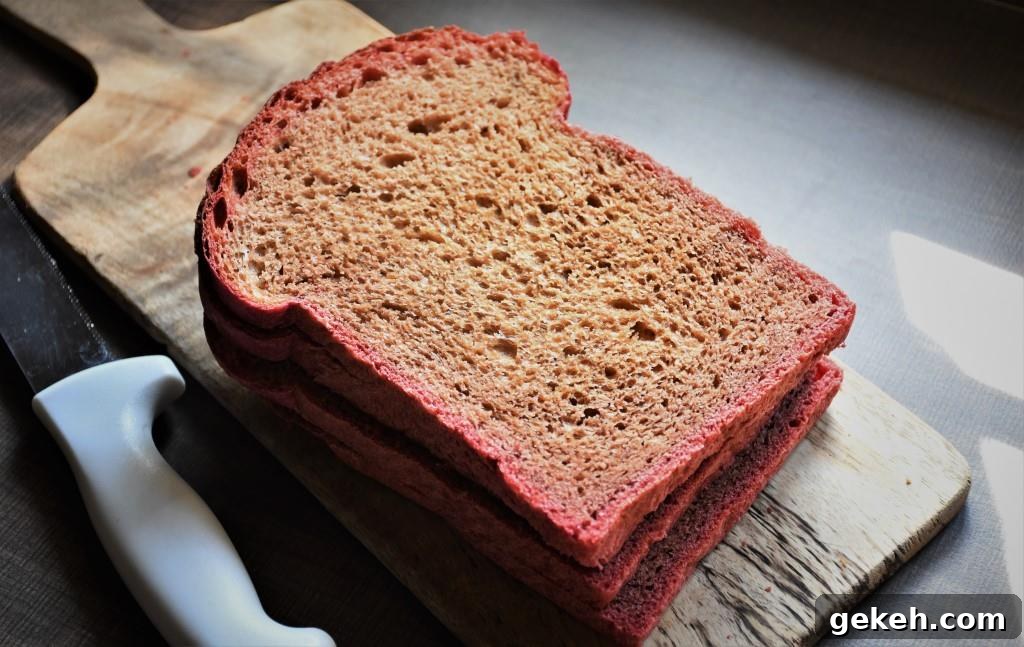
Beetroot Sandwich Loaf is one of the best breads I’ve baked recently. In this post I explain the techniques I used so you can bake a tall, soft sandwich loaf at home. Lately I’ve been baking bread regularly to refine my skills, and this beetroot loaf — made with beet puree — turned out exceptionally well.
After taking a sourdough class from an international baker, I began using preferring and autolysis in my regular bread recipes. Although I haven’t started full sourdough baking yet, applying those methods to yeasted breads made a noticeable difference in texture and flavor.
Difference between Maida and Bread Flour:
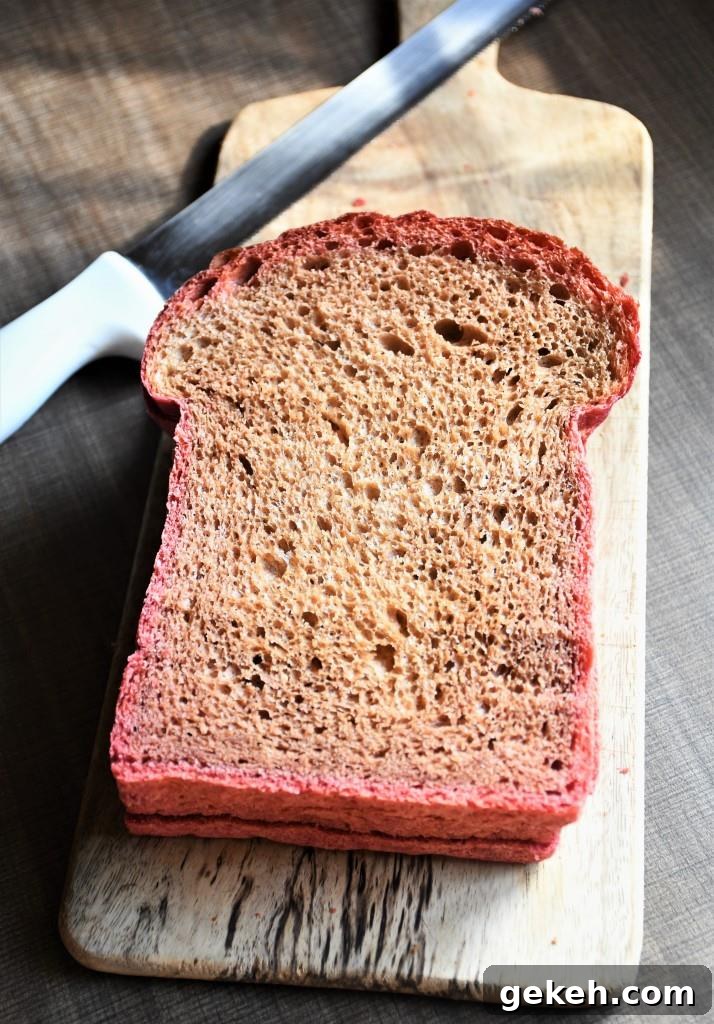
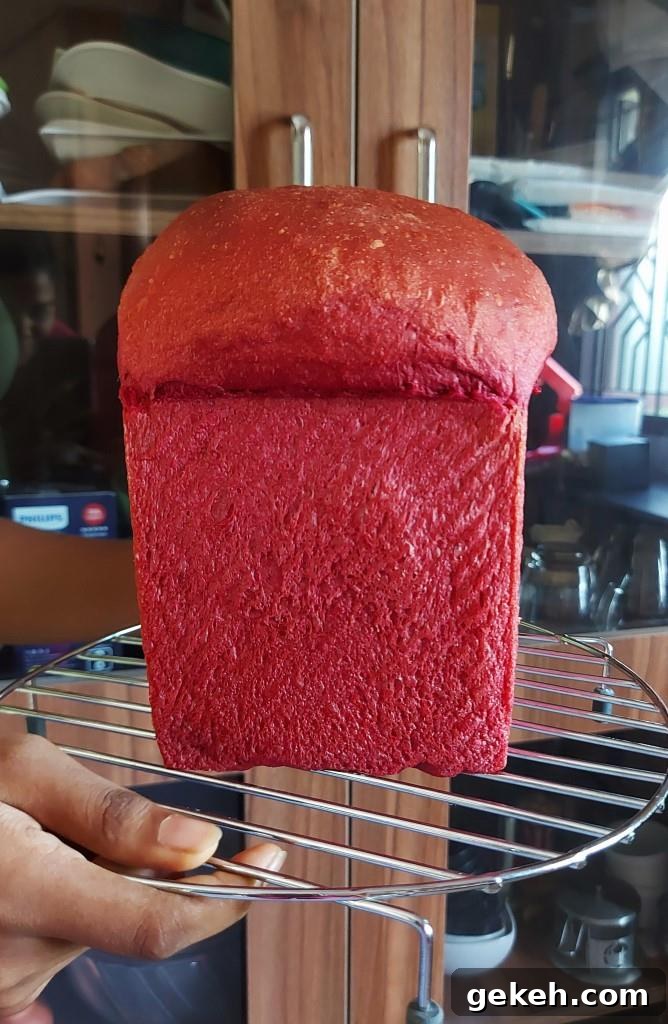
One important change I made was switching from maida to bread flour. Bread flour has a higher protein content, making it a stronger flour that yields taller, lighter loaves. With 430 g of maida in a 5″ cube tin I typically get a perfect cube without a dome. But using 400 g of bread flour in the same tin produced a large dome and a taller loaf. Next time I plan to reduce the bread flour to around 380 g because the edges felt a little dense. The takeaway: bread flour is stronger and produces a lighter, taller sandwich loaf, while maida gives a different rise and shape.
How Autolysis improves strength
Autolysis means mixing part of the flour with water (or puree in this case) and letting it rest for a period before adding the remaining ingredients. I mixed one portion of flour with water and allowed it to sit for 45 minutes. This resting stage helps the dough develop strength and extensibility so it can pass the windowpane test even without much kneading. Autolysis improves dough structure and makes it easier to handle during shaping.
How to use Pre Ferment
A pre ferment is a small mix of flour, instant yeast and liquid that ferments separately before being incorporated into the main dough. I use yeast in the pre ferment with about one-quarter of the recipe’s flour, letting it proof for 45 minutes. This builds flavor and improves proving in the final dough. Multiple fermentation stages increase the bread’s flavor and make the crumb lighter and more developed.
How to incorporate Beetroot Puree in breads
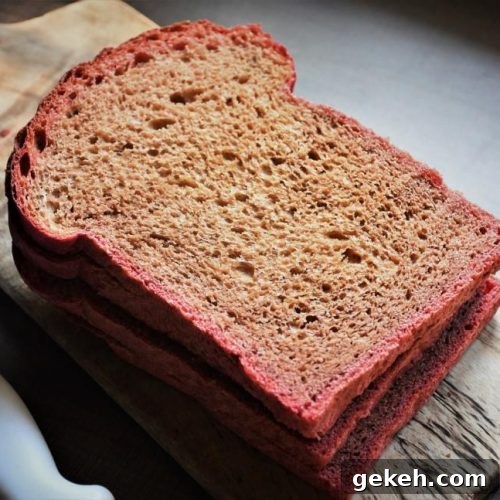
When adding vegetable purees to bread, cook and puree them first. For this loaf I boiled the beets until tender, removed the skins, chopped them and ground them to a fine paste using the cooking water. This produced a bright, vivid puree that colored the crust nicely. The crumb didn’t take on the same deep color, so next time I will add two teaspoons of vinegar to the puree to help retain the interior color. I’ll update results after trying that.
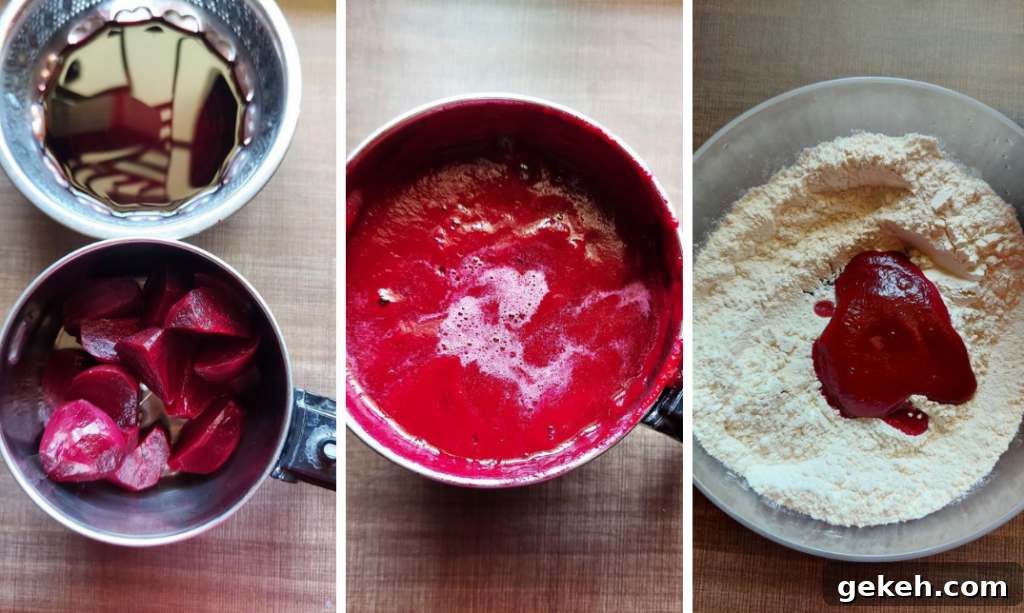
The image above shows the beet puree and the pre ferment — look at that color. It’s bright and cheerful, and it gives the dough a lovely hue.
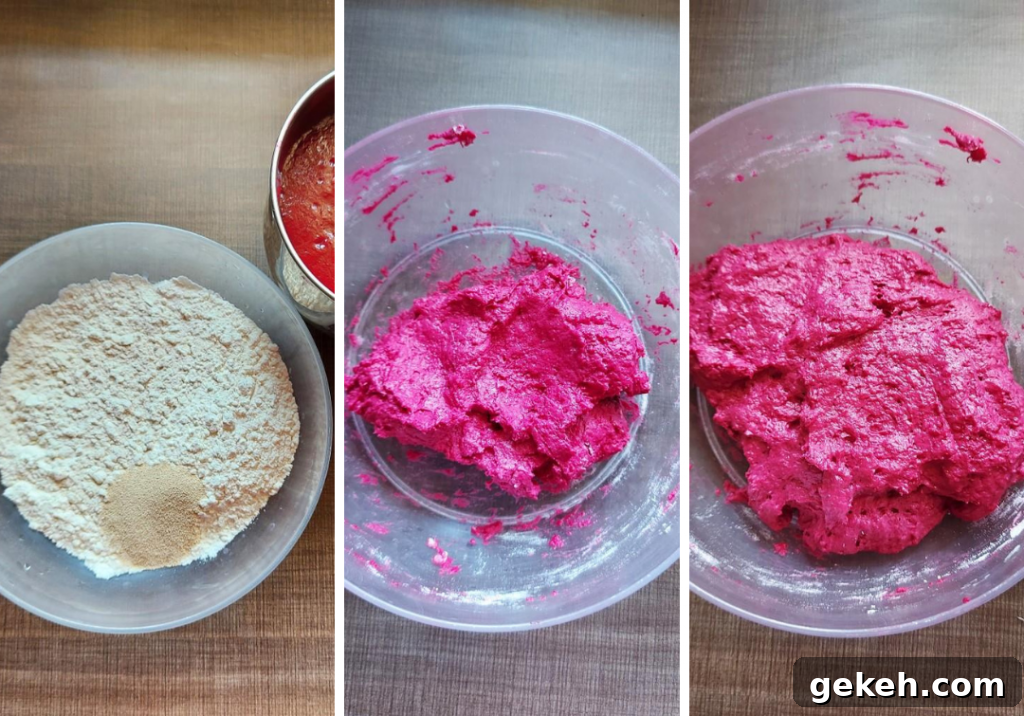
Allow the pre ferment to rise until roughly doubled in volume; in cooler climates this can take longer than 45 minutes, so judge by volume rather than time.
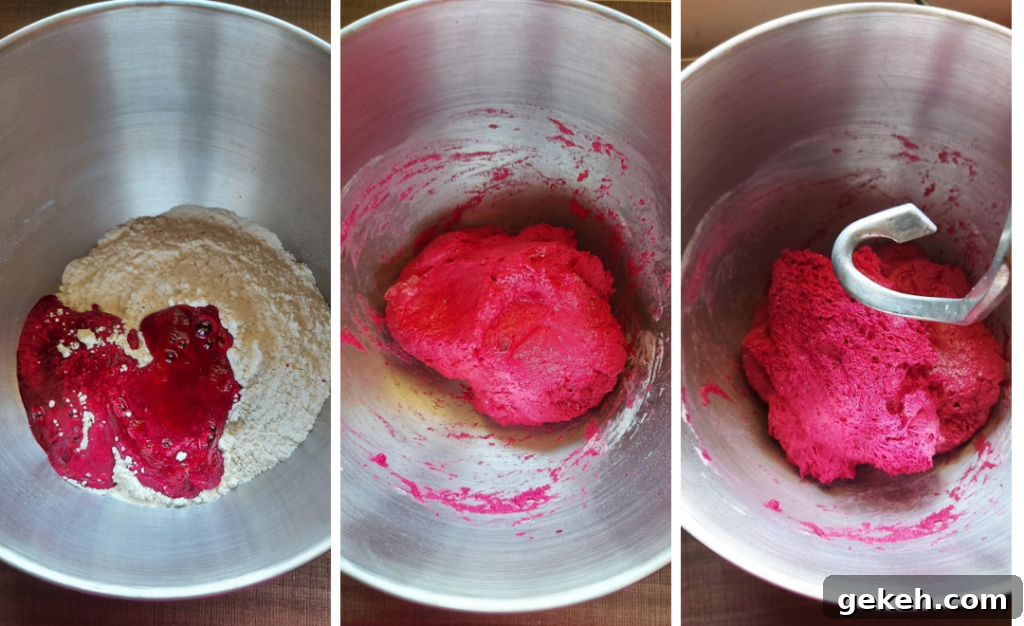
This is the autolysis dough made with beet puree and flour. Autolysis was performed for the same time as the pre ferment and noticeably improved dough strength. After proving and autolysis it’s time to knead. You can knead by hand or use a stand mixer. I kneaded by hand for 6–7 minutes or 5 minutes in a mixer for the first stage.
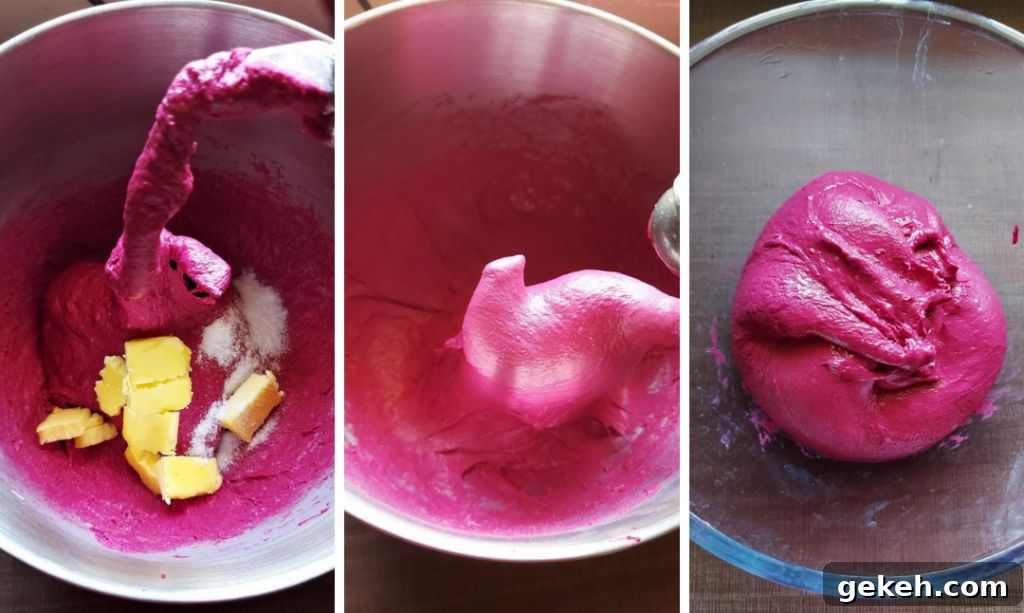
After the initial knead add butter and salt, then knead for another five minutes by hand or mixer. The finished dough should feel soft and silky. If kneading by hand and the dough becomes difficult, use a dough scraper and the slap-and-fold method to manage higher hydration.
After proving, punch the dough down to degas and shape it into a smooth round. For a cube tin there’s no need to shape into a log. Place the dough into a greased 5” cube tin.
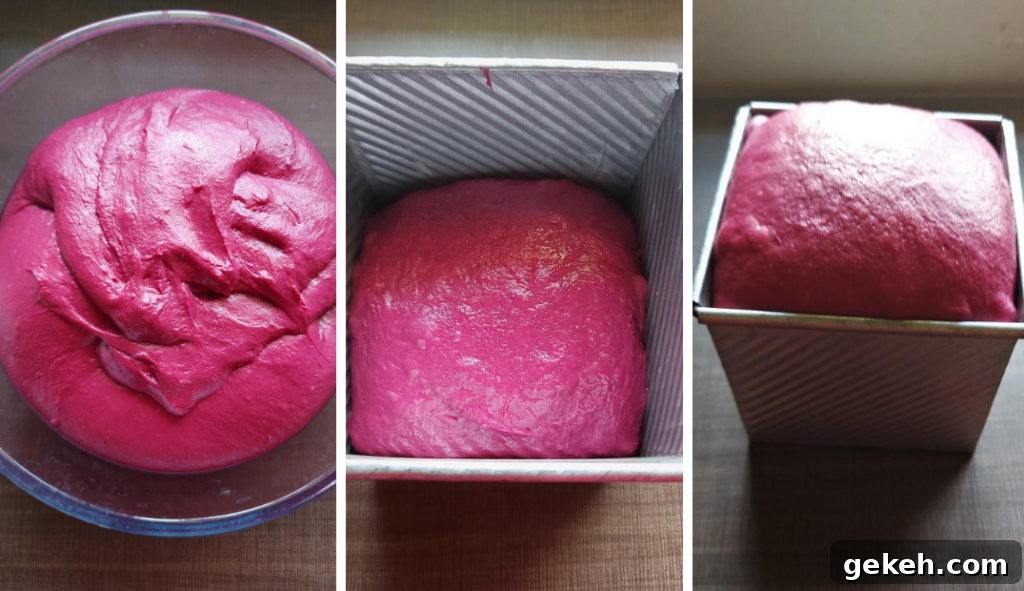
Second prove the dough until it rises slightly above the rim. With bread flour you’ll often see a tall dome above the rim; if you use maida the dough may only reach the rim and should be baked immediately to avoid overproofing. Preheat your oven to 200°C and bake for 40–45 minutes. For an OTG use the lower rack to avoid the loaf touching the top filament; in a microwave convection oven ensure at least a 2″ gap between the top of the tin and the oven ceiling. If the top is very close to the heating element, cover the loaf with foil for the last 15 minutes to prevent burning. The loaf is done when the crust is firm and sounds hollow when tapped.
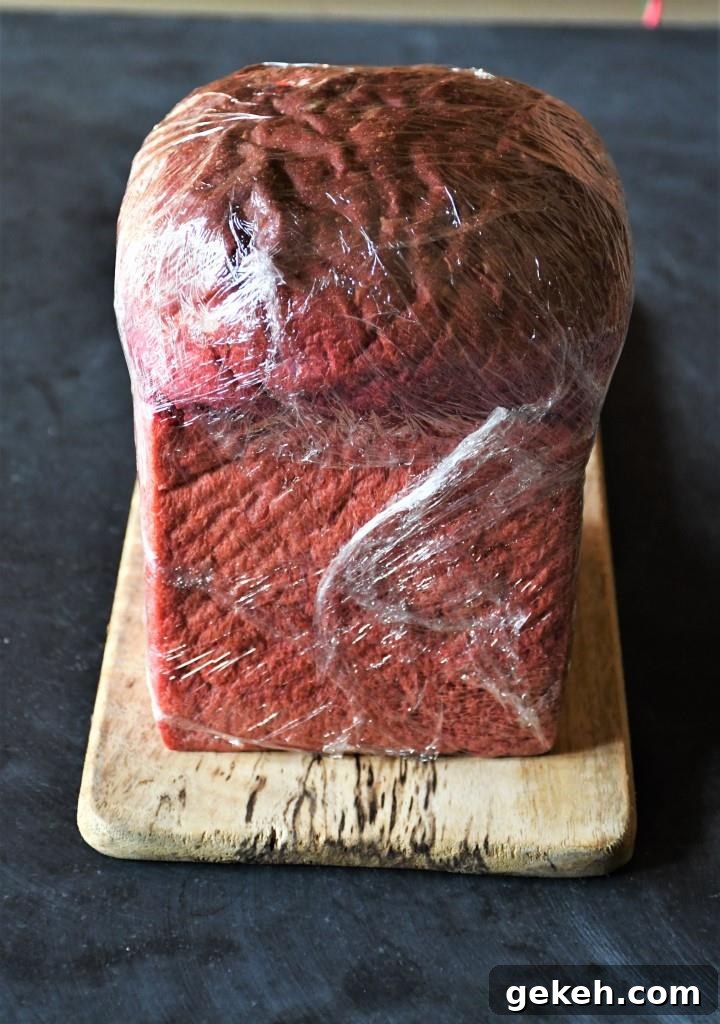
Cool the loaf on a wire rack for five minutes, then remove it from the tin. If the tin was well greased the loaf should release easily. Wrap the cooled loaf in cling film and then foil and leave it on the counter overnight; this resting adds extra softness. The next day slice with a good bread knife — the crumb will be tender and the beet flavor mild and pleasant rather than overpowering.
Why overnight rest is good for breads:
An overnight rest after baking helps the crumb relax and become softer, so avoid rushing this step and do not refrigerate the loaf. The beet flavor in this loaf is subtle and enjoyable; the crust shows more color than the crumb, but the texture and taste are excellent.
The yeast I used – Weismill
The tin is a 5″ cube tin from Leaf and Loaf
Bread flour used: T65 bread flour
Beetroot Sandwich Loaf Recipe
Gayathri Kumar
Pin Recipe
Ingredients
For the Puree:
- 4 small Beetroot
For the Pre Ferment:
- 100 gm Bread Flour
- 1 tsp Instant Yeast
- Beet Puree as needed
For the Dough:
- 300 gm Bread Flour
- Beet Puree as needed
- 1 tsp Salt
- 20 gm Butter
Instructions
Beetroot Puree:
-
Clean the beetroot and trim off the roots.
-
Place beets in a pan with enough water to cover and boil until tender.
-
Allow to cool completely.
-
Peel and chop the beets into cubes.
-
Blend the cubes with some of the cooking water to a fine puree.
-
Set aside.
Pre ferment:
-
Combine 100 g bread flour, 1 tsp instant yeast and enough beet puree to form a thick dough.
-
Cover and let it prove for 45 minutes, until roughly doubled.
Autolysis:
-
Mix 300 g bread flour with enough beet puree to make a shaggy dough.
-
Cover and rest for 45 minutes.
Preparing the dough:
-
Combine the autolysis dough and the pre ferment. If kneading by hand, mix and knead on the counter for 6–7 minutes. If using a mixer, knead with a dough hook for 5 minutes.
-
Add butter and salt.
-
Knead for another 5 minutes by hand or mixer until soft and silky.
-
Transfer the dough to an oiled bowl, cover and allow it to double in volume (45–75 minutes depending on temperature).
-
Punch down the dough to degas.
-
Shape into a smooth round and place into a greased 5” cube tin.
-
Cover and proof until the dough reaches the rim.
-
Preheat oven to 200°C.
-
Bake for 40–45 minutes in the preheated oven.
-
Remove and rest on a wire rack for five minutes.
-
Remove the loaf from the tin and allow it to cool completely.
-
Wrap the cooled loaf in cling film and foil and let it rest overnight on the counter.
-
Slice and serve the next day.