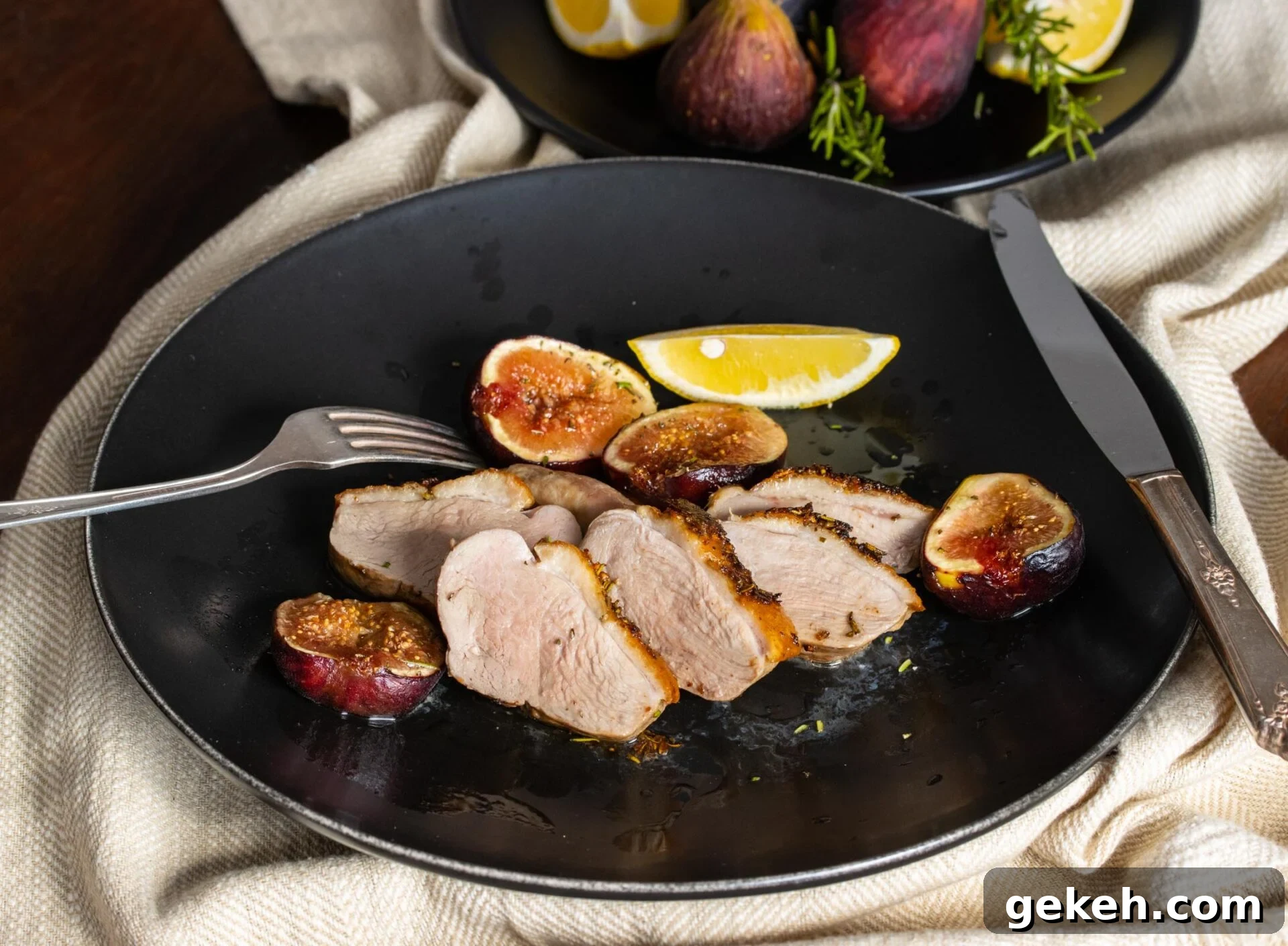
First, let me put your mind at ease: this dish is very easy to prepare. It only takes a few extra steps and a bit of attention to detail.
That attention means using a sharp knife to score the skin in a shallow crosshatch pattern, cutting through the fat but not into the meat. This helps the fat render and the skin crisp beautifully.
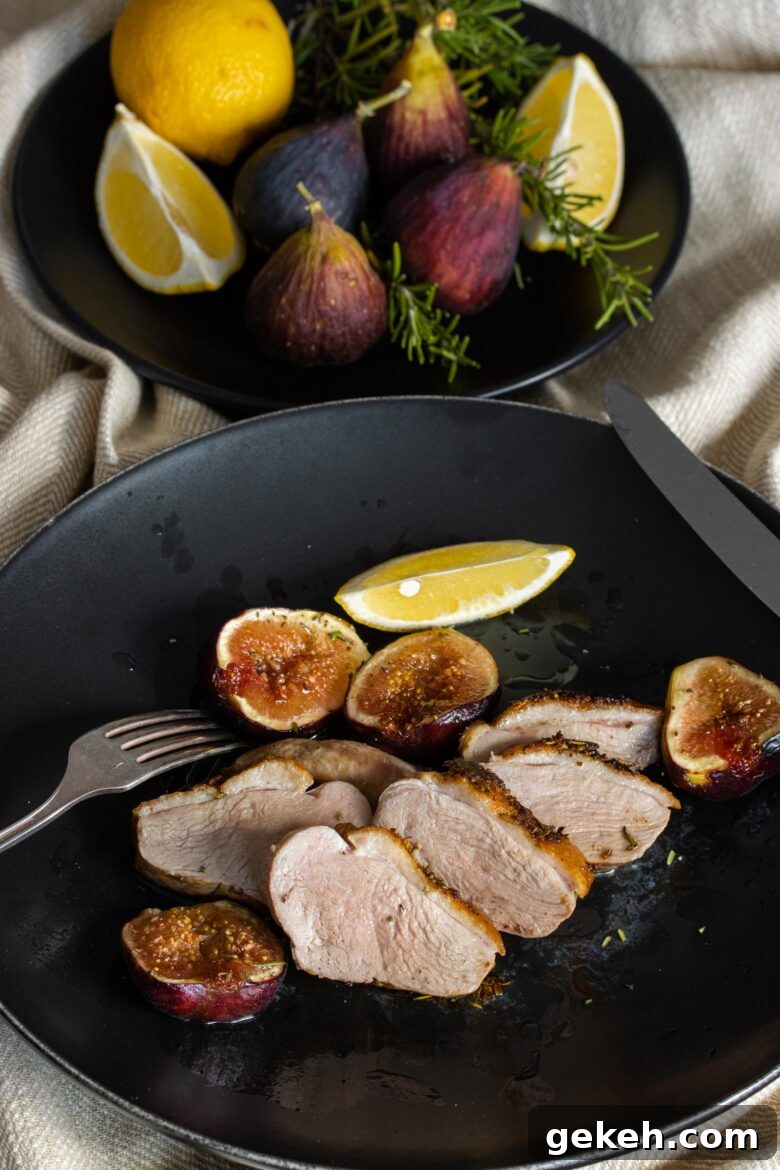
Everything cooks in a single skillet, which makes the recipe quick and convenient. From start to finish it takes about 30 minutes: simple, elegant, and full of flavor.
The most commonly served duck breeds in restaurants are Mallard and Muscovy; Peking (white) ducks are often preferred for their tender, mild flavor that’s less gamey.
In this Article
- Cooking tips and step-by-step for this fig and seared duck recipe
- Why I grate the garlic and how seasoning enhances flavor
- Serving suggestions
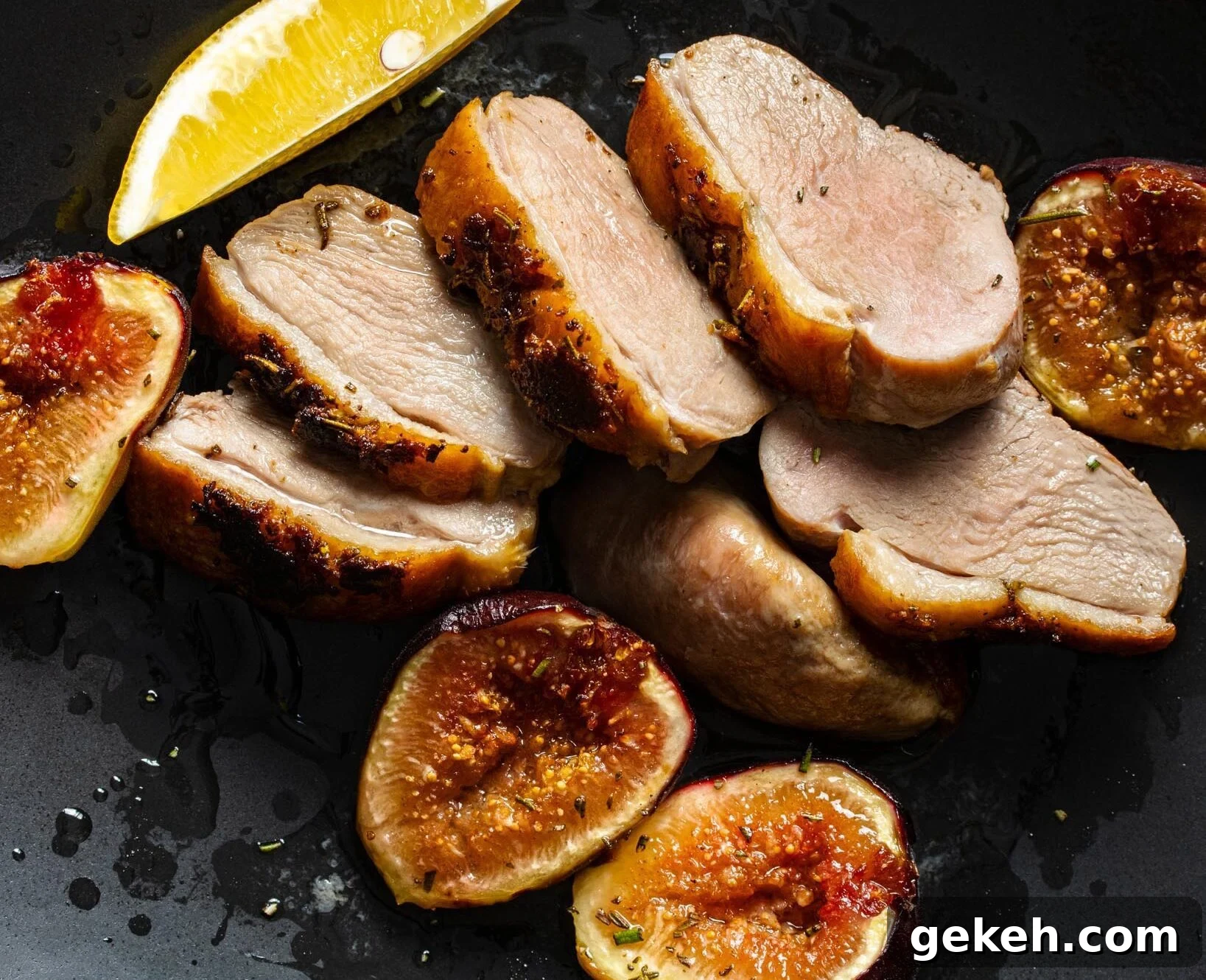
Cooking tips and step-by-step for this fig and seared duck recipe
- Duck breasts have one meaty side and one side that is rich in fat; score the fat side to help render the fat and crisp the skin.
- Reserve rendered duck fat after searing — it keeps in the refrigerator and is excellent for frying potatoes or adding flavor to vegetables and other meats.
- Bring the breasts to room temperature and pat them dry with paper towels; remove any small feather tips if present.
- Season the duck, then place it skin-side down in a cold, ovenproof cast-iron or heavy skillet so the fat renders slowly and the skin browns evenly.
- Cook skin-side down over medium heat until golden and releasing from the pan, about 10–15 minutes; then drain most of the fat, reserving a little for flavor.
Why I grate the garlic and how seasoning enhances flavor
- Grating garlic disperses its flavor more evenly through the seasoning; if you have a coarse French sea salt, it pairs particularly well with grated garlic.
- After the skin is golden, flip the breasts and finish them in the oven for a few minutes to reach medium doneness.
- Choose figs that are perfectly ripe but not overripe so they hold their shape during cooking.
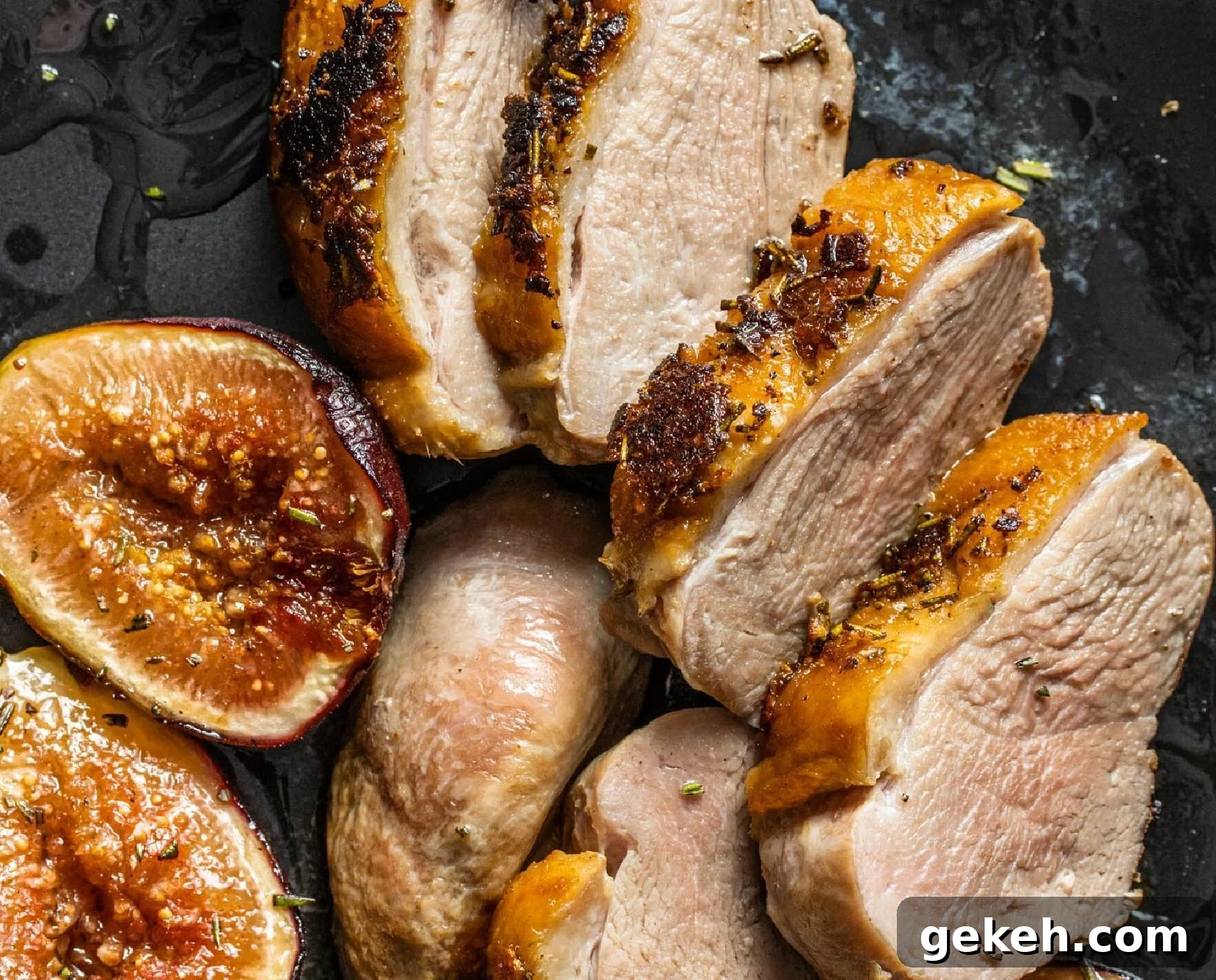
- Slice each breast into three to four pieces per person when serving. Duck legs can be prepared in a similar style if you prefer.
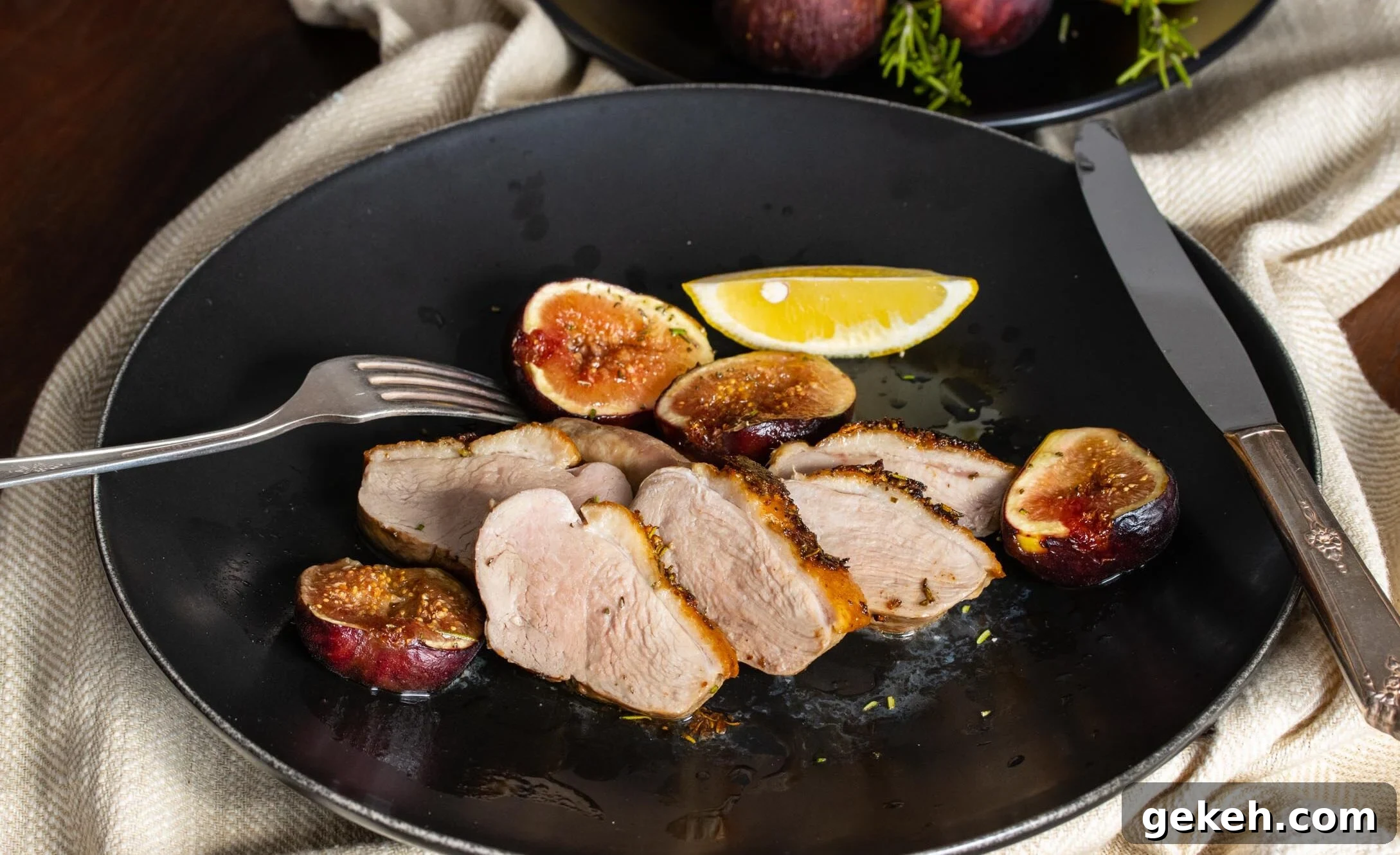
If you have time, marinate the breasts in the refrigerator for up to 24 hours, then allow them to come back to room temperature before cooking.
Figs complement the duck beautifully. After searing, I like to drizzle a little of the reserved cooking fat over the figs before roasting — the result is richly flavored and wonderfully balanced. Finish with a squeeze of lemon and a drizzle of olive oil for brightness.
Serving suggestions
Garlic potatoes are a hearty favorite to pair with this dish, or serve it with a light green salad and crusty French bread for a lighter meal.
For a seasonal side, try roasted or sautéed squash with a honey vinaigrette. For dessert, a raspberry buttermilk cake is a lovely follow-up, especially during holidays.
More delicious recipes to try:
Duck Breast with Dried Cranberries, Cream and Raspberry Jam
Pomegranate and Blackberry Sauce with Pork Tenderloin
Figs with Goat Cheese Salad
Duck Breast with Port and Cherry Sauce
Video: cook along with me
A short demonstration showing how to score the skin and sear the duck can be helpful if you’re new to the technique.
Figs and Seared Duck Breasts

Ingredients
- Finely grated lemon zest
- 1 garlic clove, finely grated
- 2 tablespoons rosemary leaves, finely chopped
- ¾ teaspoon sea salt
- ¼ teaspoon ground black pepper
- 12 ounces duck breasts, patted dry and scored crosshatch into the skin (do not pierce the flesh)
- 6 figs, halved
- Juice of ½ lemon and lemon wedges for serving
- Olive oil, to drizzle
Instructions
- In a small bowl combine lemon zest, grated garlic, and 1 tablespoon of chopped rosemary with sea salt and pepper. Mix and rub over both duck breasts.
- Place the duck skin-side down in a cold, ovenproof skillet. Heat over medium and cook until the fat renders and the skin is golden, about 10–12 minutes. Pour off most of the fat and reserve a little.
- Flip the breasts, remove the skillet from the heat, and scatter the figs and the remaining 1 teaspoon rosemary around the figs (not on top of the duck).
- Roast in the oven for about 5 minutes for medium doneness.
- Remove the skillet from the oven and turn on the broiler. Transfer the duck to a cutting board, tent with foil, and let rest for 5 minutes.
- Place the skillet with figs under the broiler 1–2 minutes until lightly charred—watch closely to avoid burning. Slice the duck and serve with figs. Squeeze lemon juice and drizzle olive oil over the duck and figs before serving.
Nutrition
Carbohydrates: 20 g |
Protein: 23 g |
Fat: 5 g |
Saturated Fat: 2 g |
Cholesterol: 87 mg |
Sodium: 648 mg
Nutritional information is an estimate and not calculated by a registered dietitian.
- Course: Dinners, Poultry
- Cuisine: French
- Occasion: Christmas, New Year
- Season: Fall
Did you make this?
Leave a comment below and tag @giangiskitchen on Instagram
Visit my Amazon Storefront for a curated selection of kitchen essentials I recommend and use.