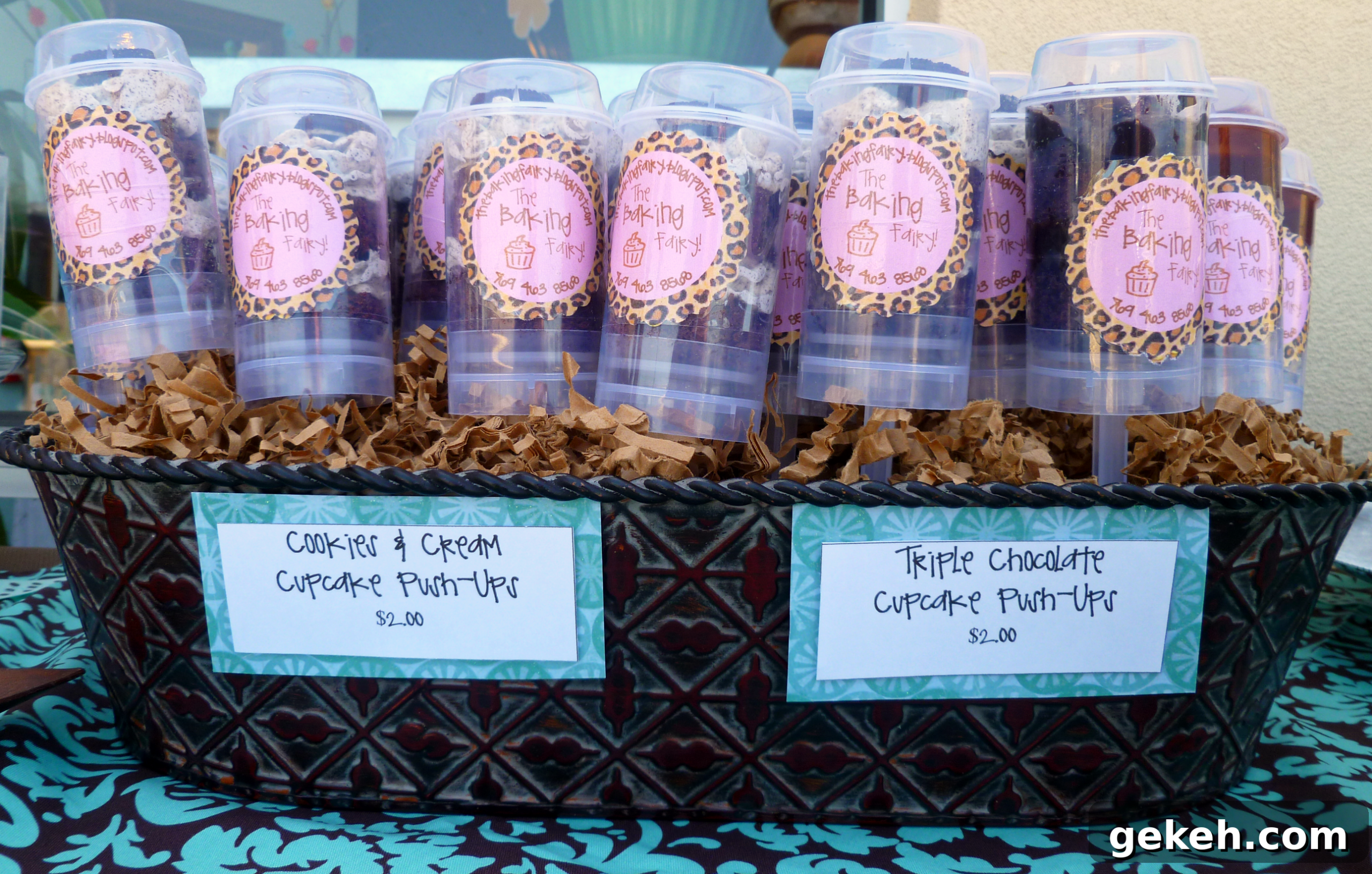
I’m a bit late posting these photos from the Chocolate Bake Sale, but here they are.
Our table setup was brown and turquoise — super cute and very eye-catching.
Cake push pops made with the Pioneer Woman’s chocolate sheet cake and my go-to Swiss meringue buttercream.
Triple chocolate cake pops, which I shared recently.
Guilt-free cake bites made from the same batter as my Skinny Chocolate Cake.
Mocha almond fudge cookies, adapted from a How Sweet It Is recipe — rich, chewy, and full of coffee-chocolate flavor.
Rice Krispie treats dipped in white chocolate and finished with sprinkles for a festive touch.
Chocolate-frosted chocolate cupcakes with molded blue chocolate decorations, and white-chocolate-dipped Rice Krispies — both made by Michelle.
Walnut chocolate fudge bars made by Mary Jo, using a Martha Stewart recipe.
Magic cookie bars, another Mary Jo specialty.
Chocolate cowgirl cookies, also Mary Jo’s contribution — my version of that recipe is available on my site.
The bake sale went well overall. Sales were slow the first day, but extending the sale another day made a big difference. I don’t have the exact total yet, but I expect it was somewhere between $100 and $200 — hopefully closer to the higher end.
Here are a few lessons learned from two bake sales:
1. People prefer familiar treats. Classics like decorated sugar cookies, Rice Krispies, and traditional bar cookies sell reliably. If an item is too unusual or unfamiliar, many shoppers won’t try it.
2. Don’t blindly double or triple recipes unless portions are tiny. Your goal should be to sell out, not to end up with leftovers. It’s better to offer more variety with smaller quantities than large amounts of only a few items. For small treats like mini muffins, package several per bag so customers feel they’re getting value.
3. Start early. Later in the day it gets hotter and foot traffic drops as people finish errands or pick up kids. Sell while people are out and about.
4. Plan the bake sale well in advance, but avoid advertising so early that people forget. Timing your promotions a few weeks to a few days ahead tends to work best.
5. Choose the right time and location. Scheduling a sale near a holiday, such as Easter, increases demand because shoppers buy extras for serving and gifting. Pick spots with strong pedestrian traffic — in front of churches, at farmer’s markets, or near garage sales — places where people are walking around and likely to make impulse purchases.