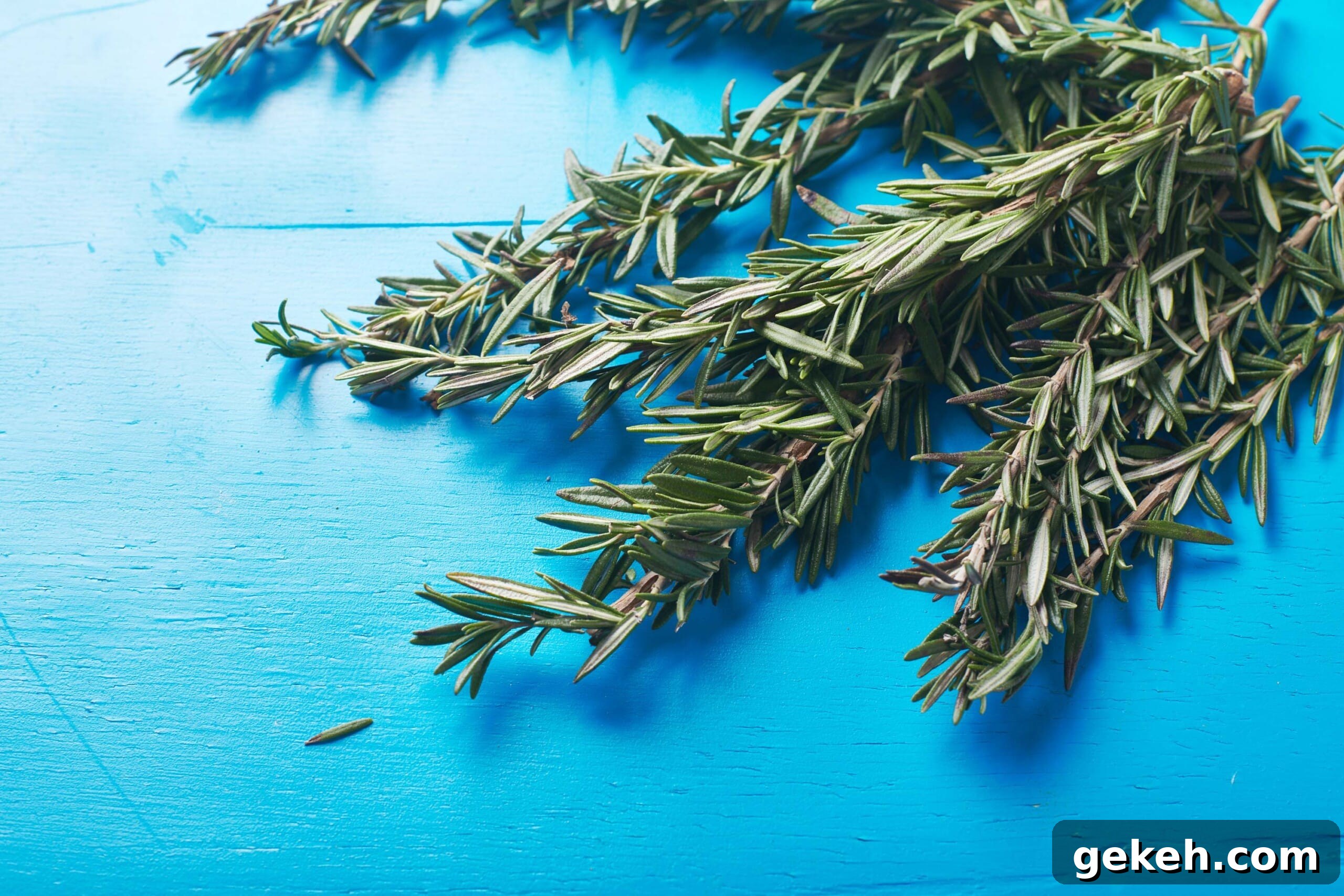
Rosemary is one of the most aromatic herbs, with a bold, pungent flavor that combines lemony, pine-like notes with hints of mint, sage, and pepper. Because its taste is strong, start with small amounts when cooking — a little goes a long way. It shines in braises and slow-cooked dishes where its flavor can develop over time.
Used medicinally for thousands of years, rosemary contains compounds such as rosmarinic acid and carnosic acid, which have antioxidant and anti-inflammatory properties. Modern research has also explored rosemary’s potential to support memory and concentration, reflecting the herb’s long cultural association with remembrance.
Rosemary can elevate many dishes. It pairs especially well with roasted meats, fish, breads, and vegetables. Try it in recipes like Rosemary Orange Cod Fillets or Lemon Rosemary Chicken Thighs.
- Everything You Wanted to Know About Rosemary
- Substituting Dried Rosemary for Fresh Rosemary
- How to Choose Fresh Rosemary
- How to Prepare and Cook With Fresh Rosemary
- How to Strip Rosemary
- Pro Tips
- Storage
- Recipes With Rosemary
- How to Prepare Fresh Rosemary Recipe
- Cooking With Other Fresh Herbs

Everything You Wanted to Know About Rosemary
Rosemary has stiff, green, needlelike leaves growing from a woody stem. Its distinctive scent makes it easy to identify from a distance once you know it.
Rosemary is distinctive and hard to replace exactly. Thyme or savory often pair with similar ingredients. Sage works well in meat and poultry dishes, marjoram can offer faint pine notes, and mint is another possible alternative depending on the recipe.
Rosemary is native to the Mediterranean and belongs to the mint family. Its Latin name, ros marinus, means “dew of the sea,” a nod to its coastal origins.
If you have an abundance, use sprigs as skewers for kabobs, infuse olive oil with rosemary for dressings and marinades, or make an infused simple syrup for cocktails. Rosemary-infused oil can be made by gently heating fresh sprigs in olive oil (do not simmer), cooling, straining, and refrigerating for up to 10 days.
Yes. Cut sprigs into 1–2 inch pieces and freeze them spread on a baking sheet until solid, then transfer to a freezer bag. Press out excess air and freeze for up to six months.
Yes. Rosemary is relatively easy to grow indoors if given direct sunlight, well-drained soil, and careful watering. A sunny windowsill is a good spot.
Substituting Dried Rosemary for Fresh Rosemary
Dried rosemary works well in many cooked dishes. Use approximately 1 teaspoon dried for every 1 tablespoon fresh (a 1:3 ratio). Because dried rosemary is woody, give it time to soften in the dish; it’s best for longer-cooked recipes, marinades, and roasts rather than raw dressings.

How to Choose Fresh Rosemary
Fresh rosemary is usually available in the produce section and at farmers markets during peak seasons. Look for firm, green leaves and avoid sprigs with brown, shriveled, or damp leaves. Dried rosemary is sold with other herbs and spices.
How to Prepare and Cook With Fresh Rosemary
Recipes may call for whole sprigs, whole leaves, or minced rosemary. Whole sprigs can be added to stews or roasts to infuse flavor and removed before serving. To use leaves, pluck them from the stem and either leave them whole or mince them, depending on the recipe. Rosemary stands up well to long cooking times and becomes more pronounced the longer it cooks.
Rosemary is a staple in Mediterranean cooking and pairs well with soups, casseroles, stews, fish, breads, stuffings, meats, and roasted vegetables.

What NOT To Do When Chopping Rosemary

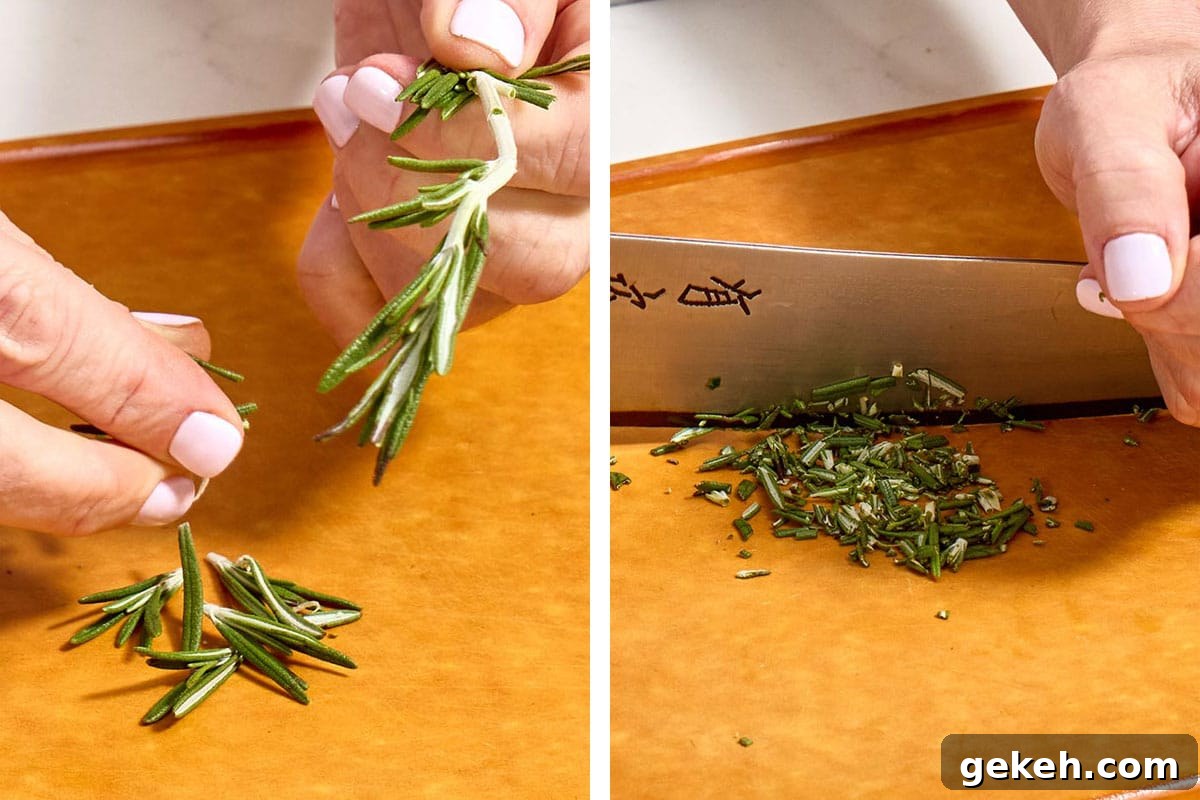
Avoid using a food processor for rosemary — the leaves tend to spin and not chop evenly. Use a sharp chef’s knife and a cutting board for best results.
How to Strip Rosemary
Method 1: Using Your Fingers
- Hold the tip – Grab the top of the rosemary sprig with one hand.
- Pinch and pull – With the other hand, pinch near the top and run your fingers down toward the base; the leaves will pop off in a neat shower.
- Chop if needed – Leave leaves whole for some recipes or give them a quick chop for marinades, breads, or dressings.
Method 2: Using an Herb Stripper
- Choose the hole size – Pick the hole that matches the stem thickness.
- Thread and pull – Insert the sprig tip into the hole and pull it through in one smooth motion.
- Gather your rosemary – Leaves will collect in a tidy pile, ready to chop or add to your dish.
Pro Tips
- Work with dry rosemary; wet leaves can stick to fingers or tools.
- Younger sprigs are softer and easier to strip than older, woodier stems.
- Save stripped stems to flavor stocks, soups, or the cavity of a roasting chicken; remove stems before serving.
Storage
Fresh rosemary on the stem will keep about three weeks if wrapped in a slightly damp paper towel and placed in a sealable bag or container in the crisper drawer. Store stripped leaves in an airtight container in the fridge for up to a week, or freeze them for several months.
Recipes With Rosemary
Fall-Apart Roasted Pork Shoulder with Rosemary, Mustard and Garlic
Eye of Round Roast
Mediterranean Braised Lamb Shoulder Chops

How to Prepare Fresh Rosemary
Equipment
-
Your fingers (free!)
-
Herb stripper (optional)
Ingredients
- Fresh rosemary sprigs (as many as needed)
Instructions
Method 1: Using Your Fingers
-
Hold the tip – Grab the very top of the rosemary sprig with one hand.
-
Pinch and pull – With your other hand, pinch the stem near the top and run your fingers firmly down toward the base. The leaves will pop right off.
-
Chop if needed – Leave leaves whole for some recipes or chop for marinades and breads.
Method 2: Using an Herb Stripper
-
Choose the hole size – Pick the hole that best matches your stem.
-
Thread and pull – Insert the tip into the hole and pull through in one motion.
-
Gather your rosemary – Leaves will collect in a pile, ready to use.
Notes
- Rosemary does not chop well in a food processor; use a sharp knife and cutting board instead.
- Store stripped rosemary in an airtight container in the fridge for up to a week, or freeze for several months.
Cooking With Other Fresh Herbs
- Thyme
- Parsley
- Oregano
- Mint
- Rosemary